Scalp Fungal Infections in Monsoon: Signs, Causes, and Natural Treatment
Liquid error (sections/article-template line 266): The format option 'month_day_year' is not a supported format.
Juicy Chemistry

You have just stepped out of the shower, hair freshly washed and smelling lovely. By afternoon, your roots already feel heavy, slick, and flat. Summer does that. The heat, the humidity, and the constant low-grade sweating you do not even notice until your hair starts clumping at the crown. Your first instinct is to wash it again. And again.
But washing your hair every single day, especially in summer, can actually make oiliness worse. Your scalp may respond to frequent stripping by producing even more sebum to compensate. It is a frustrating cycle. The good news? You can absolutely reduce hair washing frequency without walking around with greasy hair between washes. It just takes a few smart shifts.

In warmer months, your sebaceous glands naturally produce more oil. Add sweat, humidity, and pollution, and your scalp becomes a busy little ecosystem. This does not mean your hair is dirty. It simply means your scalp is responding to seasonal changes the way it is designed to.
The real issue starts when you wash too often with harsh cleansers. Stripping natural oils can signal your scalp to overcompensate, trapping you in a daily-wash cycle. Learning how to train hair to wash less is really about breaking that cycle gently.
Lifestyle plays a role too. Stress, poor sleep, dehydration, and diet all influence oil production. Before blaming your hair type entirely, consider the bigger picture. Are you drinking enough water? Sleeping well? These habits can make a real difference to how your hair behaves between washes.
For a fuller picture of how to adjust your summer hair care routine with the season, that is a great place to start.
Yes, and it is simpler than you might think. If you currently wash daily, try pushing it to every other day for a week. Once that feels comfortable, extend to every three days. Your scalp may feel oilier during the first week. That is normal. Think of it as a recalibration period. A hair washing schedule for summer does not have to be rigid. Some weeks, you might need an extra wash after a sweaty day, and that is perfectly fine.
A few things that may help during this transition: tie your hair in a loose braid or bun on day two, switch your parting to the opposite side for the illusion of volume, and avoid touching your hair throughout the day. Your hands transfer oils to your strands faster than you would expect.
Your between-wash routine matters just as much as wash day. These oily hair tips between washes are not about masking grease. They are about managing your scalp environment so oil builds up more slowly.
Start with your pillowcase. Swap it out every two to three days in summer. You would be surprised how much sweat transfers overnight. On days when your scalp feels sweaty but not truly oily, a water-only rinse works wonders. Skip the shampoo, rinse under lukewarm water, and condition only the ends.
Keep products light in the heat. Heavy conditioners near the roots weigh hair down and make it look limp faster. Keep conditioning to your mid-lengths and ends only. Clean your hairbrush weekly too so you are not redistributing old oil onto freshly managed hair.
If you are spending time outdoors, protecting your hair from the sun and frizz is just as important as managing oil. Here is a helpful read on how to protect hair from the sun and frizz that pairs well with a less-is-more washing approach.
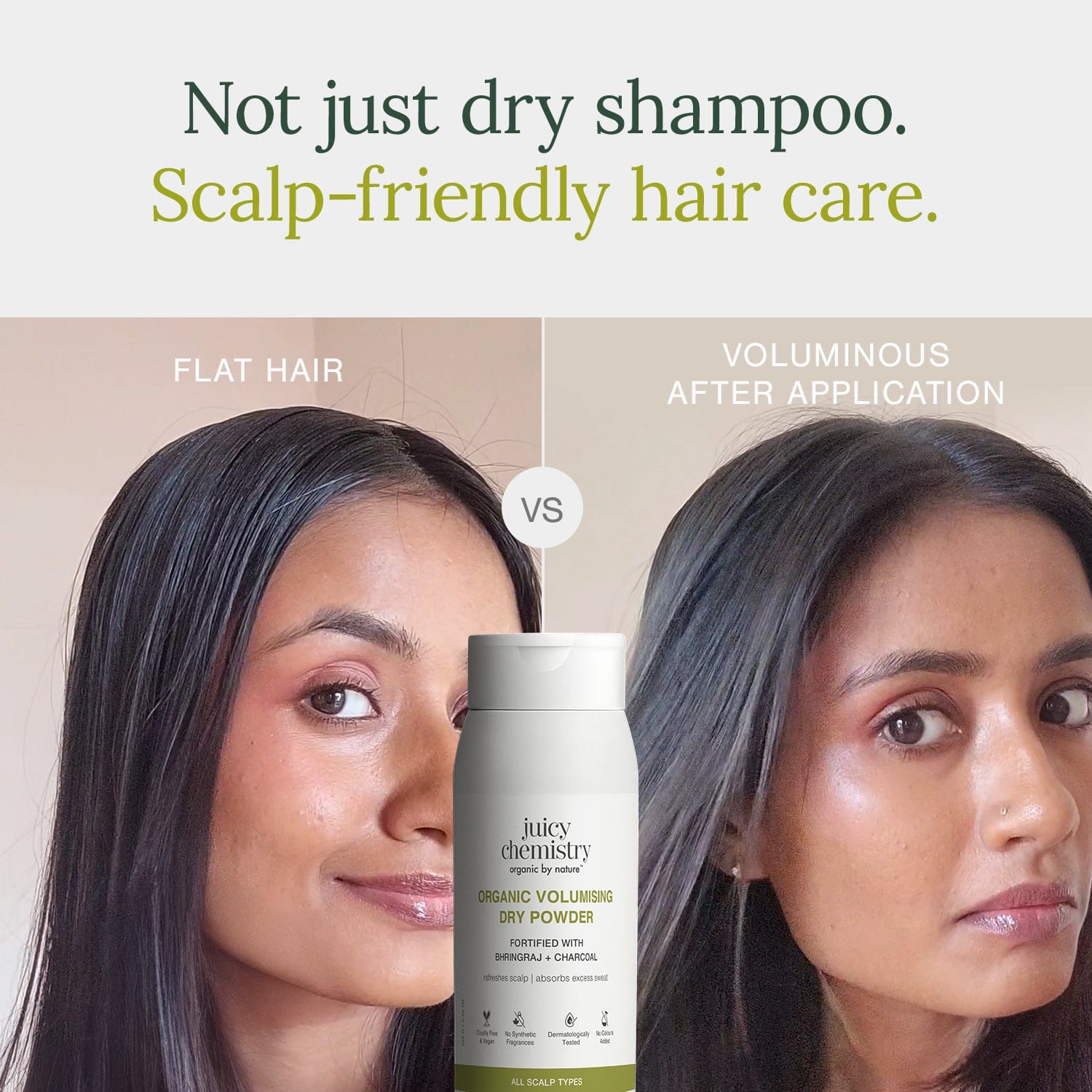
It can be if you use the right kind and use it smartly. The key with dry shampoo between washes is timing. Most people reach for it when hair already looks greasy, but applying it proactively, right after a wash or before bed, may give it time to absorb oil as it appears rather than mopping up what has already accumulated.
Not all dry shampoos are equal, though. Aerosol sprays often rely on synthetic fragrances, propellants, and silicones that can leave residue over time.
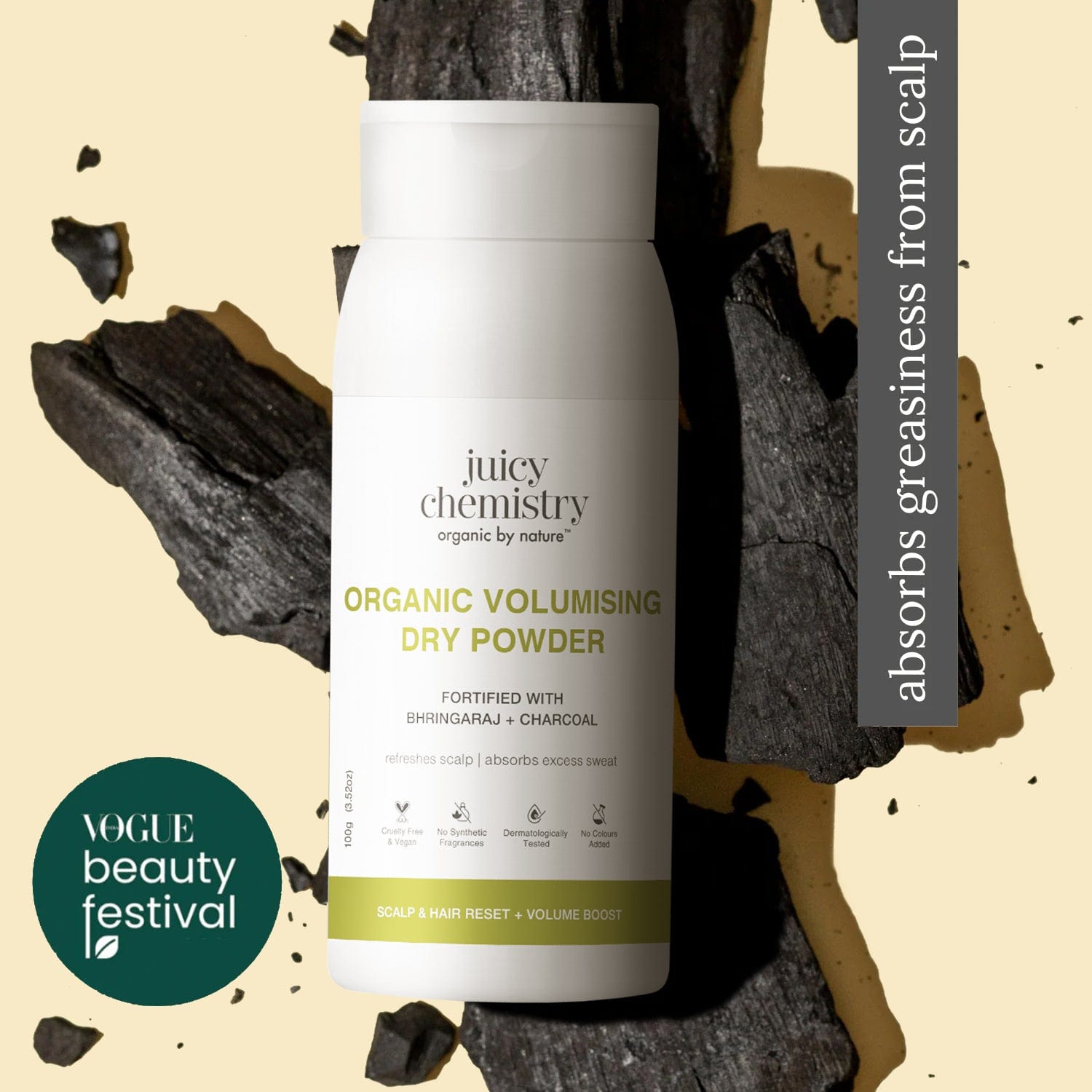
Juicy Chemistry's Organic Volumising Dry Powder takes a different approach. It is a powder format made with activated charcoal to help absorb excess oil and sweat at the scalp, along with Bhringaraj and Rhassoul Clay, both traditionally known for their scalp-friendly properties. With 69.15% of its ingredients from organic farming, no synthetic fragrance, no silicones, and no propellants, it fits naturally into a less washing, more healthy hair philosophy.
Dust a small amount onto your palms, section your hair, and apply to the scalp. Leave it briefly, then massage in and brush through for even distribution.
Rinse with cool or lukewarm water instead of hot. Hot water can stimulate sebaceous glands, encouraging more oil production. On heavy workout days, consider a rinse-only approach rather than a full shampoo.
Stay hydrated and eat a balanced diet rich in healthy fats and vitamins. Your scalp health starts from within, and no product can fully compensate for what your body needs internally.
Ultimately, how often to wash hair in summer is personal. There is no magic number. Listen to your scalp, adjust gradually, and give yourself grace during the transition. Your hair is not "bad" for being oily. It is simply responding to its environment, and with a few thoughtful changes, you can find a rhythm that works beautifully for you.

Q: How long does it take to train hair to wash less often?
A: It typically takes one to two weeks for your scalp to adjust when you start stretching time between hair washes. Your hair may feel oilier at first, but this tends to settle as your scalp recalibrates.
Q: Can I just rinse my hair with water on non-wash days?
A: Yes, a water-only rinse can remove surface sweat without stripping your scalp's natural oils. This is especially useful in summer after workouts or on humid days.
Q: Does tying hair up make it greasier?
A: Tying your hair loosely in a braid or bun can actually help conceal oily roots on day two or three. Just avoid very tight styles that press oil closer to the scalp.
Q: Is it okay to use dry shampoo every day?
A: Using dry shampoo occasionally between washes can help extend freshness, but daily use may lead to product build-up. It works best as a bridge between wash days, not a permanent replacement.
Q: Does diet really affect how oily my hair gets?
A: What you eat and drink can influence your scalp's oil production. Staying hydrated and eating a balanced diet with enough vitamins and healthy fats may support a healthier scalp over time.


Shop Now