Scalp Fungal Infections in Monsoon: Signs, Causes, and Natural Treatment
Liquid error (sections/article-template line 266): The format option 'month_day_year' is not a supported format.
Juicy Chemistry


Serum or oil: which is better for hair growth? If you have ever stood in the hair care aisle feeling completely torn between the two, you are not alone. The good news is you do not actually have to choose.
Can you use serum and oil together? Yes, you absolutely can. They do very different things for your hair, and when you use them the right way, they work beautifully as a pair. Let us break it down in the simplest way possible.

Think of a hair growth serum as a focused, lightweight treatment that goes straight to your scalp. It is water-based, absorbs quickly, and carries active ingredients like peptides and plant extracts that may help support your hair's natural growth cycle right at the root.
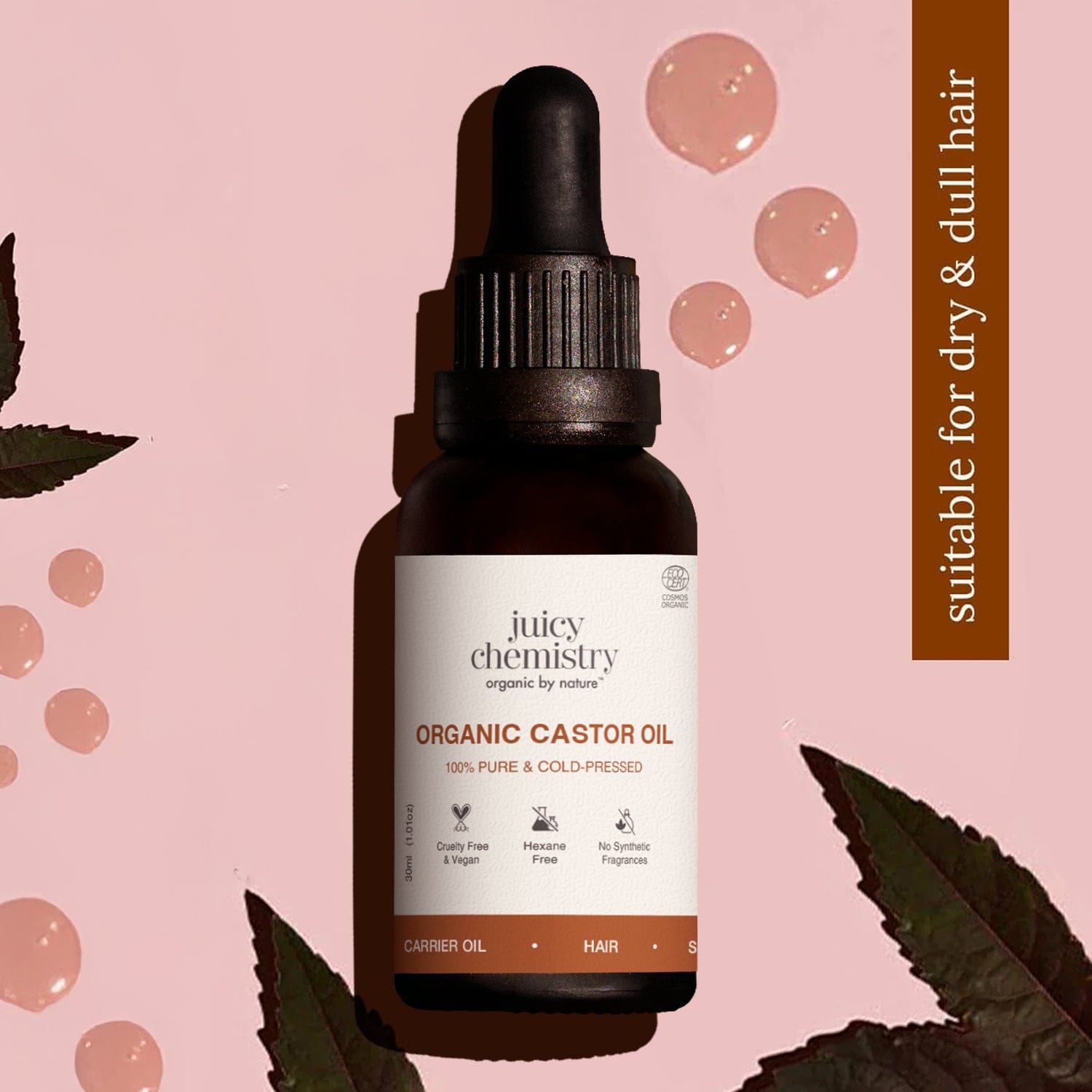
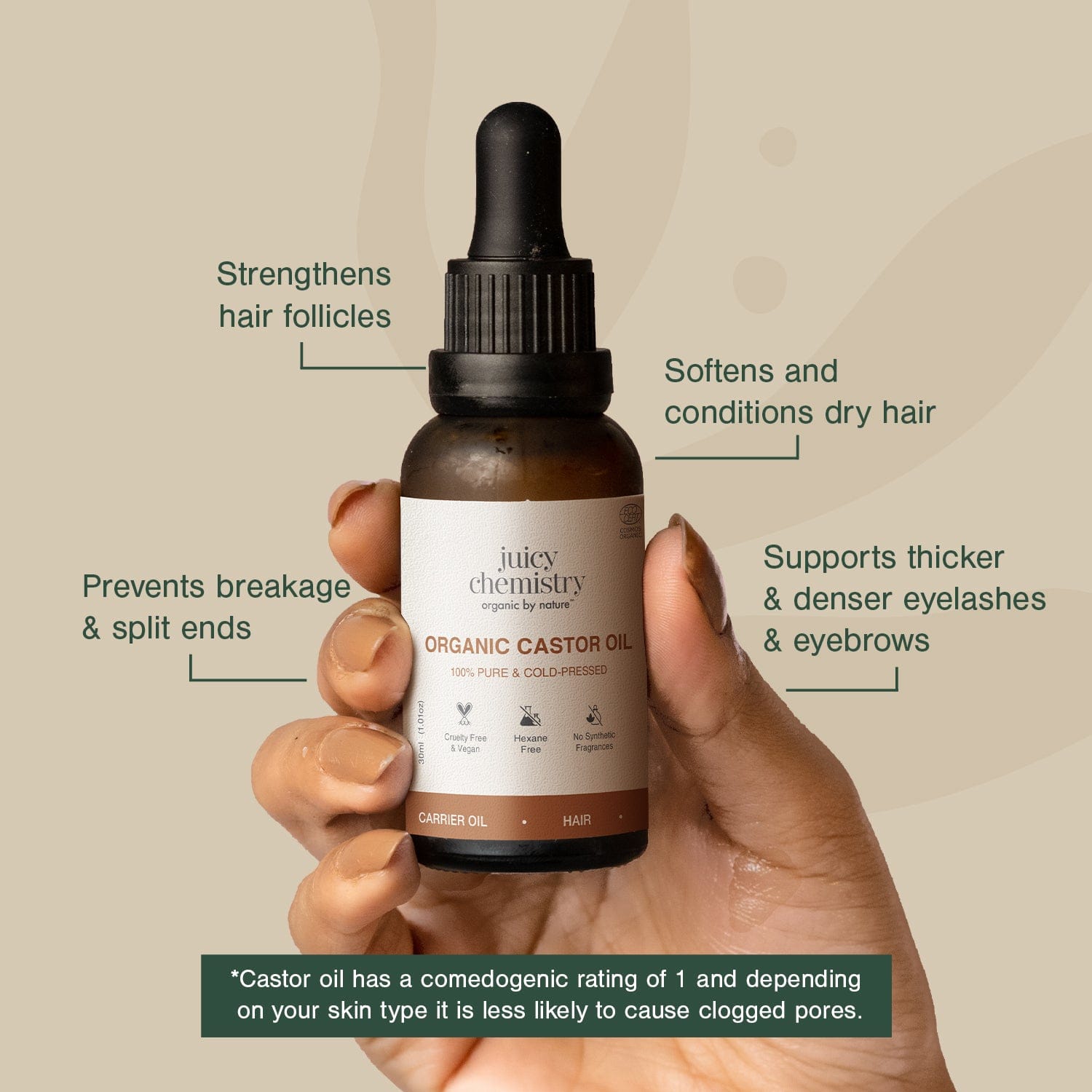
A hair oil is the opposite in texture but equally lovely. It is richer, thicker, and works more like a deep conditioner. Oils coat and nourish your hair strands from root to tip, helping reduce dryness and breakage over time.
One talks to your scalp. The other takes care of your strands. That is exactly why a hair growth serum and oil routine makes so much sense when you pair them together.
Honestly, it depends on what your hair is going through. If you are noticing your parting looking a little wider, that is more of a scalp and follicle concern. If your ends feel dry and snap easily, that is a strand concern. A serum alone may not deeply nourish your lengths. An oil alone may not deliver targeted care to the scalp.
So, do you need both serum and oil? If you want to encourage growth and keep your hair feeling soft and strong, combining serum and oil for hair just covers more ground.
A published review found that topical actives like Redensyl, Anagain, and rosemary oil each support hair through different pathways. Serums may help at the follicle level, while oils may improve circulation and reduce breakage. Together, they simply complement each other.
It really does. In summer, your scalp tends to get oilier and your hair can feel flat. That is a great time to lean more into a lightweight serum and keep your oiling sessions to once or twice a week as a pre-wash step. Think of it as your warm-weather hair growth duo routine.
In winter, when everything feels dry, your hair may want more moisture from oils. You might let your oil sit a little longer before washing or add an extra oiling session to your week. The serum still does its thing on wash days.
Your hair routine should flow with the seasons, just like the rest of your self-care does.
Here is where most people trip up. Using serum and oil on the same day is totally fine, but putting them on at the exact same time is not ideal. A heavy oil sitting on your scalp can block the serum from absorbing properly.
The simplest hair growth serum and oil routine looks like this.
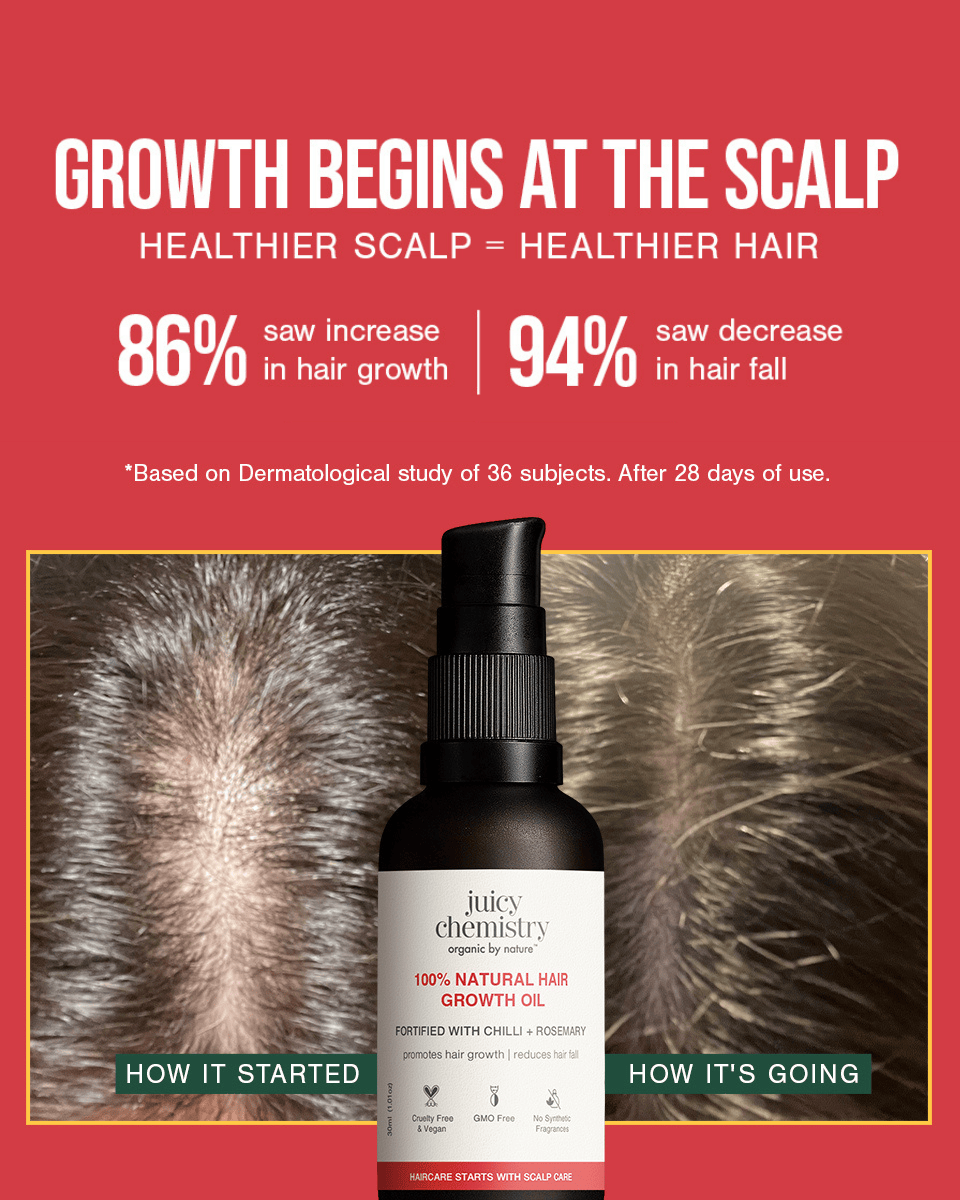
Apply your hair growth oil from roots to tips. Let it sit for an hour, two hours, or even overnight. Then shampoo it out. This step is all about deep nourishment and reducing breakage.
On clean, damp hair, apply your serum directly to the scalp. Massage gently and leave it in. No rinsing needed.
The Stemcells + Multi-Peptide Hair Growth Serum from Juicy Chemistry is designed exactly for this step. It is a leave-in formula with Redensyl, Anagain (pea sprout extract), Capilia Longa (turmeric stem cell extract), caffeine, and a blend of amino acids. Just apply it after every hair wash and let it do its work.
So if you have been wondering whether to use hair oil before serum or serum after oiling hair, here is your answer. Oil first as a pre-wash treatment, then serum on clean hair after.
This part is really important. No serum or oil works like magic on its own. Your hair reflects how you are living, sleeping, eating, and feeling.
A few small things that may help your serum-plus-oil hair care routine work even better.
Be consistent. Visible changes from any routine take a few weeks, so give it time and trust the process.
Monday. Oil treatment before your wash, shampoo, then apply serum on your damp scalp.
Thursday. Shampoo and apply serum on your damp scalp.
The rest of the week. Let everything do its thing. No extra products needed.
That is it. A hair growth duo routine that is simple, doable, and actually respects what your hair needs at every level.

Q: Can I use serum and oil together on the same day?
A: Yes. Apply oil as a pre-wash treatment, shampoo it out, then use your serum on clean, damp hair. This way both products absorb properly without getting in each other's way.
Q: Is serum or oil better for hair growth?
A: They do different things. A serum targets your scalp with active ingredients, while an oil nourishes and conditions the strand. Using both as part of a hair growth duo routine may give you broader support.
Q: Should I apply hair oil before serum or after?
A: Oil comes first, always as a pre-wash step. After shampooing, apply serum on clean hair so it can reach the scalp without being blocked by an oil layer.
Q: How often should I use a hair growth serum?
A: Most leave-in serums work best when used after every hair wash. If you wash twice a week, that gives you two applications, which is a comfortable rhythm.
Q: Can combining serum and oil for hair replace salon treatments?
A: A consistent routine forms a strong daily foundation. But lifestyle factors like nutrition, sleep, and stress also play a big role in how your hair looks and feels over time.


Shop Now