Scalp Fungal Infections in Monsoon: Signs, Causes, and Natural Treatment
Liquid error (sections/article-template line 266): The format option 'month_day_year' is not a supported format.
Juicy Chemistry




Monsoon in India brings such relief after months of heat. The cool breeze, the smell of wet earth, chai on a rainy evening. But your hair? Your hair does not share the same enthusiasm. Between the humidity, the unexpected downpours, and the constant dampness, monsoon is one of the trickiest seasons for hair care.
And one thing that gets overlooked more than anything else is how you dry your hair. What you do with your wet hair after a wash or a downpour matters a lot more than most people realise.

During the monsoon, humidity levels stay high almost all day. That means your hair takes much longer to dry naturally. And when hair stays damp for extended periods, two things happen. First, the hair shaft swells and becomes more fragile, making it prone to breakage. Second, the warm, moist environment on your scalp becomes an ideal setting for fungal and bacterial growth.
Most of us just tie up our wet hair and get on with the day. But a damp scalp that stays wet for hours can lead to itching, flaking, and even an unpleasant odour. That is not just uncomfortable. Over time, it may affect the overall health of your scalp and hair. If you have been dealing with scalp dryness or irritation, monsoon dampness can make things worse.
Neither is perfect on its own, but each has a place in your monsoon routine.
Air drying sounds gentler, and in dry weather, it usually is. But in the monsoon, air drying can take hours because of the humidity. That prolonged dampness is exactly what you want to avoid.
Blow drying gets the job done faster but can cause heat damage if overdone. The sweet spot is a combination. Let your hair air dry until about 70 to 80 percent of the moisture is gone, then use a blow dryer on a low or cool setting for the rest.
If you do use a dryer, a lightweight leave-in product beforehand can help. A certified organic leave-in hair serum with Jojoba and Sweet Almond oil forms a light protective layer that supports hair during heat styling, without silicones or heavy residue.
You do not need a complicated routine. Just a few mindful steps can make a real difference.
After washing, take a soft cotton t-shirt or a microfibre towel and gently press out the excess water. Rubbing your hair vigorously with a regular towel roughens up the cuticle and leads to frizz and breakage, especially when hair is at its weakest in its wet state.
Use a wide-tooth comb once your hair is damp, not soaking wet. Start from the ends and work your way up. Pulling through knots in fully wet hair can cause unnecessary shedding.
If you can, leave your hair loose while it dries. Tying wet hair into a tight bun or braid traps moisture at the roots. If you must tie it, keep it loose and low.
If you reach for the dryer, keep it on a cool or low-heat setting. Hold it at least six inches away from your hair. Move it around rather than focusing on one spot for too long.
Your scalp is skin. And like any skin on your body, when it stays warm and moist for too long, it becomes a breeding ground for fungi and bacteria. During monsoon, the combination of sweat, humidity, and wet hair creates the perfect conditions for dandruff flare-ups, scalp ringworm, and folliculitis.
Signs to watch out for include persistent itching, small bumps at the hairline, white or yellowish flaking, and an odour that lingers even after washing. The first step is making sure your scalp dries properly after every wash and after getting caught in the rain.
Washing your hair soon after a downpour is a good monsoon habit. Rainwater in cities can carry pollutants and fine dust that sit on your scalp. For a fuller guide on protecting your hair through monsoon, you can read more on our blog.
Let us be real. You are not going to wash your hair every time it rains. Some days you just need a quicker fix. And on those days, a good dry shampoo can be genuinely helpful.
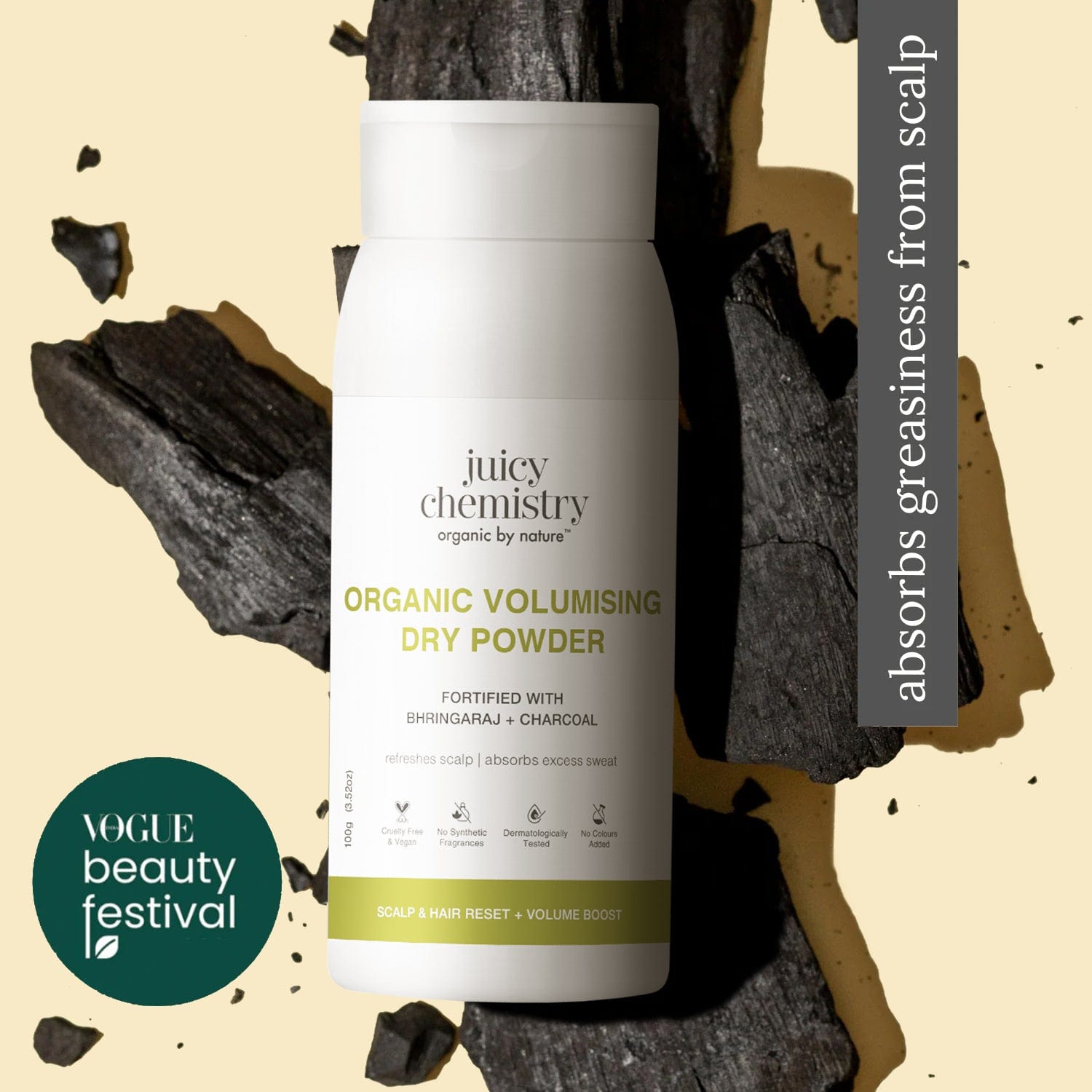
The Organic Volumising Dry Powder with Bhringaraj + Charcoal uses Activated Charcoal to absorb excess oil and sweat at the scalp, helping your roots feel fresher and lighter between washes. No aerosol, no silicone residue, no synthetic fragrance. Just dust a small amount onto your scalp, massage it in, and brush through for even distribution. Your hair looks and feels cleaner without adding any moisture.
During monsoon, extending the gap between washes makes sense on lower-humidity days. But when your scalp feels sweaty or greasy, do not let it sit. Either wash or use a dry shampoo to absorb the excess.
Even after drying your hair well, monsoon humidity has a way of puffing everything up. Frizz during the rains is simply your hair responding to the moisture in the air. But a few simple steps can keep things smoother.
Once your hair is dry, applying a small amount of a leave-in serum through the lengths and ends helps seal the cuticle. Look for lightweight, fast-absorbing formulas with nourishing oils like Jojoba, Oat, or Sweet Almond that smooth without weighing hair down. Avoid anything with silicones, as buildup tends to get worse in the monsoon.
Loose braids and low buns are your friends during humid days. Keeping your hair off your neck and away from sweat zones helps it stay fresher longer.
Beyond drying, a few small shifts can go a long way through the season. Try not to sleep with wet or even slightly damp hair. The combination of a warm pillow and trapped moisture is not kind to your scalp.
Switch to a gentle, sulphate-free shampoo that cleans without stripping your hair's natural oils. Over-cleansing in the monsoon can dry out your scalp and trigger more oil production, which creates its own cycle. Be kind to your hair. Let your routine be simple, consistent, and focused on keeping your scalp clean and dry.

Q: Is air drying bad for hair in the monsoon?
A: Air drying is not bad in itself, but the high humidity slows it down significantly. A damp scalp sitting for hours can encourage fungal growth. Air dry partially, then finish with a dryer on a low or cool setting.
Q: How often should I wash my hair during monsoon?
A: Wash whenever your scalp feels sweaty, oily, or after getting caught in the rain. For most people, two to three times a week works well. On in-between days, a dry shampoo helps keep roots fresh.
Q: Can wet hair really cause fungal infections on the scalp?
A: A warm, damp scalp is an ideal environment for fungi to grow. If your scalp stays wet for prolonged periods regularly, it can lead to dandruff flare-ups, itching, and other scalp concerns. Drying your hair properly helps prevent that.
Q: Should I use a leave-in serum before blow-drying?
A: Yes, a lightweight leave-in serum with natural oils can help protect your hair from heat damage and reduce frizz after drying. Apply it on damp hair before using a dryer on a cool or low-heat setting.


Shop Now