Monsoon Skincare Mistakes: 7 Things Making Your Skin Worse in the Rains
Liquid error (sections/article-template line 277): The format option 'month_day_year' is not a supported format.
Juicy Chemistry

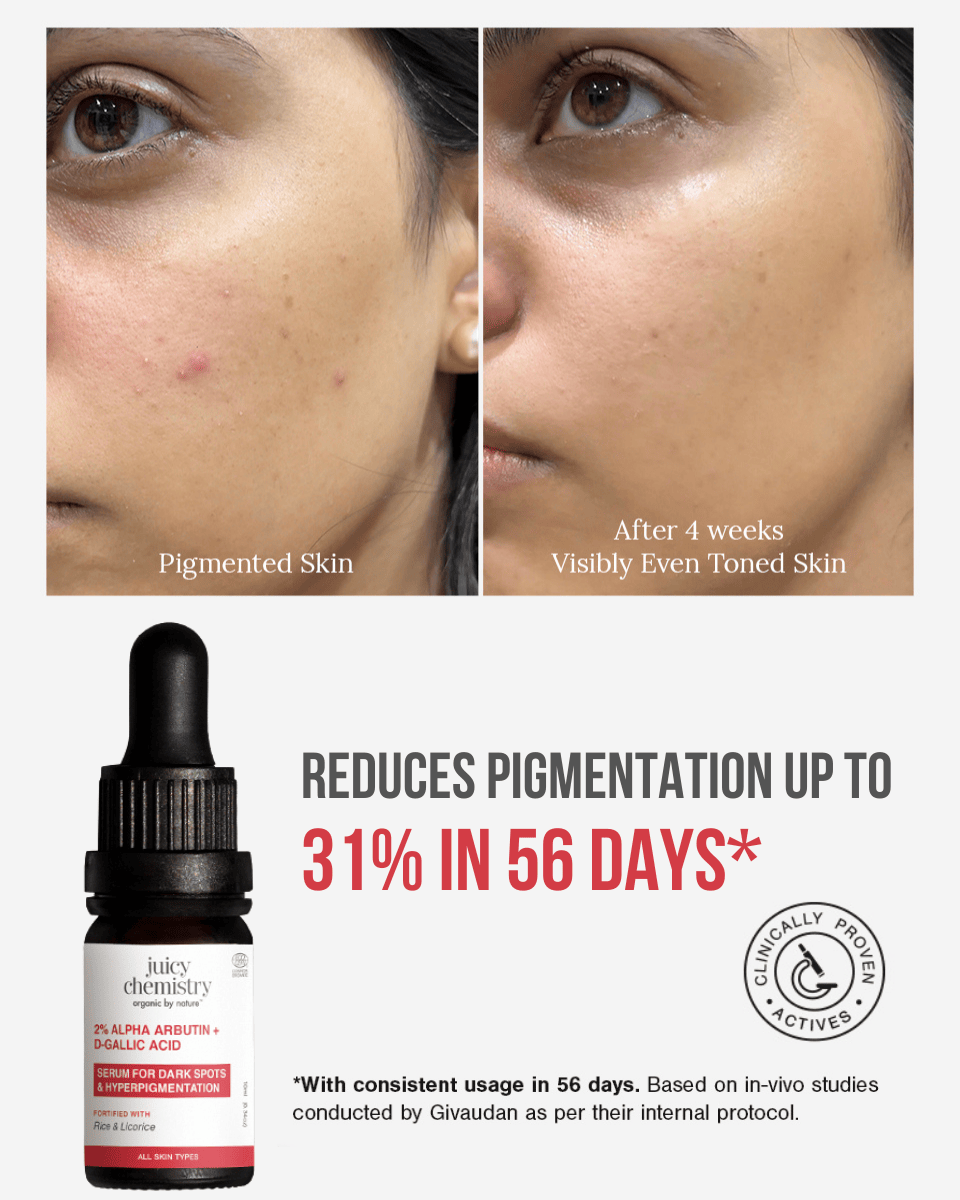
Dark spots won't budge. When hunting for the right pigmentation fighter, two names crop up: alpha arbutin and vitamin C. Both fade marks and brighten skin.
So which one actually works better?
Neither is objectively superior. Your choice depends on what your skin needs.
Alpha arbutin is a precision ingredient that targets melanin production directly, making it an excellent choice for those seeking straightforward pigmentation control without complexity.
Inhibits tyrosinase enzyme: Controls the enzyme responsible for melanin production at the source
Visible results in 4-8 weeks: Fades dark spots with consistent daily application
Works without inflammation: Operates quietly on skin, making it ideal for reactive and sensitive complexions
Gentle on reactive skin: Doesn't sting, valuable for those who've abandoned other brightening serums
Safe at standard concentrations: 2% concentration is considered the optimal efficacy level for sensitive skin types
Compatible with all active ingredients: Layers seamlessly with retinoids, hydroxy acids, peptides, and niacinamide without stability issues
Requires no special formulation protocols: The 2% Alpha Arbutin + D-Gallic Acid Face Serum from Juicy Chemistry integrates directly into existing routines without demanding adjustments
Vitamin C is a multitasking powerhouse that addresses pigmentation whilst simultaneously delivering broader anti-ageing and protective benefits for your entire complexion.
Dual antioxidant and brightening action: Neutralises free radicals whilst inhibiting melanin production simultaneously
Fades existing dark spots: Targets pigmentation that's already formed on your skin
Prevents future discolouration: Protects against new dark spots caused by UV exposure and environmental stressors
Particularly valuable in high-pollution environments: Fortifies natural defence against environmental damage and oxidative stress
Stimulates collagen synthesis: Goes beyond spot-fading to improve skin firmness and elasticity
Improves skin texture and appearance: Fine lines appear softer, pores look refined, and complexion gains visible plumpness
Requires stabilised formulations: L-ascorbic acid degrades rapidly when exposed to light, heat, or oxygen, demanding specialised delivery
Works optimally at lower pH levels: Requires a pH of 3.5 or below for maximum efficacy, necessitating fresh skin application
Can irritate sensitive skin: High concentrations (10-15%) may cause stinging, requiring gradual introduction for sensitive complexions
Alpha arbutin and vitamin C complement each other. Using them together creates a comprehensive pigmentation-fighting strategy through multiple pathways. Ingredient synergy means faster results than either alone.
Apply vitamin C first: Use on completely clean, dry skin to ensure optimal penetration and pH stability
Allow 2-3 minutes absorption time: Give vitamin C sufficient time to establish its protective antioxidant layer before layering the next product
Layer alpha arbutin serum second: Apply after vitamin C has fully absorbed to work on melanin production without interference
Use Juicy Chemistry's proven duo: The 10% Vitamin C + EGCG Face Serum combined with 2% Alpha Arbutin + D-Gallic Acid creates a particularly potent brightening combination
EGCG provides enhanced antioxidant support: The green tea extract amplifies the antioxidant firepower of the vitamin C base
Seal with your regular moisturiser: Follow with a moisturiser to lock in both actives and maintain skin barrier integrity
Commit to consistent daily use: Daily application for 8 to 12 weeks typically produces noticeable dark spot fading and visible skin brightening
Your ideal brightening ingredient depends on your primary skin concerns and sensitivity level.
If sensitive skin reacts to most actives, alpha arbutin may suit you perfectly. It fades spots effectively without irritation or formulation complications.
Conversely, if you're prioritising comprehensive anti-ageing alongside spot-fading, vitamin C becomes the smarter choice. The collagen boost and antioxidant protection may address concerns beyond pigmentation.
For maximum impact, combining both provides the most comprehensive approach. Your skin can receive targeted melanin inhibition from alpha arbutin plus antioxidant protection and collagen support from vitamin C.
Maximising brightening results requires supporting your actives with complementary skincare practices and realistic timelines.
UV exposure can trigger melanin production and completely undo months of brightening progress. Use a broad-spectrum sunscreen for daily protection,
The Moisturising Mineral Sunscreen SPF 40 PA++++ from Juicy Chemistry provides effective defence without compromising your organic skincare commitment
Gentle chemical exfoliation can enhance penetration. AHA or BHA serums help remove dead skin cells sitting atop pigmented areas, allowing brightening actives to work more effectively
Patience remains critical. Dark spots fade gradually, not overnight, requiring realistic expectations and sustained effort.
Daily use of properly formulated actives outperforms sporadic use of high concentrations
Neither alpha arbutin nor vitamin C claims universal superiority. Alpha arbutin excels at gentle, straightforward pigmentation control. Vitamin C offers broader anti-ageing benefits alongside spot-fading. Pairing both intelligently creates optimal results.
Ready to fade those stubborn spots? Start with our Alpha Arbutin + D-Gallic Acid Face Serum, paired with our 10% Vitamin C + EGCG Face Serum for maximum brightening impact. Both are ECOCERT COSMOS certified organic.
Combine them with our mineral sunscreen and watch your complexion transform. Shop now.
Expect visible fading within 4 to 8 weeks of consistent daily application.
Yes, both are safe for daily use when properly formulated and applied.
Alpha arbutin typically shows results faster (4-8 weeks) than vitamin C (6-12 weeks).
No, vitamin C doesn't photosensitise skin. But remember to always apply SPF when using brightening serums.
Yes, but start with lower concentrations and introduce gradually.
Absolutely. Combining them creates more comprehensive pigmentation control than either alone.


Shop Now