Monsoon Skincare Mistakes: 7 Things Making Your Skin Worse in the Rains
Liquid error (sections/article-template line 266): The format option 'month_day_year' is not a supported format.
Juicy Chemistry


You have probably heard of alpha arbutin. And you have probably heard of lactic acid. Both are widely loved for what they do for dull, uneven skin. But the real question most people land on is whether you can use alpha arbutin and lactic acid together without irritating your skin or cancelling out the benefits.
The short answer? Yes, you can. And when used the right way, the two actives may actually complement each other beautifully. Here is how that works and how to get the most out of both.

Alpha arbutin is a naturally derived compound that works on melanin production. More specifically, research suggests that alpha arbutin may help inhibit the activity of tyrosinase, the enzyme responsible for melanin synthesis in the skin. When tyrosinase activity slows down, less excess melanin is produced. Over time, that can help reduce the appearance of dark spots, acne marks, and uneven tone.
What makes alpha arbutin stand out from harsher brightening agents is that it tends to be gentle. It does not strip or sensitise the skin, which makes it a solid starting point for anyone dealing with hyperpigmentation for the first time. Even sensitive skin types can generally tolerate it well when used at appropriate concentrations.
The Scientific Committee on Consumer Safety (SCCS) has suggested concentrations of alpha arbutin up to 2% in face creams as safe for consumer use, which is why most effective formulations stay within that range.
Lactic acid belongs to the alpha hydroxy acid (AHA) family. But unlike glycolic acid, which has a smaller molecular size and can penetrate quickly, lactic acid has a larger molecule. That means it works more gradually and is generally gentler on the skin.
Here is what makes it interesting for pigmentation and dullness. Lactic acid supports cell turnover by helping to dissolve the bonds between dead skin cells on the surface. When those old, pigmented cells shed more efficiently, fresher skin comes through. The result is a more even-looking complexion over time. And unlike most exfoliating acids, lactic acid also acts as a humectant, drawing moisture into the skin while exfoliating. So you get smoothness without the dryness.
Lactic acid is a naturally occurring organic acid that the body produces on its own, which may partly explain why the skin tends to tolerate it so well. If you are new to acid-based skincare, a gentle lactic acid formulation is a smart place to start.
Yes. And research supports the idea that these two actives can work well in combination. A formulation study published on alpha arbutin, lactic acid, and niacinamide explored how these ingredients can be combined in cosmetic formulations for skin brightening, showing compatibility when formulated thoughtfully.
The reason the pairing makes sense is simple. Alpha arbutin targets future pigmentation by slowing melanin production at the source. Lactic acid addresses existing dullness and uneven texture by speeding up the shedding of pigmented surface cells. One works beneath the surface, the other on the surface. Together, the two approach skin tone from different but complementary angles.
That said, pairing actives always requires a bit of care. Both ingredients are gentle on their own, but using too many exfoliating products alongside lactic acid can overwhelm the skin. Keep the routine minimal and give each product space to work.
The simplest way to use both actives without overloading your skin is to split them between your morning and evening routines.
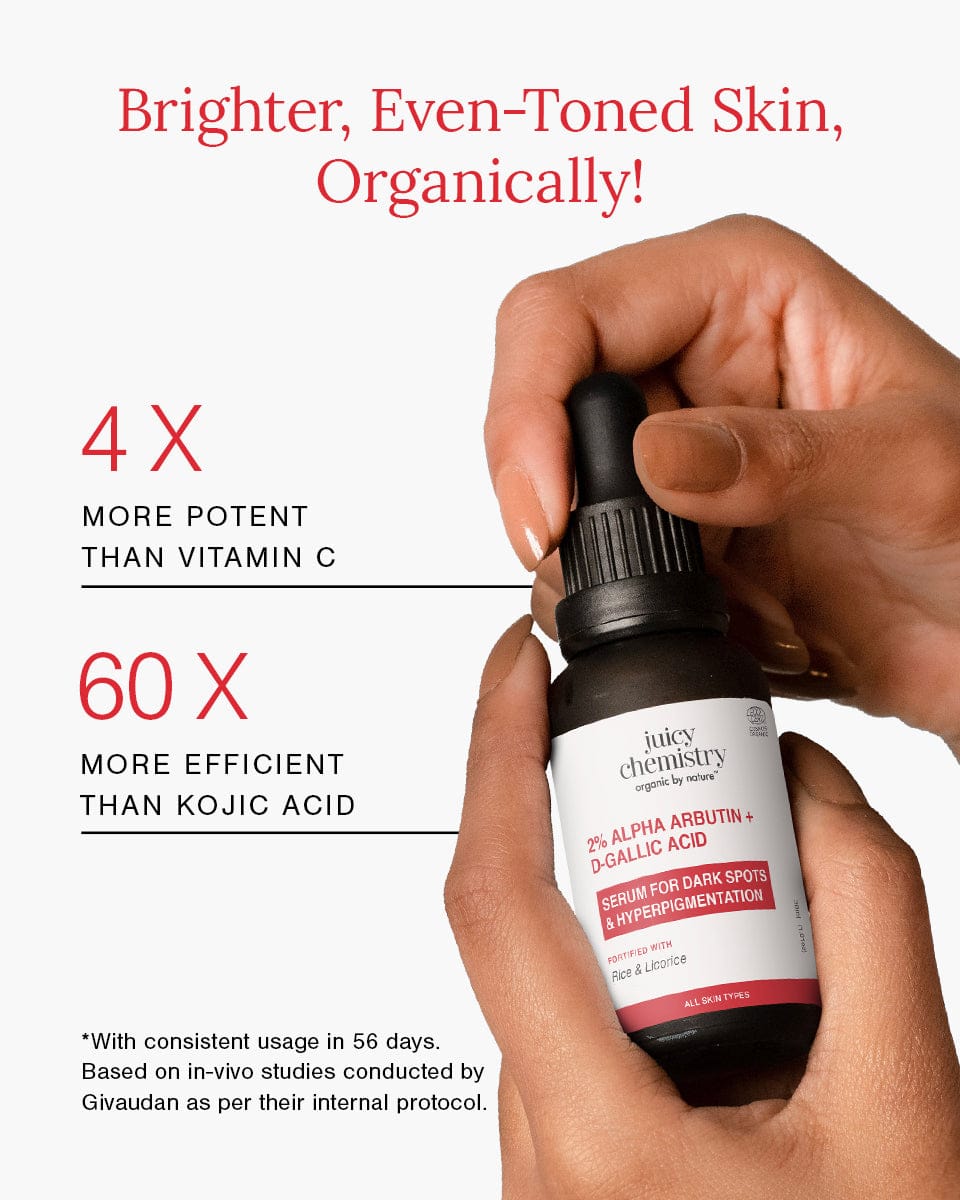
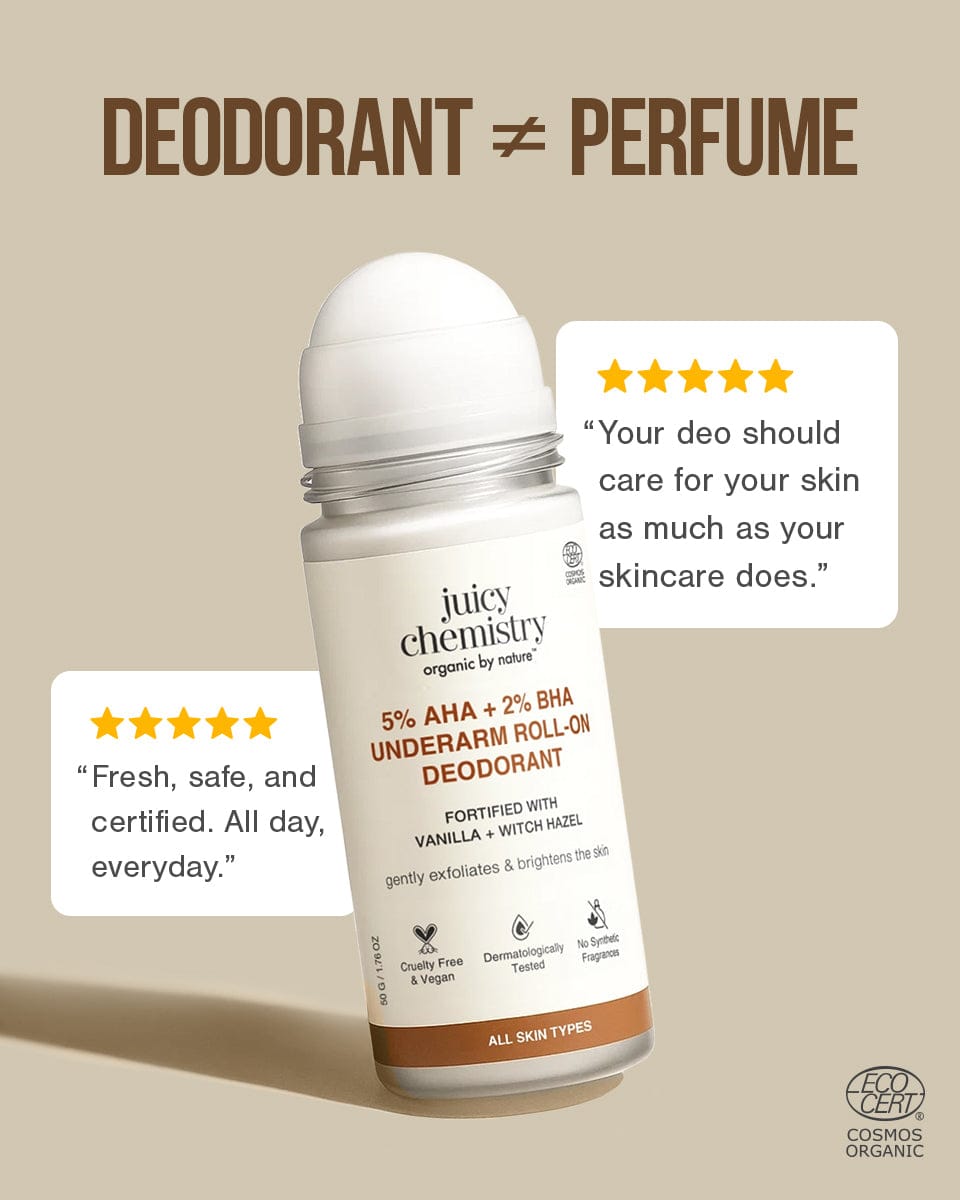
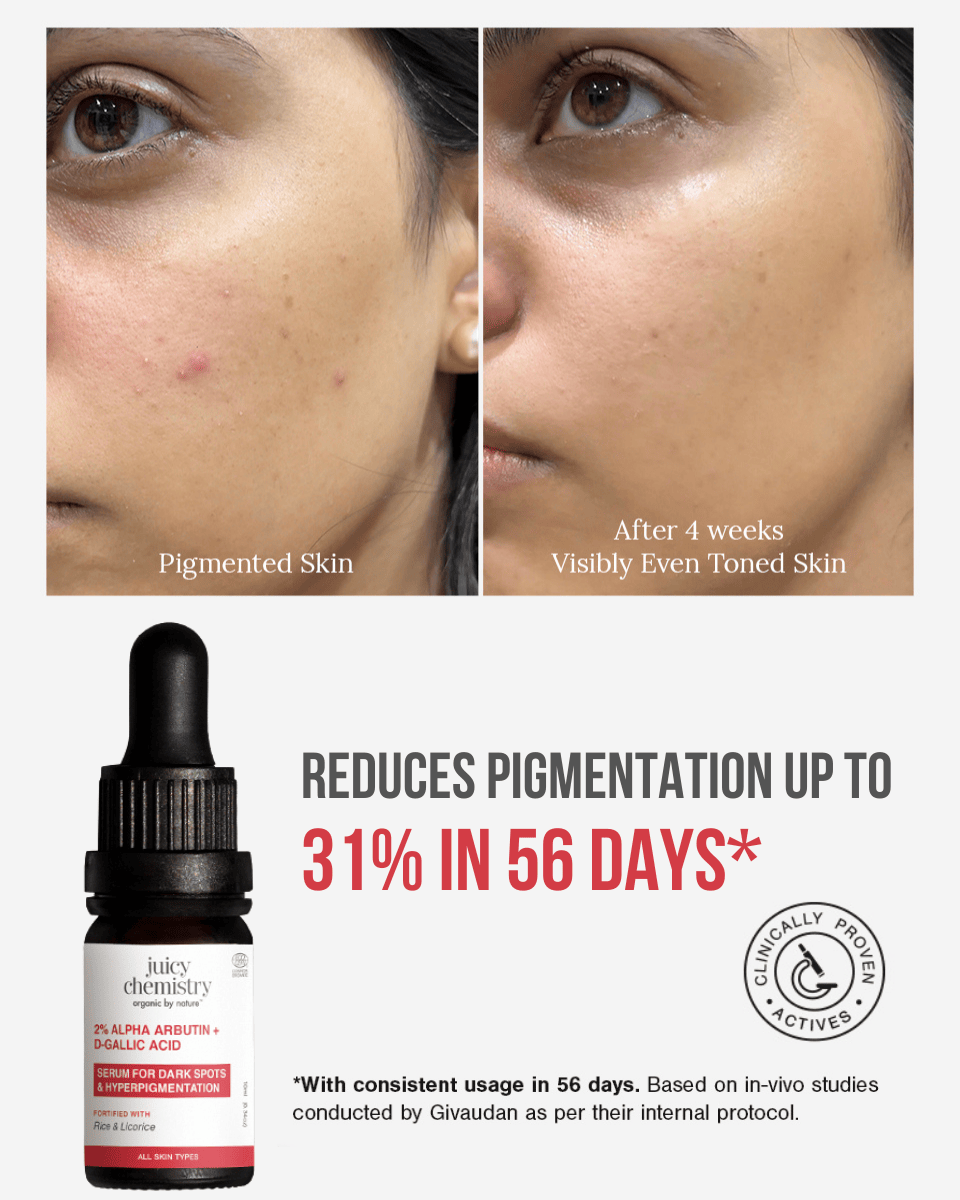
After cleansing and toning, apply your alpha arbutin serum. Juicy Chemistry's 2% Alpha Arbutin + D-Gallic Acid Serum is formulated with rice and licorice extracts alongside alpha arbutin, making it a well-rounded option for targeting dark spots and post-acne marks. Follow with your moisturiser and a broad-spectrum sunscreen. Sunscreen is non-negotiable when using any brightening active.
After cleansing, apply your lactic acid serum on dry skin. The 5% Lactic Acid + 3% Flower Acids Serum from Juicy Chemistry pairs lactic acid with hibiscus-derived flower acids, sodium hyaluronate, and centella asiatica. The flower acids support cell renewal while cica calms any potential sensitivity. Follow with a nourishing moisturiser.
Splitting the two actives between AM and PM is the safest approach to layering skincare actives. You get the full benefit of both without asking your skin to process everything at once.
If you are brand new to actives, start with just one. Use the alpha arbutin serum for a week or two, and then slowly introduce the lactic acid serum on alternate evenings. A beginner-friendly pigmentation routine can help you build confidence without overdoing things.
If your skin concern is pigmentation paired with dullness or rough texture, using alpha arbutin and lactic acid together makes a lot of sense. The combination is particularly well-suited for a few scenarios.
Post-acne marks that linger, especially on Indian skin tones where hyperpigmentation tends to be more persistent. Uneven texture that comes with dull, congested skin, where exfoliation helps surface-level concerns and alpha arbutin works on the melanin beneath. And seasonal transitions, like moving from winter to spring, when your skin could use a gentle nudge toward brighter, fresher tone without harsh treatments.
Both actives work well for most skin types, including sensitive skin, as long as concentrations stay gentle and the rest of the routine is kept simple.
Do not layer lactic acid with other exfoliating acids in the same routine. Using lactic acid alongside glycolic acid or retinol in one sitting can compromise your skin barrier. Keep the exfoliation limited to one product per routine.
Always wear sunscreen when using either of these actives. Alpha arbutin supports melanin regulation, and lactic acid increases cell turnover, both of which make sun protection essential.
Patch test before introducing any new active. Apply a small amount behind the ear or on the inner wrist, wait 24 hours, and watch for redness or irritation.
And finally, be patient. Pigmentation takes time to fade. Most people notice visible improvement in skin clarity and texture within six to eight weeks of consistent use. Small, steady steps are always better than rushing.

Q: Can I apply alpha arbutin and lactic acid at the same time?
A: You can, but splitting them between morning and evening is gentler on the skin. Use alpha arbutin in the AM and lactic acid in the PM for the best balance.
Q: Is alpha arbutin safe for sensitive skin?
A: Yes. Alpha arbutin is one of the gentler brightening actives available. At concentrations up to 2%, most skin types tolerate it well without irritation.
Q: How long before I see results from using both actives?
A: With consistent use, most people start noticing smoother texture and more even tone within six to eight weeks. Deeper pigmentation may take longer.
Q: Do I need sunscreen if I use alpha arbutin and lactic acid?
A: Absolutely. Lactic acid increases cell turnover, and alpha arbutin works on melanin regulation. Without sunscreen, new pigmentation can form just as fast as old spots fade.


Shop Now