Monsoon Skincare Mistakes: 7 Things Making Your Skin Worse in the Rains
Liquid error (sections/article-template line 266): The format option 'month_day_year' is not a supported format.
Juicy Chemistry


Dark spots and uneven skin tone are probably the most common skin concerns in India. Sun exposure, post-acne marks, hormonal changes, or simply years of not wearing sunscreen all leave their traces. And while there is no shortage of brightening actives out there, not all of them are gentle enough for everyday use. Some can irritate, some can sensitise, and some work so aggressively that the skin ends up worse than before. That is where alpha arbutin steps in.
If you have been curious about alpha arbutin and how to use it, what concentration is safe, or whether it suits Indian skin tones, you are in the right place. Think of this as your no-fuss alpha arbutin beginner guide, with practical steps you can follow starting today.

Alpha arbutin is a naturally derived skin-brightening ingredient that works by inhibiting tyrosinase, the enzyme responsible for melanin production. In simple terms, it slows down the process that creates excess pigment in your skin. Over time, that helps dark spots fade and your overall complexion look more even.
What makes alpha arbutin for pigmentation stand out is its gentleness. Unlike some harsher brightening agents, alpha arbutin does not strip, sensitise, or irritate the skin. It works gradually, regulating melanin production rather than forcing the skin to change overnight. That steady, gentle approach is exactly what makes it a smarter option for treating pigmentation without damaging the skin barrier.
Yes. Alpha arbutin for Indian skin is widely considered one of the safest brightening actives available. Indian skin tones, which naturally produce more melanin, are often more prone to post-inflammatory hyperpigmentation. That means any ingredient used for pigmentation needs to be effective without triggering further darkening or irritation.
Alpha arbutin fits that brief well. A safe concentration of alpha arbutin typically ranges between 1% and 2% in most formulations. At 2%, the active works effectively on dark spots, acne marks, and uneven patches without overwhelming the skin. And because of its gentle profile, it suits sensitive skin types too.
If you are new to brightening actives, alpha arbutin is one of the best starting points. It is well-tolerated, non-photosensitising, and plays nicely with other ingredients in your routine.
If you are wondering how to introduce alpha arbutin without overcomplicating your regimen, here is the simplest way to go about it.
Start by using your alpha arbutin serum once a day. Most people prefer the morning, but evening works just as well. Apply a few drops onto clean, slightly damp skin after cleansing and toning. Let the serum absorb for a minute, then follow with your moisturiser and sunscreen.
For the first week, use the serum every other day. Once your skin feels comfortable, you can move to daily use. There is no need to jump into twice-a-day application right away. Slow and steady works best with any new active, and alpha arbutin is gentle enough to build into your routine without stress.
One of the most common questions is whether to apply alpha arbutin morning or night. The good news is that alpha arbutin works well at both times. Unlike retinoids or strong acids, alpha-arbutin is not photosensitising. That means morning application is perfectly fine.
In the morning, applying alpha arbutin under sunscreen gives your skin a double layer of pigmentation support. The serum works to regulate melanin while your sunscreen shields the skin from UV-triggered darkening.
At night, alpha arbutin pairs beautifully with hydrating ingredients like hyaluronic acid or aloe vera. The skin's natural repair cycle during sleep means actives get an undisturbed window to do their work.
If your pigmentation is a priority concern, using alpha arbutin both morning and night is an option. But even once daily delivers solid results when paired with consistency and sun protection.
A well-built alpha arbutin serum routine does not need to be complicated. Here is a simple framework that works for most skin types.
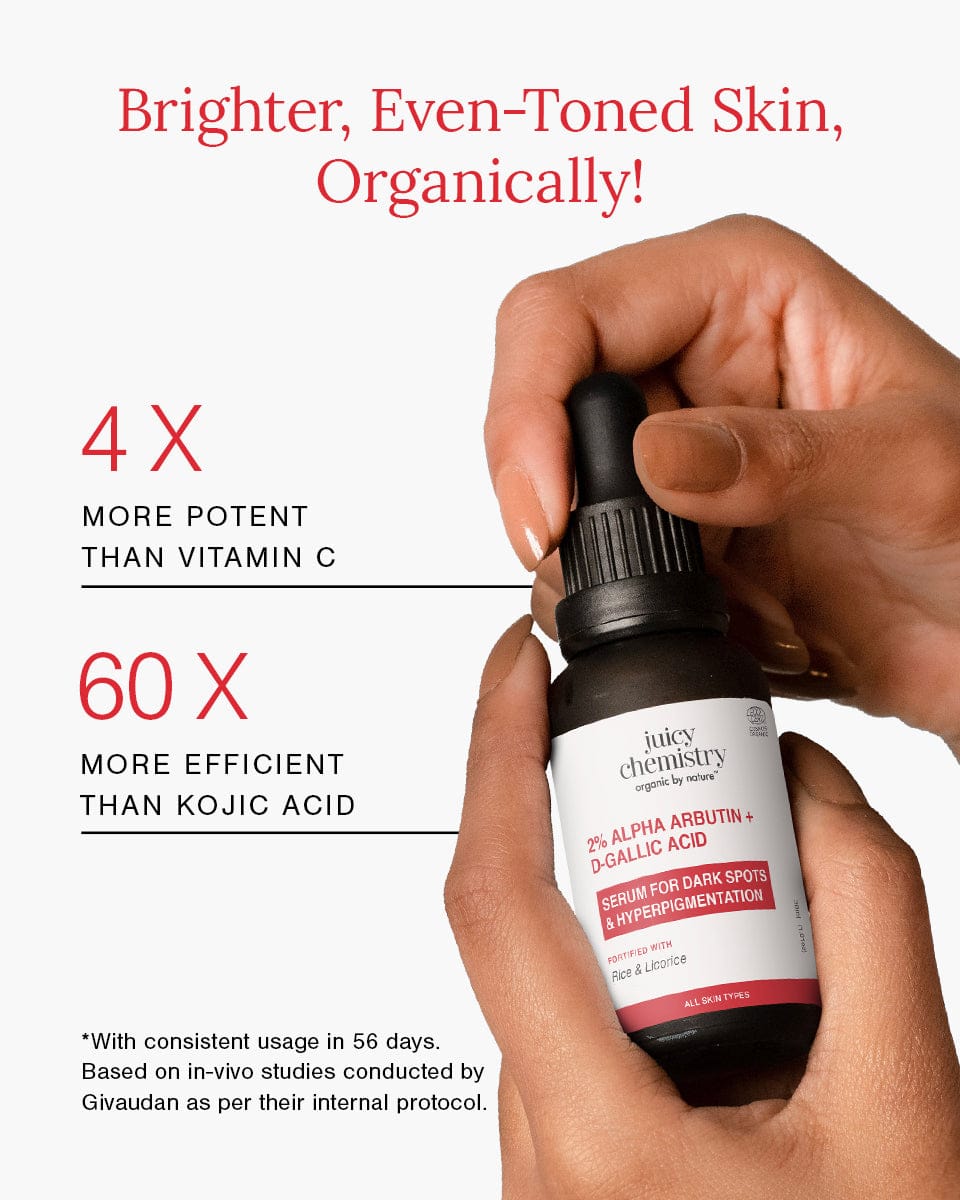
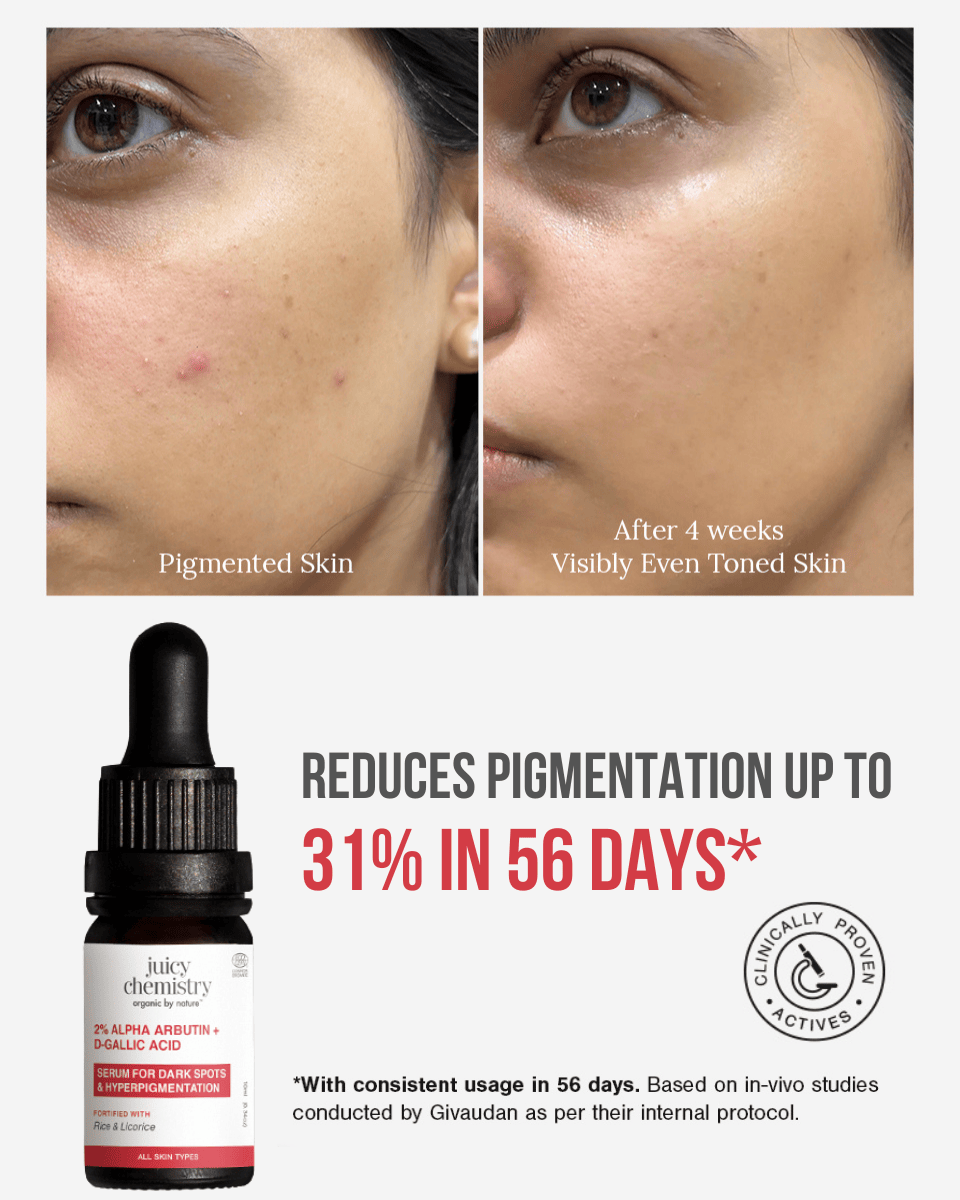
The 2% Alpha Arbutin + D-Gallic Acid Serum from Juicy Chemistry is a good example of a well-formulated option. The 2% alpha arbutin safe concentration works alongside D-gallic acid, a plant-derived antioxidant that helps reduce oxidative stress and prevent further darkening. The base includes organic aloe vera extract, panthenol, licorice root, green tea, rice extract, and saffron. COSMOS is organic-certified by Ecocert Greenlife and 98.97% natural origin.
For those who also want to understand how alpha arbutin compares with Vitamin C for pigmentation, both work well but through different mechanisms. Alpha arbutin inhibits melanin production, while vitamin C tackles free radicals and brightens. Some routines include both.
Patience is non-negotiable with any pigmentation treatment, and alpha arbutin is no exception. The alpha arbutin results timeline depends on the depth and age of the pigmentation.
For fresh post-acne marks or surface-level discolouration, many people notice improvement within four to six weeks of consistent daily use. Deeper pigmentation, like melasma or long-standing sun damage marks, can take eight to twelve weeks or longer.
The key word here is consistent. Using alpha arbutin for dark spots once a week and expecting results in a fortnight is not realistic. Daily application, a good sunscreen, and patience are the three pillars. And when results do start showing, they tend to be lasting, because alpha arbutin works on the root cause of pigmentation rather than just the surface.
No brightening ingredient, no matter how effective, can do its job properly without sun protection. Using alpha arbutin with sunscreen is not optional. UV exposure is the single biggest trigger for melanin overproduction. Without sunscreen, every bit of progress your serum makes during the day can be undone with a few hours of unprotected sun exposure.
A broad-spectrum mineral sunscreen with SPF 30 or higher is ideal. Apply generously and reapply every two to three hours if you are outdoors. Your alpha arbutin serum works to reduce pigment from within, while your sunscreen stops new pigment from forming. Together, they create a complete approach to managing pigmentation. Skipping sunscreen while using a brightening active is like mopping the floor with the tap still running.

Q: Can I use alpha arbutin every day?
A: Yes. Alpha arbutin is gentle and well-tolerated for daily use. Start with once a day and build up to twice daily if your skin feels comfortable with it.
Q: Does alpha arbutin work on acne scars?
A: Alpha arbutin for dark spots, including post-acne marks, can help fade the discolouration over time. For textured or indented scars, you may need additional treatments alongside it.
Q: Can I mix alpha arbutin with Vitamin C?
A: Yes. Both ingredients work through different pathways. Using alpha arbutin with Vitamin C can offer complementary brightening support, though each has a different strength.
Q: Is 2% alpha arbutin too strong for beginners?
A: A 2% concentration is widely considered safe and effective for most skin types. Start every other day and move to daily use once your skin adjusts. A patch test is always a good first step.
www.google.com


Shop Now