Monsoon Skincare Mistakes: 7 Things Making Your Skin Worse in the Rains
Liquid error (sections/article-template line 266): The format option 'month_day_year' is not a supported format.
Juicy Chemistry

You have probably picked up an aloe vera gel at some point, flipped it over, and assumed the bright green stuff inside was as natural as the label promised. Most of us have. But here is the truth. A huge number of aloe vera gels on the market contain more water, thickeners, and synthetic additives than actual aloe. The word "pure" gets used very loosely, and unless you know what to look for, it is easy to end up with a product that barely delivers.
So how do you tell the real thing from a dressed-up version? Let us walk through what actually matters when choosing a pure aloe vera gel.
Here is where it gets tricky. Some products say "100% gel" on the front, which sounds great until you realise it means the product is entirely in gel form. Not that the gel is 100% aloe vera. There is a big difference.
Other labels use phrases like "aloe extract" or "aloe essence," which often means the aloe has been diluted heavily. The real thing you want to see on the ingredient list is Aloe Barbadensis Leaf Juice as the very first ingredient. Ingredients are always listed in order of concentration. If water or alcohol sits at the top and aloe is somewhere near the bottom, you are essentially paying for flavoured water.
A genuinely pure aloe vera gel will have a short ingredient list, typically just the aloe base and a couple of natural stabilisers. Anything longer than five or six ingredients should make you pause.
The simplest way to judge an aloe vera gel is to flip the bottle and count the ingredients. A clean formulation needs very few things to work well.
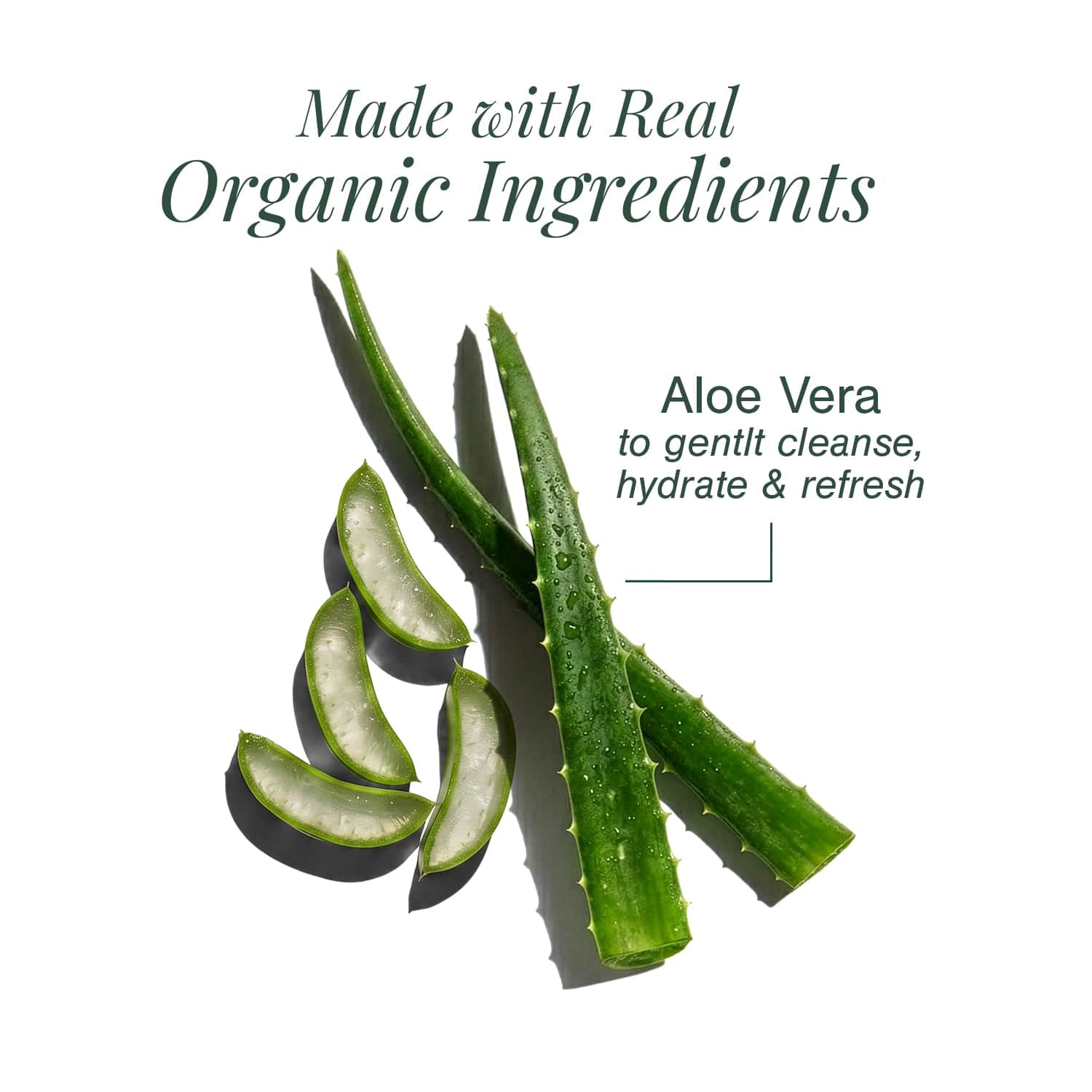
At its core, a good aloe vera gel contains Aloe Barbadensis Leaf Juice as the primary ingredient, a natural thickener like xanthan gum to give it a gel-like texture, and a mild pH adjuster like citric acid. That is pretty much all you need. Aloe vera, as reviewed in the Indian Journal of Dermatology, is naturally rich in polysaccharides, vitamins, enzymes, and amino acids. When the formulation stays minimal, those naturally occurring compounds remain intact and can actually benefit your skin.
The moment a product starts adding carbomers, silicones, synthetic fragrances, or preservatives like parabens, you lose a lot of what makes aloe vera worth using in the first place. More ingredients does not mean more effective. With aloe, less truly is more.
Not every green gel on the shelf deserves a spot in your routine. Here are the things to watch for.
Real aloe vera gel is naturally clear to slightly cloudy, sometimes with a faint golden tint. If your gel looks neon green, that colour comes from artificial dyes, not the plant.
Fresh aloe has a very mild, slightly earthy scent. If the gel smells like a perfume counter, synthetic fragrance oils have been added, and those are a common irritant for sensitive skin.
Some brands add alcohol to create a quick-drying, cooling sensation. But alcohol dries the skin out, which defeats the purpose of a hydrating gel.
If aqua sits at the top and aloe appears much further down, the product is mostly water with a small amount of aloe mixed in.
Terms like "natural" or "plant-based" are not regulated. Without third-party certification, the claim does not hold much weight.
Not many people talk about the age of the aloe vera plant, but it genuinely affects the quality of the gel.
Younger plants, harvested at one or two years, contain lower concentrations of polysaccharides, which are the key active compounds behind aloe's hydrating and soothing properties. Plants that mature for three or more years accumulate significantly higher levels of polysaccharides, vitamins, and minerals. The result is a more potent gel.
Then there is the extraction method. Cold-pressing preserves the plant's active compounds without heat degradation. Heat-based processing can break down enzymes and vitamins, leaving you with a gel that looks the same but performs differently. If a product mentions cold-pressed extraction, that is a positive sign.
"Organic" is another word that gets thrown around a lot without always meaning what you assume. In India and globally, the most reliable way to verify an organic claim is through a third-party certification like ECOCERT COSMOS.
A COSMOS Organic certification means the product has been audited at every stage. The farming practices, the ingredient sourcing, the formulation process, and even the packaging are all scrutinised. When a product carries that certification, you know the organic claim is backed by evidence, not just marketing.
If you are looking for a pure, certified organic aloe vera gel with a clean ingredient list, the Pure and Certified Organic Gel Fortified with Aloe Vera from Juicy Chemistry is worth a look. The formulation has just three ingredients: Aloe Barbadensis leaf juice, xanthan gum, and citric acid. The aloe comes from 3+ year old plants, is cold-pressed to retain its polysaccharide content (800+ ppm), and is COSMOS organic certified by ECOCERT Greenlife. At 98.34% organic content, the label matches the promise.
Once you have the right gel, you can do a lot with a single product. Pure aloe vera gel is one of the most versatile additions to your skincare and haircare lineup.
As a lightweight moisturiser, it works beautifully for oily and acne-prone skin that needs hydration without heaviness. As a soothing after-sun treatment during the warmer months, it calms redness and helps the skin recover. You can also layer it under your regular moisturiser as a hydration booster, or apply a generous amount to your scalp and hair lengths for a conditioning mask.
Wondering whether aloe vera gel or aloe vera juice is the better pick for your needs? The gel works best for topical, on-skin use, while the juice is typically consumed as a supplement. For skincare and haircare, gel is the way to go.
And for anyone who shaves regularly, pure aloe vera gel doubles up as a gentle, soothing post-shave treatment that helps calm razor burn and irritation without clogging pores.
As summer approaches, swapping out heavier creams for a pure aloe vera gel as your go-to hydrator is one of the simplest upgrades you can make.
Check the ingredient list. Aloe Barbadensis Leaf Juice should be the first ingredient, and the overall list should be short. Avoid products with artificial colour, fragrance, or alcohol listed near the top.
Yes. Pure aloe vera gel is naturally clear to slightly cloudy or pale golden. A bright green colour usually means artificial dyes have been added, which adds no benefit to your skin.
A certified organic gel ensures the aloe was grown without synthetic pesticides and processed without harsh chemicals. Look for a third-party certification like ECOCERT COSMOS rather than relying on the word "organic" alone.
Pure aloe vera gel is lightweight and non-comedogenic, making it suitable for daily use on most skin types. Apply it as a moisturiser or hydration layer, and follow with sunscreen during the day.


Shop Now