Aloe Vera Gel Vs Aloe Vera Juice; What should you pick?
December 09, 2022Aloe vera juice stands out as one of the most adaptable components in both skincare and haircare. This refreshing and highly hydrating ingredient can be utilized in countless ways and offers a variety of advantages. Therefore, it’s not reasonable to limit it to just one form, is it?
Consequently, we made the decision to offer aloe vera in both liquid and gel forms for skincare and haircare. This article will assist you in selecting the ideal aloe vera product from Juicy Chemistry that suits your requirements.
Aloe Vera Gel
A container of pure aloe vera gel is an essential item in any skincare collection that everyone should possess. While not all aloe vera gels available on the market are created equally, the finest aloe vera gel will contain over 95% aloe vera juice and will be devoid of any unnecessary additives.
JC’s pure aloe vera gel is formulated with 98.4% aloe vera juice, 1% xanthan gum (a natural thickening agent), and safe Ecocert-approved preservatives to ensure a stable shelf life, making it the top aloe vera gel in India.
It serves effectively as a moisturizer, a remedy for sunburn, or even as a targeted treatment to alleviate pimples, burns, and other minor skin injuries.
How To Apply Aloe Vera Gel On Face:
- Begin by cleansing your skin with one of our gentle organic cleansers. Then, take the desired amount of aloe gel and apply it generously across your face and body as a moisturizer.
- If you have dry skin, follow up with a facial oil to seal in that moisture.
- You can incorporate some aloe vera gel into your homemade face masks for added hydration.
How To Use Aloe Vera Gel For Hair:
Step 1: Apply a generous amount to your scalp and ensure to coat your hair strands with the gel.
Step 2: Allow it to sit for at least an hour. This can be done 2-3 times a week.
Step 3: Gently cleanse with your preferred JC shampoo and rinse thoroughly.
Aloe Vera Juice Toner
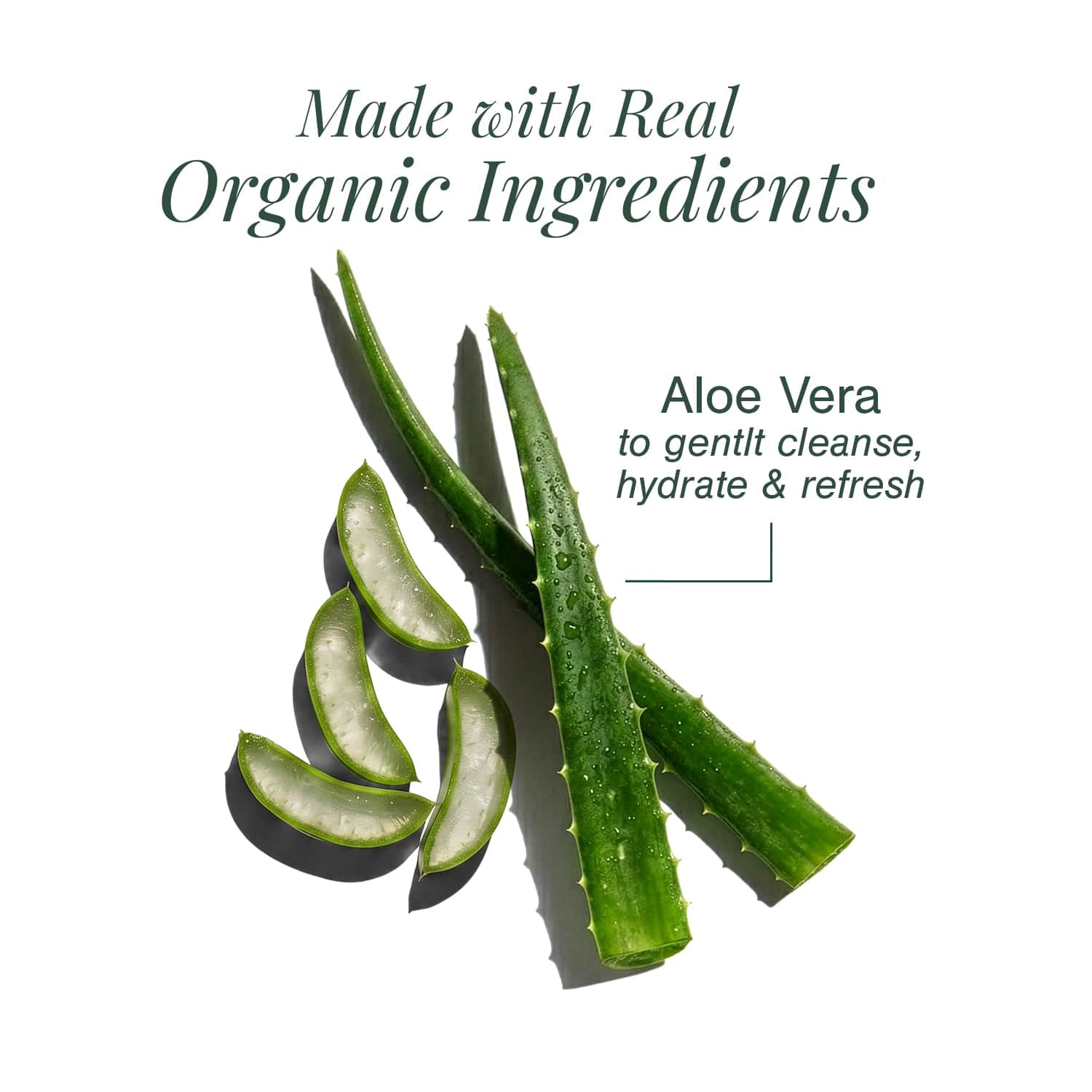
Aloe vera juice serves as an excellent hydrating toner for your skin. It possesses the same properties and composition as aloe vera, but without any thickener added. Thus, it is in a liquid form that is more convenient for use as a toner or in DIY projects for an extra boost of hydration.
How To Use Aloe Vera Juice For Skin
- Wash your face with a cleanser and gently pat it dry.
- Close your eyes and hold the bottle a few inches away from your face.
- Lightly spray it all over your face and neck.
- Allow it to partially absorb, then follow up with a serum and moisturizer.
- Reapply throughout the day to keep your skin hydrated.
How To Use Aloe Vera Juice For Hair
- Divide your hair into sections and spray some of the juice all over your scalp to provide relief.
- Massage it for a few seconds and let it sit for a few minutes or overnight as an aloe vera hair mask.
- Alternatively, pour some juice into a bowl and mix it with a cold-pressed carrier oil. Use this mixture as a pre-shampoo hair mask for a dry, itchy scalp.
- Rinse with shampoo and follow up with a conditioner.
Aloe Vera Juice Vs Aloe Vera Gel: Which Should You Choose?
Depending on your specific aloe vera needs, you can select either product. Our natural and certified organic aloe vera gel is an excellent choice if you primarily intend to use it as a moisturizer for your face or body.
However, if you already have a moisturizer and still wish to take advantage of the benefits of aloe vera for your face and hair, you might opt for the aloe vera juice toner and layer it beneath your moisturizer or serum.
You may also find the aloe vera juice toner to be more convenient for application on the scalp and hair due to its liquid consistency, which spreads more easily than the gel.
Both products are certified organic by Ecocert France in accordance with Cosmos V3 standards. Discover our complete Aloe Vera range here.
FAQs
Can aloe vera be used daily?
Absolutely, aloe vera is very gentle and can be used every day for both skincare and haircare.
Why does aloe vera make my skin feel dry?
If aloe vera gel causes your skin to feel dry, consider layering a cold-pressed oil like almond or argan on top to lock in moisture.
Are the preservatives and thickeners safe?
Yes, we utilize only natural, Ecocert-approved preservatives for a stable shelf life and natural xanthan gum as a thickener.
Is aloe vera a non-comedogenic moisturizer?
Yes, aloe vera consists of 96% water, making it an acne-friendly ingredient.
- 100% pure shea butter
- Acne-Prone Skin
- Aloe Vera
- Amla
- Babycare
- beauty
- Benefits
- body care
- bodycare
- boon
- brightening
- Carrier Oils
- Cellular Extraction
- clearskin
- Combination skin
- d tan pack
- de-tan face pack
- DIY
- dry skin
- Essential Oil
- evenskintone
- Exfoliating skin
- Eye
- face care
- face tan
- glowingskin
- healthyskin
- home remedies for pigmentation
- how to get rid of underarm pigmentation
- How to remove tan
- how to remove tan from face
- how to remove tan from hands
- how to use shea butter
- howtogetclearskin
- Juicy Active
- Juicy chemistry
- Juicy Chemistry Blogs
- legs
- lip care
- mature skin
- Normal skin
- oil
- Oily skin
- Olive
- organic shea butter
- pigmentation remedies
- radiant skin
- remove tan from face
- Science
- scrubs
- Sensitive skin
- serums
- shea butter
- shea butter benefits
- shea butter for hair
- shea butter for skin
- Skin
- Skin care
- skin pigmentation
- skin tone
- skin type
- Skincare
- smooth skin
- sun tanning
- tan removal home remedies
- tanning
- Toner
- underarm
- underarms
- unevenskintone
- Vitamin C
- Vitamin E
- what is pigmentation
- winter skin
Translation missing: en.blog.comments.form_title
An Essential Guide to Essential Oils
Understanding Organic Skincare and its Certifications
The Secret to Healthy Hair and a Healthy Scalp!
Everything You Need to Know About Skin Purging
Busting Some Facial Oil Myths!
A Guide to Face Oils
How Rosemary Oil Helps Treat Flaky Scalp & Irritation
Kajal Pencil Guide | Learn How To Apply Kajal Pencil
Rosehip Oil Benefits For Sensitive Skin
Best Organic Face Washes for Indian Skin
Complete Guide to Skin Brightening and Dark Spot Removal with 2% Alpha Arbutin Serum
Behind the Bottle: The Sustainable Journey of Juicy Chemistry’s Rose Water
What Ingredients Make Juicy Chemistry’s Toner Unique?
Flower Waters
Preservatives
Switching to Natural Deodorants: What You Need to Know Before You Make the Change
Men's Summer Skincare: A No-Nonsense Routine for Indian Heat
How to Use Saffron and Sandalwood for Glowing Skin: An Ayurvedic Summer Guide
How to Use Rose Water for Face: 8 Methods Beyond Just a Toner
Dusting Powder for Chafing and Sweat: Where to Apply and How It Works
Argan Oil for Dry Skin in Summer: How AC and Sun Create a Dehydration Cycle
Baby Massage Oil Guide: Almond, Jojoba, or Coconut — Which Is Safest?
AC Skin: How Air Conditioning Is Drying Out Your Skin and How to Fix It
What Is Dusting Powder and Why You Need It This Summer (Especially During the Heat Wave)
Why Your Skin Breaks Out More in a Heat Wave (and How to Stop It)
Summer Body Scrubs: The Secret to Glowing, Smooth Skin in 2026
Niacinamide for Skin: The Ultimate Serum for Acne-Prone, Oily & Combination Skin
Caffeine for Undereyes: The Best Eye Serum for Dark Circles, Puffiness & Tired Eyes
Everything You Should Know about Organic Deodorants
Neem Oil in Summer: How It Protects Skin and Scalp from Heat and Humidity
Face Mist in Summer: Why You Need One and How to Use It Right
What Is a Carrier Oil? Types, Uses, and How to Choose the Right One
How to Exfoliate Your Face in Summer Without Over-Scrubbing
Sunscreen Mistakes That Undo Your Skin Protection: What You're Doing Wrong
How to Apply Face Serum: Morning vs Night Routine and Application Tips
Peppermint Oil Uses in Summer: Cooling Benefits for Skin, Hair, and Mind
The Complete Guide to Organic Face Serums: Types, Benefits, and How to Layer
Bath Salt Benefits for Skin and Body Himalayan, Epsom And Dead Sea Salts - What's the Difference?
How to Build a Minimalist Organic Skincare Routine for Indian Summers
Rose Water in Your Skincare Routine: 7 Ways You're Probably Not Using It
SPF Decoded: How to Pick and Apply Sunscreen the Right Way in 2026
Skin Barrier 101: What It Is, Why It Matters, and How to Repair It Naturally
Whiteheads vs Blackheads: What Causes Them and How to Clear Them Naturally
Cold-Processed Soap vs Commercial Soap: Why the Way Soap Is Made Changes What It Does to Your Skin
Dark Circles Under The Eyes: Causes, Home Remedies, and What Actually Works
Women's Day Special: A Self-Care Ritual Every Woman Deserves in 2026
How to Treat Chapped Lips Effectively