Monsoon Skincare Mistakes: 7 Things Making Your Skin Worse in the Rains
Liquid error (sections/article-template line 266): The format option 'month_day_year' is not a supported format.
Juicy Chemistry

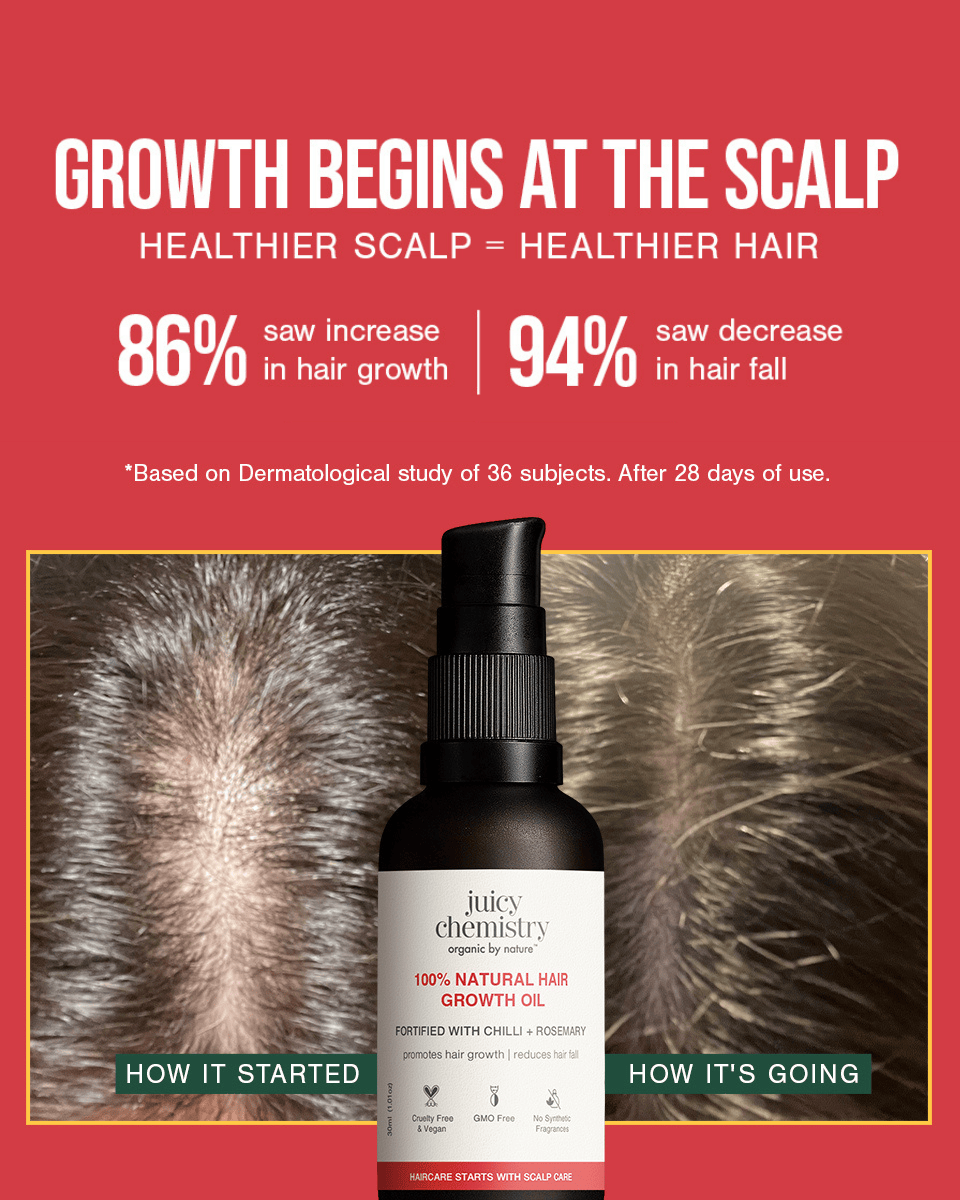
Everyone talks about rosemary oil and castor oil for hair. And fair enough, both are wonderful. But there is one oil that quietly sits in the background with actual clinical research to back its hair benefits, and most people scroll right past it. We are talking about pumpkin seed oil for hair.
If you have noticed more strands on your pillow, a wider parting, or just hair that does not feel as full as it used to, pumpkin seed oil might be worth a closer look. Not because of a trend, but because of what the science actually says.

Let us get straight to the point. Is pumpkin seed oil good for hair? The short answer is yes, and the longer answer involves some genuinely interesting research.
Pumpkin seed oil (from Cucurbita pepo) is naturally rich in linoleic acid, zinc, phytosterols, and Vitamin E. Each of these plays a role in keeping the scalp balanced and the hair nourished. But what sets pumpkin seed oil apart from other carrier oils is the research around its relationship with DHT, a hormone closely linked to hair thinning.
According to the Cleveland Clinic, pumpkin seed oil is antioxidant, anti-inflammatory, and may help lower excess dihydrotestosterone (DHT) that can contribute to hair loss. A dermatologist quoted in the same article placed pumpkin seed oil supplements at a "level two" effectiveness rating, which is a relatively high ranking in the world of hair growth aids.
So no, not overhyped. Just underrated.
One of the most referenced studies on pumpkin seed oil hair growth is a randomised, double-blind, placebo-controlled trial published in Evidence-Based Complementary and Alternative Medicine. The study looked at men with androgenetic alopecia and found that pumpkin seed oil may help block the action of 5-alpha reductase, the enzyme that converts testosterone into DHT.
A separate study published in Avicenna Journal of Phytomedicine looked at topical application of pumpkin seed oil and observed beneficial effects on hair growth in a preclinical model.
Are these studies conclusive proof? No. More research is needed. But the existing pumpkin seed oil hair science is promising, and that is more than most trending hair oils can claim.
So why does pumpkin seed oil keep coming up in the hair thinning conversation? The answer lies in its phytosterol content.
Pumpkin seed oil is a natural source of beta-sitosterol and other phytosterols. These plant compounds may help inhibit 5-alpha reductase activity, the same enzyme that pharmaceutical DHT blockers target. When excess DHT accumulates around hair follicles, it can shrink them over time, leading to thinner, weaker hair and eventually noticeable thinning.
The idea behind pumpkin seed oil as a DHT blocker is not about eliminating DHT entirely. Your body needs some. The goal is to help manage excess levels that may be contributing to hair fall. And because pumpkin seed oil approaches it through a naturally occurring, plant-based mechanism, it appeals to people who prefer gentler alternatives.
If you are someone dealing with pumpkin seed oil for thinning concerns, pairing a topical oil with a good scalp-care routine is a sensible approach. And if you are unsure where to start with choosing the right hair growth oil for your hair type, that is a great place to begin.
Pumpkin seed oil benefits hair in ways that go beyond the DHT conversation. Here are a few that matter for everyday hair health.
The zinc and phytosterols in pumpkin seed oil help maintain a healthier-feeling pumpkin seed oil scalp environment. A balanced scalp means your follicles have a better foundation to work from.
One of the nicest things about pumpkin seed oil is its medium-light texture. Unlike heavier oils, it absorbs well without weighing hair down or leaving a greasy residue. The linoleic-rich profile supports moisture without suffocating the hair or scalp.
Vitamin E in pumpkin seed oil helps protect against environmental stressors like pollution and UV exposure, both of which can contribute to dull, dry-looking hair over time.
Regular use can help reduce dryness and improve manageability, making hair feel smoother and more cooperative on wash days and beyond.
For anyone who wants to see how pumpkin seed oil fits into Juicy Chemistry's ingredient philosophy, the brand sources organic Cucurbita Pepo seed oil that is cold-pressed and hexane-free, retaining its full fatty acid and micronutrient profile.
One of the best things about pumpkin seed oil is how easy it is to work into your routine. You do not need a ten-step process.
Take a few drops of organic cold-pressed pumpkin seed oil and warm it between your palms. Massage gently into your scalp in small circular motions. Leave it on for 30 minutes to an hour before shampooing. Once or twice a week works well.
If you already oil your hair before a wash, add a few drops of pumpkin seed oil to your usual blend. It mixes well with lighter oils like jojoba or argan.
On days when your ends feel dry, a tiny amount smoothed over damp ends can help with manageability and frizz.
If you like the ritual of a weekly hair mask, here is a gentle one you can try.
Mix two tablespoons of pumpkin seed oil with one tablespoon of yoghurt and a teaspoon of honey. Apply section by section, focusing on the scalp and mid-lengths. Leave it on for 20 to 30 minutes, then wash out with a gentle shampoo. The yoghurt adds protein, the honey adds moisture, and the pumpkin seed oil brings its fatty acid and phytosterol profile to the table.
A pumpkin seed oil hair mask like this works well as a weekend self-care step, especially during seasonal transitions when hair tends to feel drier.
Pumpkin oil for hair fall is not an overnight fix. Like most natural approaches, consistency is what delivers results. Give a new oil at least six to eight weeks of regular use before judging whether it is working for you.
Always do a patch test before applying any new oil to your scalp. And if you are experiencing sudden or severe hair loss, consult a dermatologist to rule out underlying causes.
One more thing. Quality matters. Cold-pressed, organic, hexane-free oils retain far more beneficial fatty acids and micronutrients than refined versions. The processing method directly affects what your scalp actually receives.

Q: Can pumpkin seed oil regrow hair?
A: Research suggests pumpkin seed oil may support the hair growth cycle by helping manage excess DHT. Results vary, and consistent use over several weeks is key.
Q: How often should I use pumpkin seed oil on my hair?
A: Once or twice a week as a pre-wash scalp massage is a good starting point. You can also add a few drops to your regular oiling routine.
Q: Does pumpkin seed oil work for all hair types?
A: Yes, pumpkin seed oil has a medium-light texture that suits most hair types. It absorbs well and does not leave heavy residue, making it comfortable even for fine or oily hair.
Q: Can I use pumpkin seed oil on my face too?
A: Absolutely. Pumpkin seed oil's linoleic-rich profile and vitamin E content make it suitable for skin as well. You can add a few drops to your face moisturiser or use it in a homemade face pack.


Shop Now