Monsoon Skincare Mistakes: 7 Things Making Your Skin Worse in the Rains
Liquid error (sections/article-template line 266): The format option 'month_day_year' is not a supported format.
Juicy Chemistry



You have probably reached for rose water at some point. Maybe as a quick spritz on a hot afternoon or mixed into a face pack on a lazy Sunday. But here is the real question. Can rose water be used as toner in your actual skincare routine? Not just as a feel-good step, but as a proper replacement for your regular toner?
The short answer is yes, but only if the rose water you are using is the right kind. Let us break down what makes a natural toner rose water actually effective.

Not every bottle labelled "rose water" can do what a toner is supposed to do. Most of what you see in supermarkets is fragrance mixed into water. That smells lovely, but your skin cannot do much with it.
A true rose hydrosol, on the other hand, is steam-distilled from fresh rose petals. During that process, the water captures real plant compounds like geraniol, citronellol, flavonoids, and phenolic acids. A research paper published in the International Journal for Research Trends and Innovation notes that rose water maintains skin moisture, reduces irritation, and acts as a mild astringent without drying out the skin.
So when people talk about rose water toning properties, that is what they mean. A well-made hydrosol can cleanse residual impurities, calm the skin, and prep it for whatever comes next. And all of that is exactly what a toner is supposed to do.
Here is where we get honest. Rose water can replace toner, but only if the product is genuinely a pure hydrosol and not fragrance water.
A lot of conventional toners rely on alcohol or synthetic astringents to give that "tight" feeling after cleansing. That tightness is not always a good sign. Alcohol-based toners can strip the skin's acid mantle, which may lead to dryness, sensitivity, and even more oil production over time.
A pure rose water as a toner works differently. The absence of alcohol means your skin's barrier stays intact. The mild astringent quality comes from the plant compounds themselves, not from harsh additives. And the hydration is real, not just a temporary feeling that fades in minutes.
For everyday toning needs, a good hydrosol does the job gently and effectively. If your current toner has actives like AHA or BHA for exfoliation, rose water would not replace that function. But for the hydrating, pH-balancing, and soothing steps? A rose water daily toner holds up well.
If you have oily skin, you might think you need something strong to "control" oil. But that approach often backfires. Stripping your skin with harsh products can trigger even more sebum production.
A rose water toner for oily skin works because it balances without stripping. The mild astringent effect helps tighten the look of pores and manage surface oil, while the hydrating base ensures your skin does not feel parched underneath. If you have been dealing with that oily-yet-dehydrated combination, a rose water hydrating toner might be the shift your routine needs.
For anyone wanting more ways to use rose water for face care, the versatility goes well beyond toning alone.
Your skin's natural pH sits between 4.5 and 5.5, which is slightly acidic. Most cleansers, especially foaming ones, tend to be alkaline. After washing your face, your skin's pH can be temporarily disrupted.
That is where rose water pH for skin becomes relevant. A steam-distilled hydrosol is naturally mildly acidic, which helps bring your skin back to its comfortable range. When your skin's pH is balanced, the barrier works better, irritation stays down, and serums applied afterwards absorb more effectively.
Think of toning as the step that resets your skin before everything else.
Using a rose water daily toner is simple. Here is a straightforward approach:
If you want to go deeper into how rose water fits into a full skincare routine, there are quite a few ways to build it into your morning and evening steps.
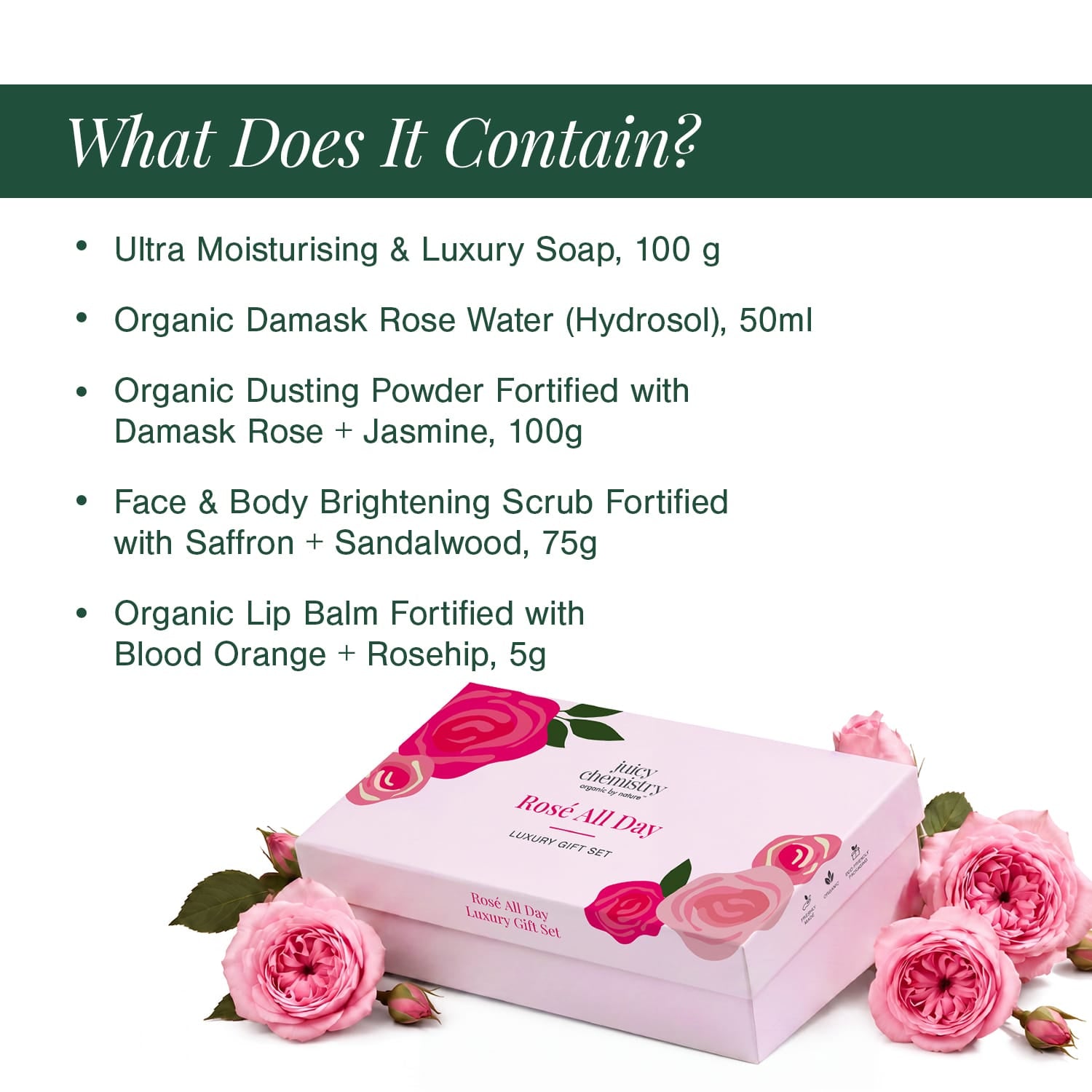
Juicy Chemistry's Organic Damask Rose Water Hydrosol is steam-distilled from Rosa Damascena petals and is COSMOS Organic certified by Ecocert Greenlife. The formulation contains 99.95% organic ingredients and is alcohol-free. In a clinical trial with 35 subjects conducted under dermatological supervision, the hydrosol improved skin brightness by 132% and promoted a more even skin tone by 18% in 28 days. You get genuine plant compounds in every spritz, not just fragrance.
And here is the part that really matters. The word "rose water" gets used loosely. Some products are water with rose-fragrance oil. Others are diluted extracts. Neither will give you the toning, hydrating, or pH-balancing benefits of a true steam-distilled hydrosol.
When you are choosing a pure rose water as a toner, look for a few things. The ingredient list should be short and transparent. If Rosa Damascena is the first (and ideally the only functional) ingredient, you are on the right track. A COSMOS or ECOCERT certification adds another layer of trust, confirming that the sourcing and production meet strict organic standards.
The difference between a rose water toner that actually works and one that just smells nice comes down to how it is made. Distillation captures what your skin can actually use. Adding fragrance to water does not.
Rose water is a wonderful everyday toner. But if your skin has specific concerns like active acne, heavy congestion, or significant hyperpigmentation, you may need targeted actives in addition to toning.
In those cases, rose water works beautifully as the hydrating, soothing base of your routine, while a separate serum handles the heavier work. There is also no rule that says you cannot use rose water alongside other toning products in a layered routine.
The goal is not to overcomplicate things. A simpler routine that works consistently will always outperform a ten-step plan.

Q: Can rose water be used as toner every day?
A: Yes, a pure rose hydrosol is gentle enough for twice-daily use, morning and evening. Just make sure the product is alcohol-free and steam-distilled for genuine skin benefits.
Q: Is rose water toner good for sensitive skin?
A: Rose water is one of the gentlest toning options available. The anti-inflammatory compounds like flavonoids and phenolic acids make it especially suitable for reactive and sensitive skin types.
Q: Does rose water toner help with acne?
A: Rose water can help soothe redness and mild irritation around breakouts. For active acne, pairing it with a targeted treatment that contains BHA or niacinamide will give better results.
Q: How do I know if my rose water is a real hydrosol?
A: Check the ingredient list. A genuine hydrosol will list Rosa Damascena Flower Water as the primary ingredient. If the label mentions "fragrance" or "perfume," the product is likely not a true distillate.


Shop Now