Why Sourcing Matters: Unlocking the True Potential of Your Ingredients
Liquid error (sections/article-template line 266): The format option 'month_day_year' is not a supported format.
Juicy Chemistry

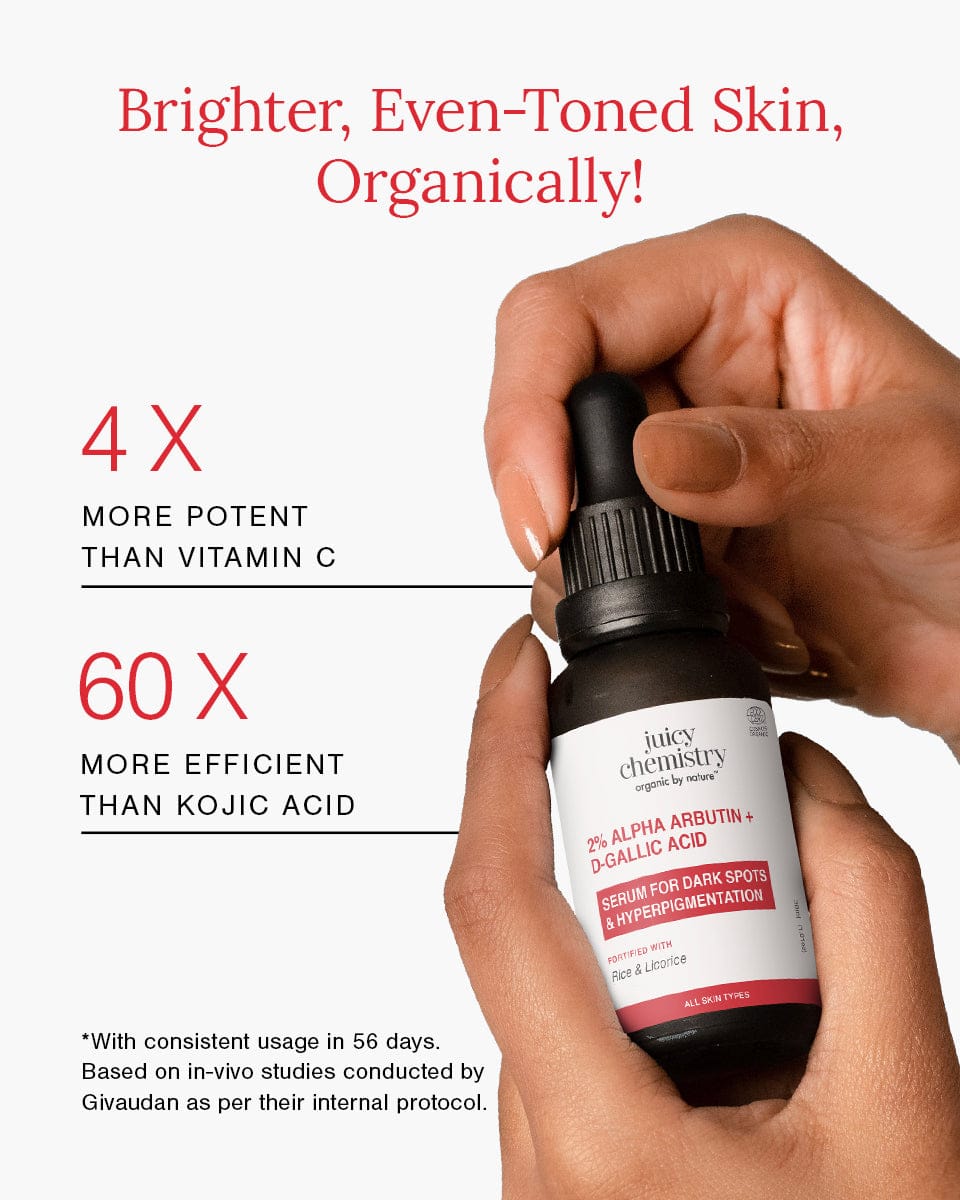

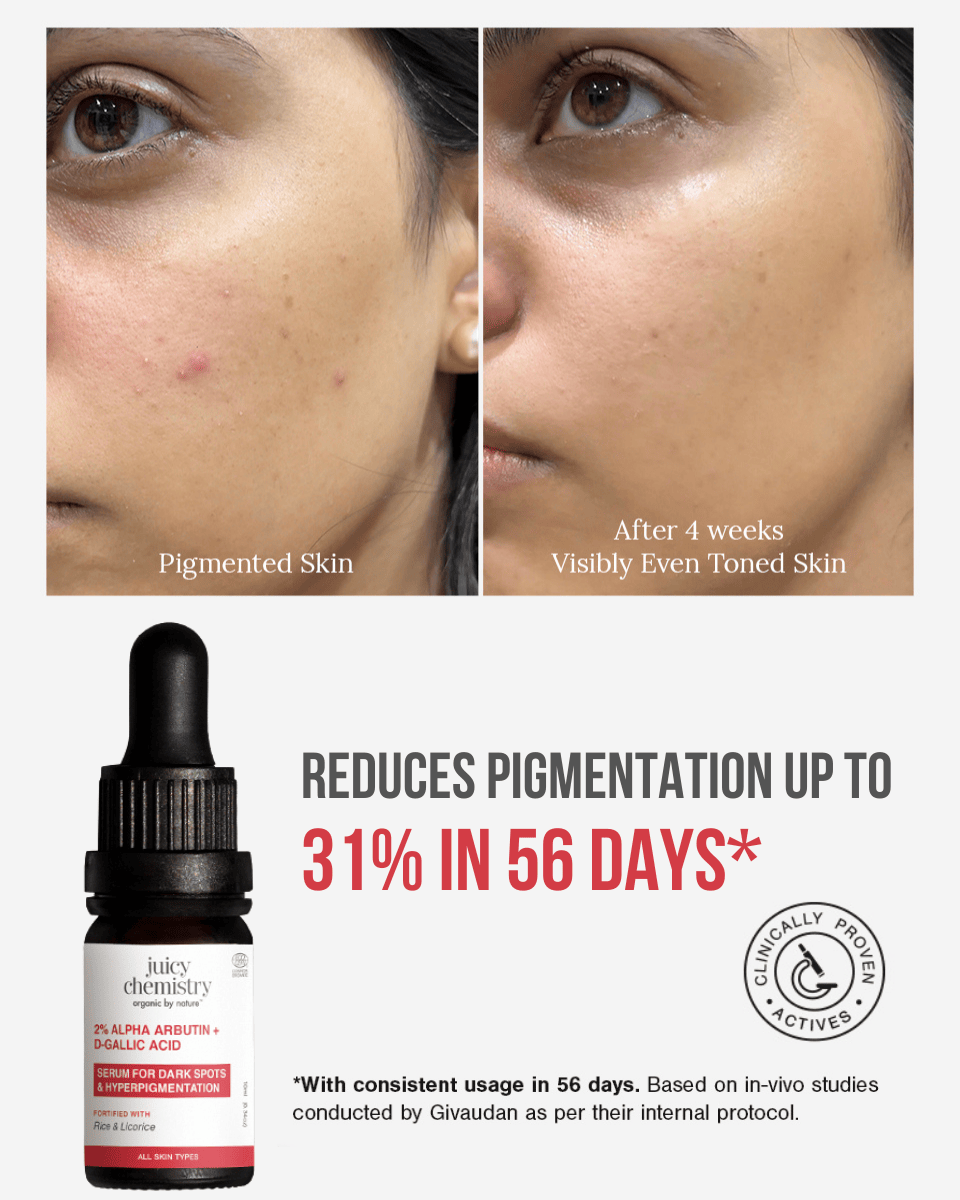

Pigmentation is one of the most misunderstood skin concerns—not because it’s complex, but because it’s often treated too aggressively.
Over the years, we’ve spoken to customers who tried everything: strong actives, harsh exfoliants, and short-term fixes. While some saw brief results, many found their skin becoming thinner, more reactive, or darker over time.
The Insight: Pigmentation doesn’t need force. It needs regulation.
Pigmentation occurs when melanocytes (cells responsible for melanin) receive signals to produce excess pigment. These signals are typically triggered by:
Most treatments focus on "scrubbing" pigment away. But pigment isn't dirt; it’s a biological response. Lasting correction happens when melanin production is calmed and regulated, not suppressed aggressively.
Alpha Arbutin is often misunderstood as a bleaching agent. In reality, it is a sophisticated regulator.
Even gentle actives can fail if the skin environment is unsupportive. Pigmentation rarely exists alone; it is often accompanied by oxidative stress and micro-inflammation.
Diglucosyl Gallic Acid is a next-generation molecule that works "upstream" by:
Think of pigmentation as a conversation happening inside the skin. This duo works together to change the narrative:
|
Ingredient |
Role in the "Conversation" |
|
Alpha Arbutin |
Turns down the volume on melanin production signals. |
|
Diglucosyl Gallic Acid |
Calms the oxidative and inflammatory triggers. |
|
The Result |
Reduces excess pigment while preventing new triggers from escalating. |
Indian skin is resilient but highly reactive. It tends to tan easily and pigment quickly after inflammation. Aggressive brightening often backfires, causing more darkening. A formulation that regulates pigment while supporting barrier comfort is the only way to achieve long-term results.
Timeline of Results
Pigmentation correction is a marathon, not a sprint.

Final Thought: Pigmentation is not a flaw; it’s feedback. When skin feels safe, it naturally returns to balance.
Q: How does alpha arbutin differ from hydroquinone?
A: Alpha arbutin regulates the enzyme involved in melanin production rather than suppressing pigment cells outright, which is why it is considered gentler for long-term use.
Q: How long does alpha arbutin take to work?
A: Most people see a change at eight to twelve weeks. It works gradually, and daily sunscreen is what makes the progress hold.
Q: Can it be used on sensitive skin?
A: It is generally well tolerated, which is one of its advantages. Introduce it two or three times a week at first and build from there.
Q: Can I use it with vitamin C or acids?
A: Yes, and the combination is common. If your skin is reactive, use them at different times of day rather than layering all at once.


Shop Now