Why Sourcing Matters: Unlocking the True Potential of Your Ingredients
Liquid error (sections/article-template line 266): The format option 'month_day_year' is not a supported format.
Juicy Chemistry


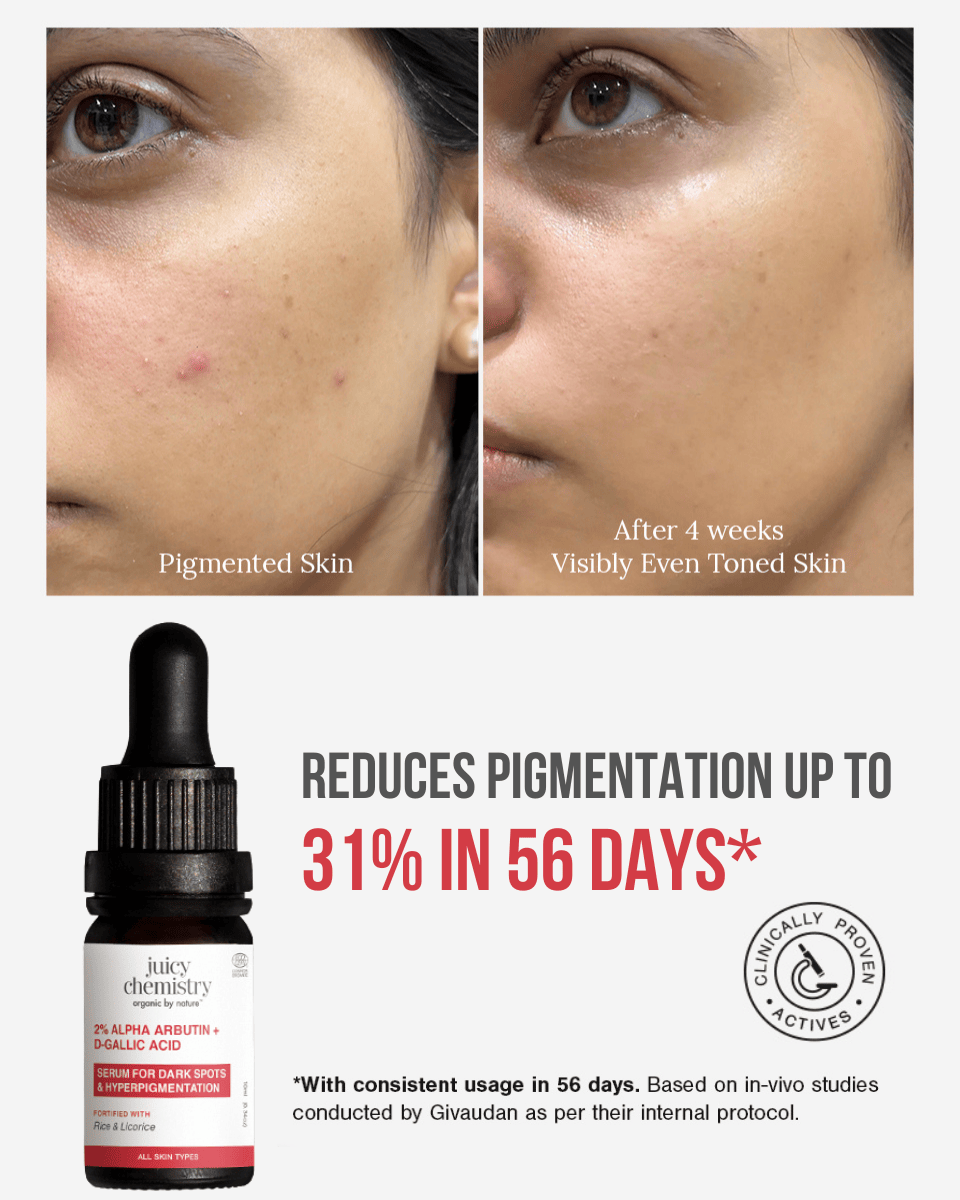
Pigmentation is significantly more frequent in melanin-rich skin tones. Indian skin typically falls under Fitzpatrick skin types III, IV, and V, which naturally produce more melanin.
While this melanin provides a built-in defense against sun damage, it also makes the skin hyper-reactive. Even minor issues can trigger an overproduction of pigment, leading to long-lasting marks.
Key Reactivity Factors:
Because melanin activity is naturally higher in Indian skin, these common factors often lead to stubborn spots that take longer to fade:

Effective management requires a consistent, gentle routine focused on stabilisation rather than aggression:
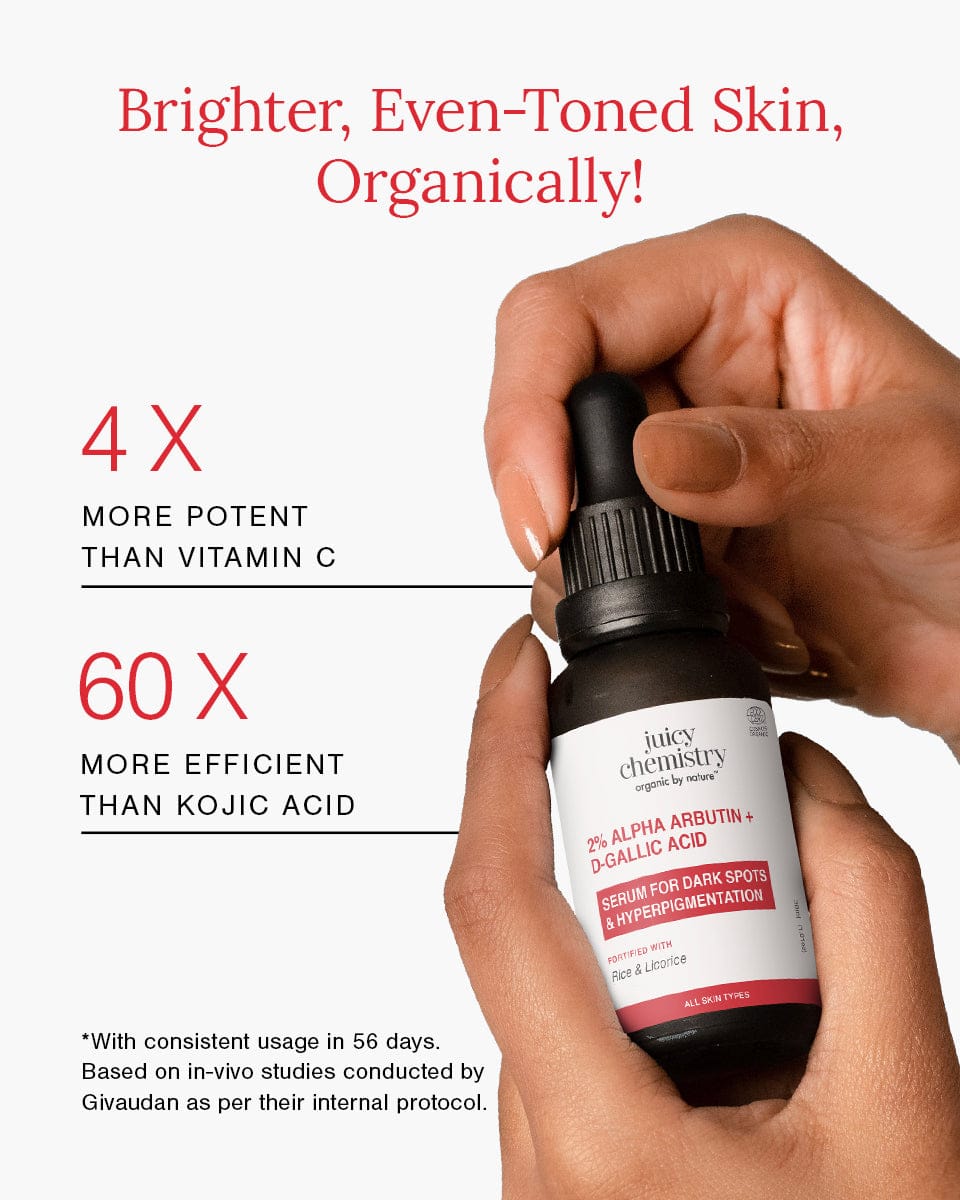
Ingredients such as Alpha Arbutin, Niacinamide, and Vitamin C are widely used to support skin tone balance.
Q: Why is pigmentation more common in Indian skin?
A: Higher baseline melanin means pigment cells respond more readily to sun, inflammation and hormonal shifts. The same trigger that leaves a faint mark on lighter skin can leave a longer-lasting dark patch on Indian skin.
Q: How long does pigmentation take to fade?
A: Surface marks often settle over eight to twelve weeks with consistent care. Deeper pigmentation such as melasma can take considerably longer and tends to return without daily sun protection.
Q: Does sunscreen really matter if the pigmentation is hormonal?
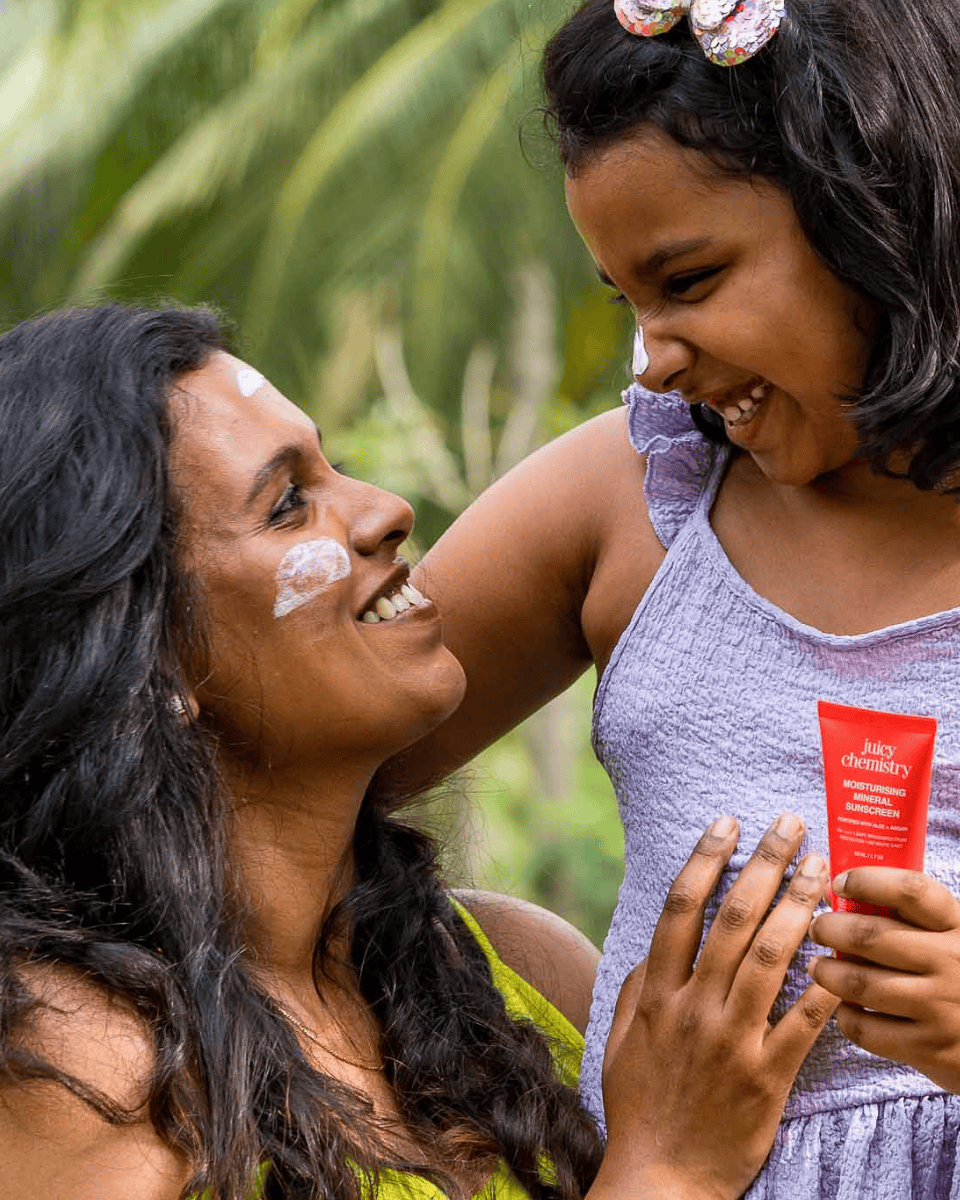
A: Yes. UV exposure stimulates pigment production regardless of the original trigger, so skipping sunscreen undoes the work of every brightening active you use.
Q: Can I use more than one brightening active at a time?
A: You can, but introduce them one at a time and a few weeks apart. Layering several strong actives from day one is the fastest route to irritation, which itself causes more pigmentation.


Shop Now