Unlocking the Power of Ectoine: The Skincare Ingredient You Need to Know
Liquid error (sections/article-template line 266): The format option 'month_day_year' is not a supported format.
Juicy Chemistry


In the dynamic realm of skincare, active ingredients serve as the pivotal elements. Whether it's addressing acne, brightening uneven pigmentation, or fortifying your skin barrier, actives are the true champions. However, with a plethora of products and ingredients available, the pressing question arises: how can you layer them properly to prevent irritation and achieve optimal results?
At Juicy Chemistry, we advocate for formulations grounded in scientific research, utilizing clinically validated actives and certified organic components. In this article, we will outline the principles of layering actives and provide dermatologist-approved advice to assist you in creating an effective skincare regimen.
Your skin, being the largest organ of your body, is remarkably intelligent. However, applying multiple potent ingredients without comprehending their interactions can overwhelm it, resulting in breakouts, irritation, or a weakened barrier function.
Here’s why it’s crucial to layer your actives appropriately:
Adhere to this guideline when layering your skincare products to enhance absorption and maximize benefits.
Step 1: Cleanser
Begin with your facial cleanser or soap to eliminate all impurities, oil, and sebum.
Step 2: Toner/Essence (Optional)
Next, apply a toner or essence that aids in rebalancing the pH and clarifying pores.
Step 3: Serums
The third step involves applying serums. Start with a water-based serum, followed by an oil-based one.
Step 4: Moisturizer
The subsequent step is to apply a moisturizer to seal in the serums.
Step 5: Face Oil
Then, apply an appropriate face oil to lock in all the beneficial ingredients and prevent moisture loss.
Step 6: SPF (AM only)
This step is vital for shielding the skin from UV rays and photodamage.
Let’s explore the Juicy Chemistry Actives Range and how to layer them effectively without causing conflicts.
What does it do?
A stable, non-irritating form of Vitamin C (3-O Ethyl Ascorbic Acid) combats free radicals and enhances radiance. Glutathione contributes to brightening effects.
What does it do?
Encapsulated Salicylic Acid penetrates deeply into the pores to clear blockages. Zinc PCA helps manage sebum production and controls acne-causing bacteria.
What does it do?
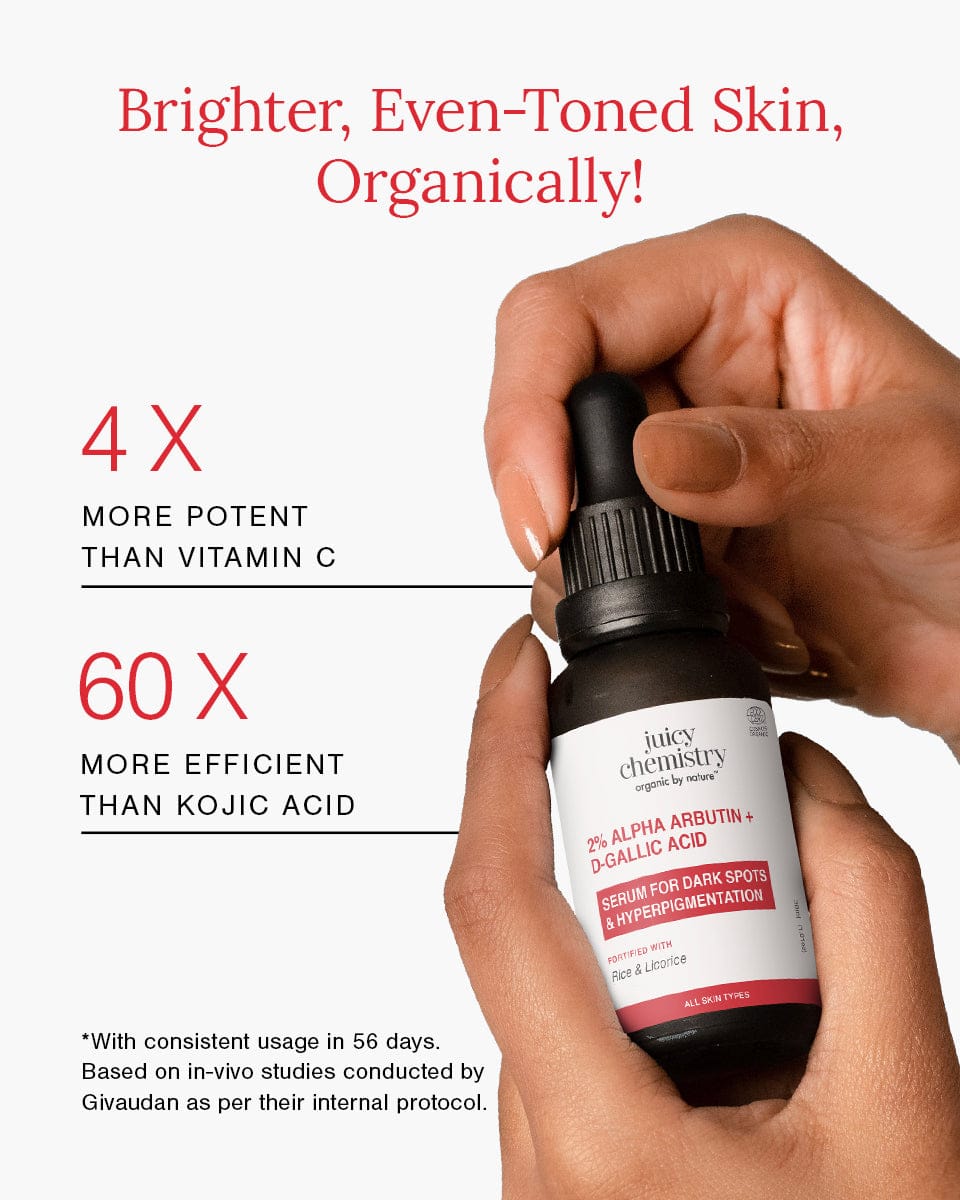
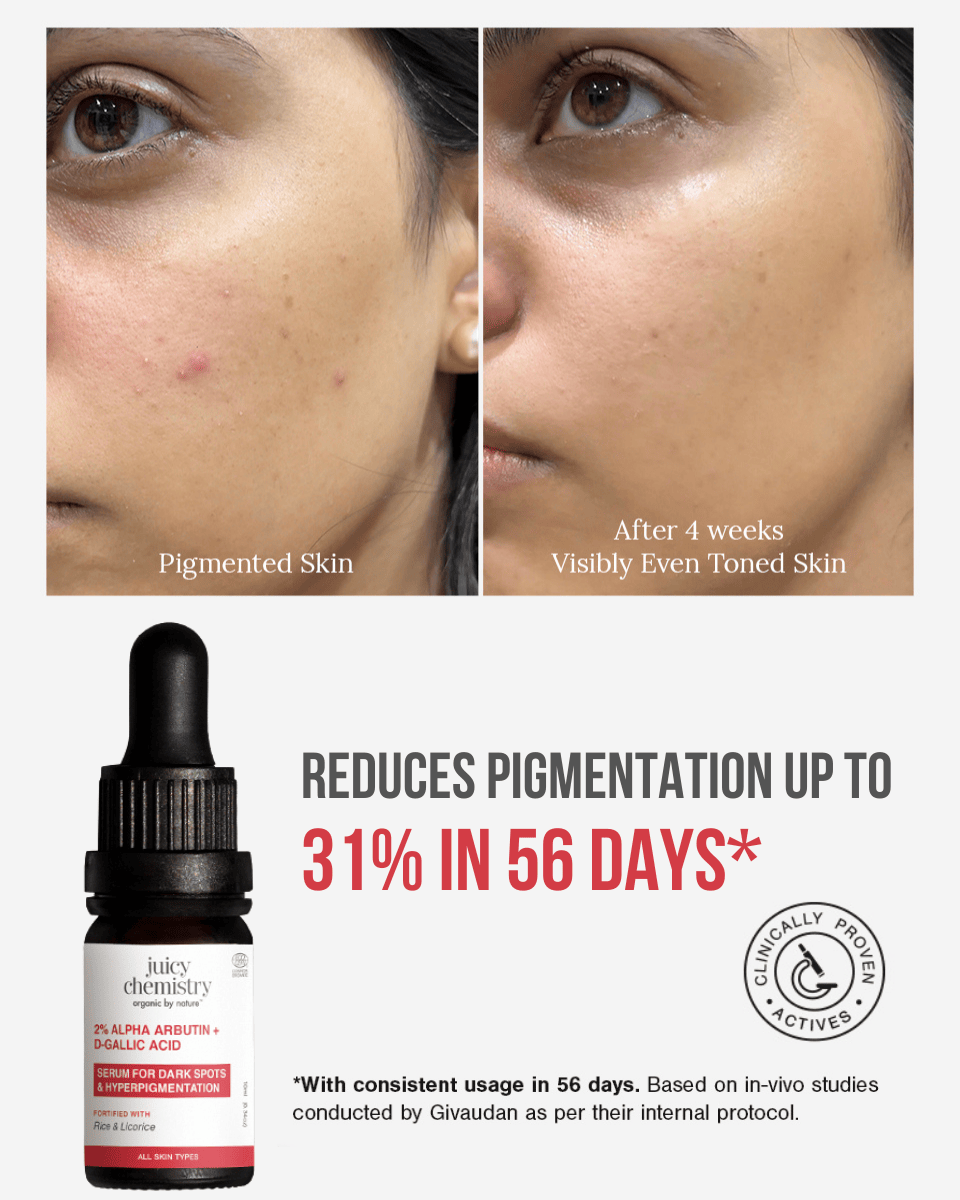
Alpha Arbutin acts as a melanin inhibitor that diminishes dark spots and pairs well with Vitamin C or Niacinamide.
What does it do?
Niacinamide aids in tightening pores and regulating sebum, while Ectoine fortifies the skin barrier.
What does it do?
Ceramides help retain moisture and strengthen the skin barrier, while Copper Peptides promote collagen and elastin production.
Now, let’s delve into how to layer these actives for optimal results:
| Concern \ Routine | AM | PM |
| Acne and Blackheads | Cleanser → 10% Vitamin C + 2% Glutathione Serum → Moisturizer → SPF | Cleanser → 2% Salicylic Acid + 1% Zinc PCA Serum → Moisturizer |
| Pigmentation and Uneven Skin Tone | Cleanser → 10% Vitamin C + 2% Glutathione Serum → Moisturizer → SPF | Cleanser → 2% Alpha Arbutin + B5 Serum → Moisturizer |
| Enlarged Pores and Oily Skin | Cleanser → 10% Vitamin C + 2% Glutathione Serum → Moisturizer → SPF | Cleanser → 12% Niacinamide + 2% Ectoine Serum → Moisturizer |
| Barrier Repair and Dry/Mature Skin | Cleanser → 10% Vitamin C + 2% Glutathione Serum → Moisturizer → SPF | Cleanser → 3% Ceramide + 1% Copper Peptide Serum → Moisturizer |
Exfoliating toners can significantly enhance your skincare routine by improving skin texture, promoting cell turnover, and boosting overall radiance. However, it’s crucial to use them judiciously to avoid irritation and maximize their benefits. Here are some tips on how to effectively integrate exfoliating toners into your skincare routine:
Layering skincare products can enhance the effectiveness of your routine, but it’s essential to do so carefully to prevent irritation and ensure optimal results. Here are some vital tips to help you layer your products safely and effectively:
✅ Conduct a patch test for all products to identify any potential sensitivities or reactions.
✅ Start slowly with exfoliants, using them 1–2 times a week to allow your skin to acclimate.
✅ Introduce one active ingredient at a time, enabling you to monitor your skin's response.
✅ Maintain hydration by incorporating Hyaluronic Acid into your routine—it’s your best ally for keeping skin plump and moisturized.
✅ Remember to apply SPF every morning to protect your skin from harmful UV rays, especially when using active ingredients.
Every serum from Juicy Chemistry is crafted to be bioavailable, pH-balanced, and biocompatible. Our dedication to clean beauty transcends mere buzzwords—we formulate Certified Organic, Dermatologically Tested, Clinically Proven Serums using a minimal number of potent ingredients that genuinely deliver results.
Q: Is it possible to layer multiple actives together?
A: Yes, but it’s crucial to select complementary ingredients (e.g., Niacinamide + Vitamin C). Start with one and gradually expand your routine.
Q: Can I use active serums on a daily basis?
A: Serums containing Niacinamide and Vitamin C can be used daily. Exfoliants like Glycolic or Lactic acid should be limited to 2–3 times a week.
Q: What’s the most effective serum for pigmentation?
A: Juicy Chemistry’s 2% Alpha Arbutin + B5 Serum or 12% Niacinamide + 2% Ectoine Serum are excellent choices for diminishing dark spots.
The key to achieving glowing, healthy skin lies not only in using the right actives but also in applying them correctly. By understanding which ingredients work harmoniously together, how frequently to use them, and respecting your skin’s barrier, you can attain transformative results.
At Juicy Chemistry, we are revolutionizing skincare through the science of organic ingredients. From soil to serum, every component is meticulously selected, tested, and designed to enhance skin health—safely and effectively.
how to layer serums, layering actives skincare, vitamin C niacinamide together, salicylic acid before or after serum, how to use actives in skincare routine, alpha arbutin serum guide, best serum for pigmentation, Juicy Chemistry serums


Shop Now