Unlocking the Power of Ectoine: The Skincare Ingredient You Need to Know
Liquid error (sections/article-template line 266): The format option 'month_day_year' is not a supported format.
Juicy Chemistry




Chilli in Hair Care: From Sensation to Stimulation
Chilli in a hair oil tends to make people pause. It’s an unconventional ingredient that raises a valid question: Is it too strong for the scalp?
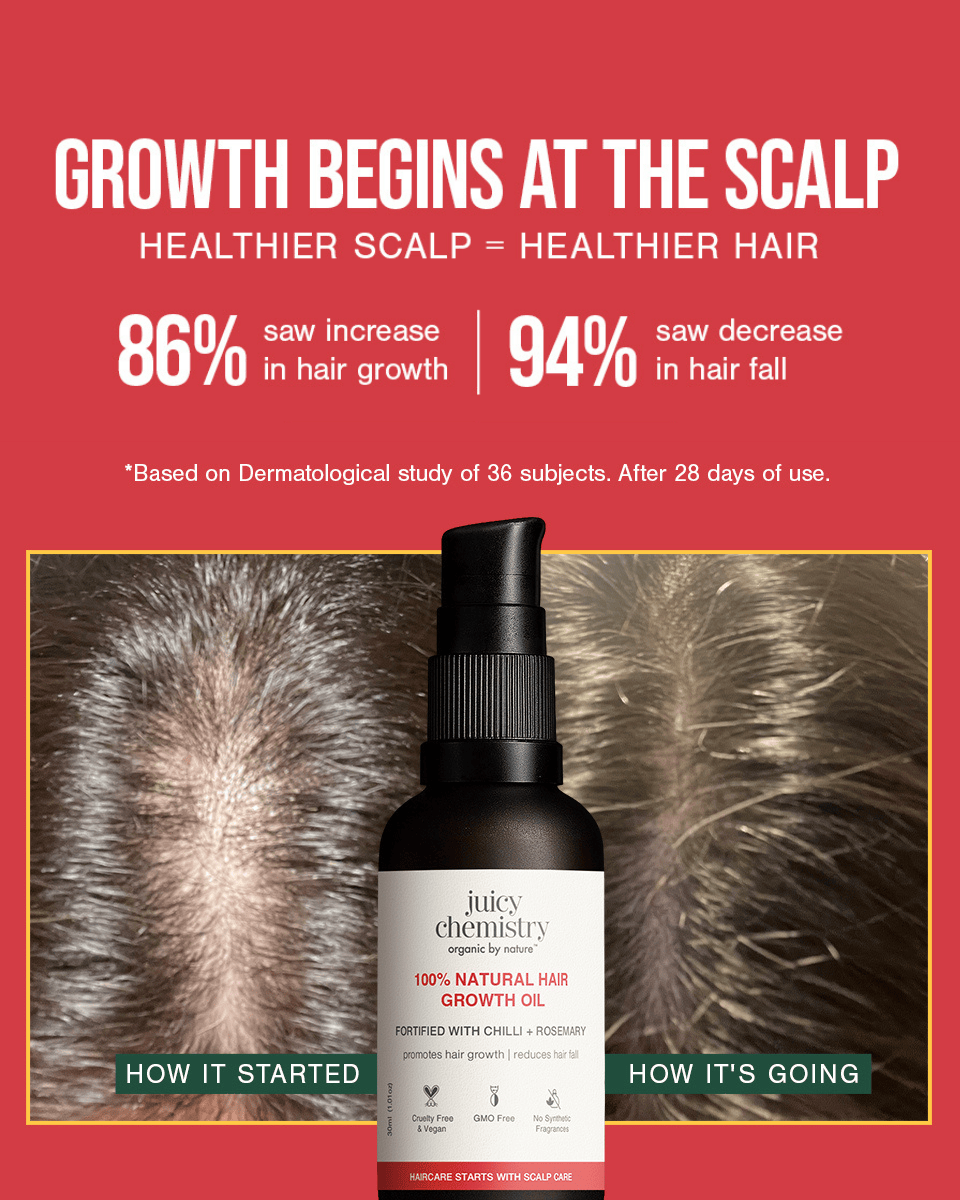
To understand why chilli belongs in a scalp formulation, we must look deeper than the hair shaft. Hair growth begins at the follicle, fueled by the microcirculation that keeps those follicles active. When handled with precision, chilli is not an irritant—it is an activator.
Why Hair Fall Starts Below the Surface
Excessive hair fall is rarely just a "hair strength" problem. It is often a biological signaling issue. Common contributors include:
Hair follicles are metabolically active; when circulation slows down, growth slows down.
The Science of Capsaicin
The magic of chilli lies in its active compound: Capsaicin. In a dermatological context, capsaicin provides controlled neuro-vascular stimulation by:
The Danger of "Raw" Chilli Oil
Formulation is everything. Poorly formulated or "DIY" chilli oils can backfire by:
The Juicy Chemistry Difference: We use measured chilli extracts and buffered delivery systems rather than raw infusions. The goal is activation without irritation—warmth, not heat.
Understanding the "Tingle": What to Expect
Because capsaicin stimulates nerve endings, a physical sensation is normal.
|
What is Normal |
What is NOT Normal |
|
Mild tingling |
Intense burning |
|
A gentle warming sensation |
Persistent redness |
|
Temporary scalp awareness |
Itching or discomfort that worsens |
Tip for Sensitive Scalps: Always patch test, start with a small quantity, and avoid application on broken or freshly irritated skin.
The Role of Carrier Oils
Chilli never works alone. A well-designed formulation uses carrier oils to:
Usage Guide
Who it’s for:
How to use:
Final Thought:
Chilli doesn’t force hair to grow; it reminds the scalp how growth works. When stimulation is intelligent and measured, the body responds naturally.


Shop Now