The Two Unsung Heroes that Revitalise Your Skin!
Liquid error (sections/article-template line 277): The format option 'month_day_year' is not a supported format.
Juicy Chemistry

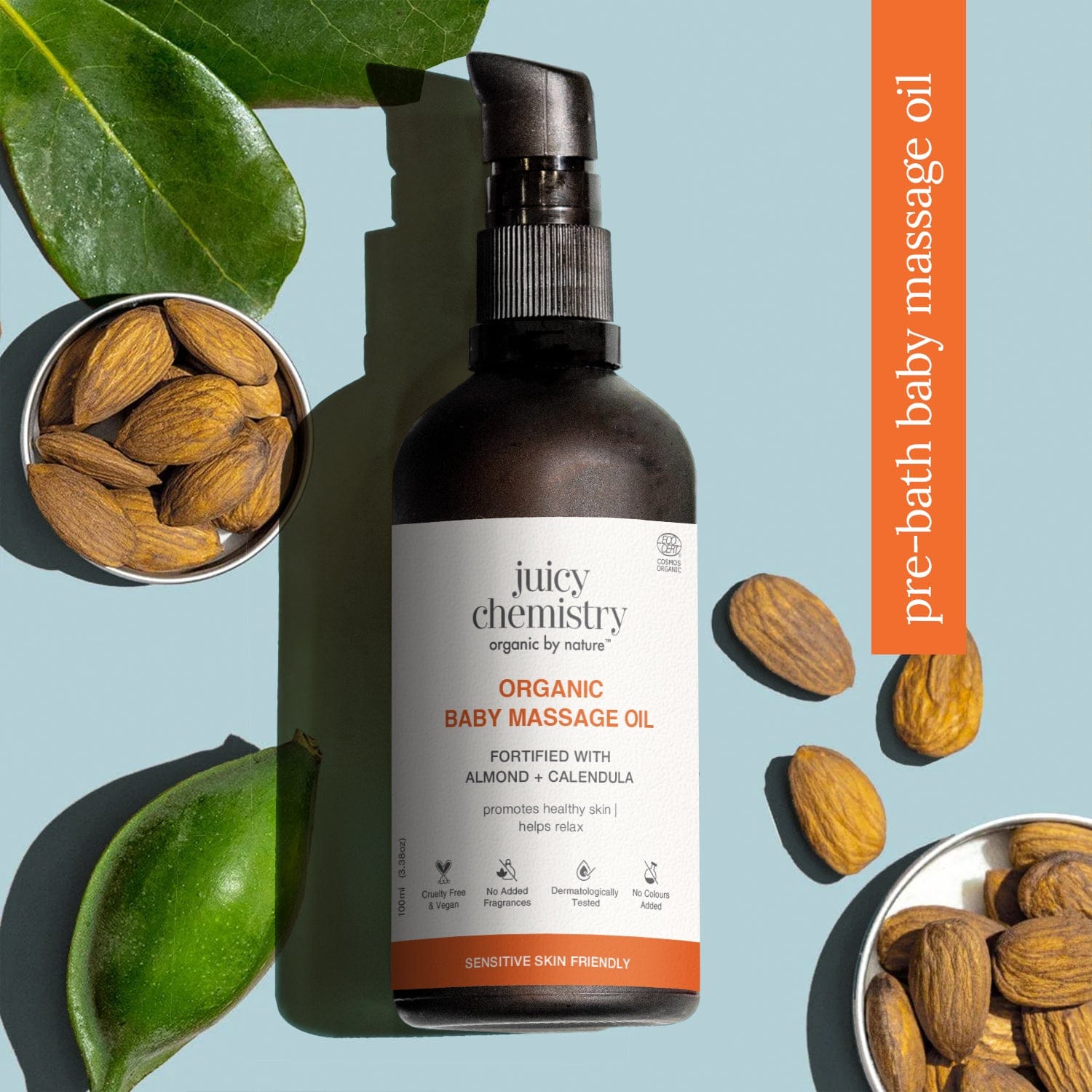
That quiet moment after bath time, when your little one is all warm and calm, is probably the best part of your day. Baby massage turns that moment into something deeper. It is not just about soft skin. It is about connection, comfort, and a gentle ritual that may support your baby's sense of security.
But here is the question every parent eventually lands on: which oil for newborn massage is actually safe? With so many options on the shelf, figuring out baby massage oil and how to choose the right one can feel overwhelming. Especially when every brand claims to be "the best."
Let us simplify this. Think of it as a natural baby oil guide, built around what your baby's skin genuinely needs.
Baby skin is thinner and more permeable than adult skin. In fact, in the first few weeks after birth, infant skin is still adapting to the outside world, which means everything that touches it matters a little more.
A good massage oil should glide smoothly without leaving your baby feeling greasy or slippery. It should absorb gently, support the skin's comfort, and, most importantly, contain nothing that could irritate that beautifully delicate skin.
This is exactly why choosing cold-pressed oil for baby massage over heavily refined or synthetic options can make a real difference. Cold pressing retains the oil's natural fatty acids and nutrients without the use of harsh solvents or excessive heat.
These two are the most commonly used oils in Indian households, but they work quite differently on your baby's skin.
When comparing almond oil vs. coconut oil for baby massage, the simplest way to think about it is this: almond for cooler, drier months; coconut for warmer, humid weather. Neither is universally "better." It depends on your baby's skin and the season.
Here is where things get interesting. Jojoba oil for baby skin is a slightly lesser-known choice, but it is a genuinely thoughtful one.
Technically, jojoba is not even an oil. It is a liquid wax ester that closely mimics the natural sebum of human skin. This means it may absorb quickly, feel lightweight, and sit comfortably on your baby's skin without clogging pores.
If your baby has particularly sensitive or easily irritated skin, jojoba can be a gentle option worth exploring. It is naturally hypoallergenic and works beautifully across all seasons because it is neither too heavy nor too light.
So, is jojoba oil safe for babies? For most little ones, yes, it can be a lovely, gentle pick. As always, a patch test comes first.
Choosing the safest baby oil for massage is not just about picking the right oil. It is also about knowing what to avoid. Here are a few things to keep in mind:
Look for oils that are cold-pressed, hexane-free, and free from added synthetic fragrances or preservatives. Mineral oil-based products, while common, may not absorb as well as plant-based alternatives and can leave a greasy film. Blends with multiple oils can also make it harder to identify what might be causing a reaction if one occurs.
When it comes to baby oil allergy signs, watch for redness, small bumps, unusual dryness, or any visible discomfort after application. If you notice anything, pause use and consult your paediatrician. A simple patch test, applying a small drop on your baby's inner arm and waiting 24 hours, is the easiest way to check before a full massage.
Thinking about which oil suits your little one best? Here is a simple way to look at it:
If your baby's skin feels dry, especially in winter, sweet almond oil may offer gentle, nourishing comfort. If you are in a warm, humid climate and want something light and cooling, coconut oil is a classic choice. And if your baby has sensitive or easily reactive skin, jojoba oil may be the gentlest option to explore.
Seasonal shifts matter too. As research on infant skin suggests, the environment around your baby plays a role in how their skin responds. Switching between lighter oils in summer and richer ones in winter can be a simple, practical approach.
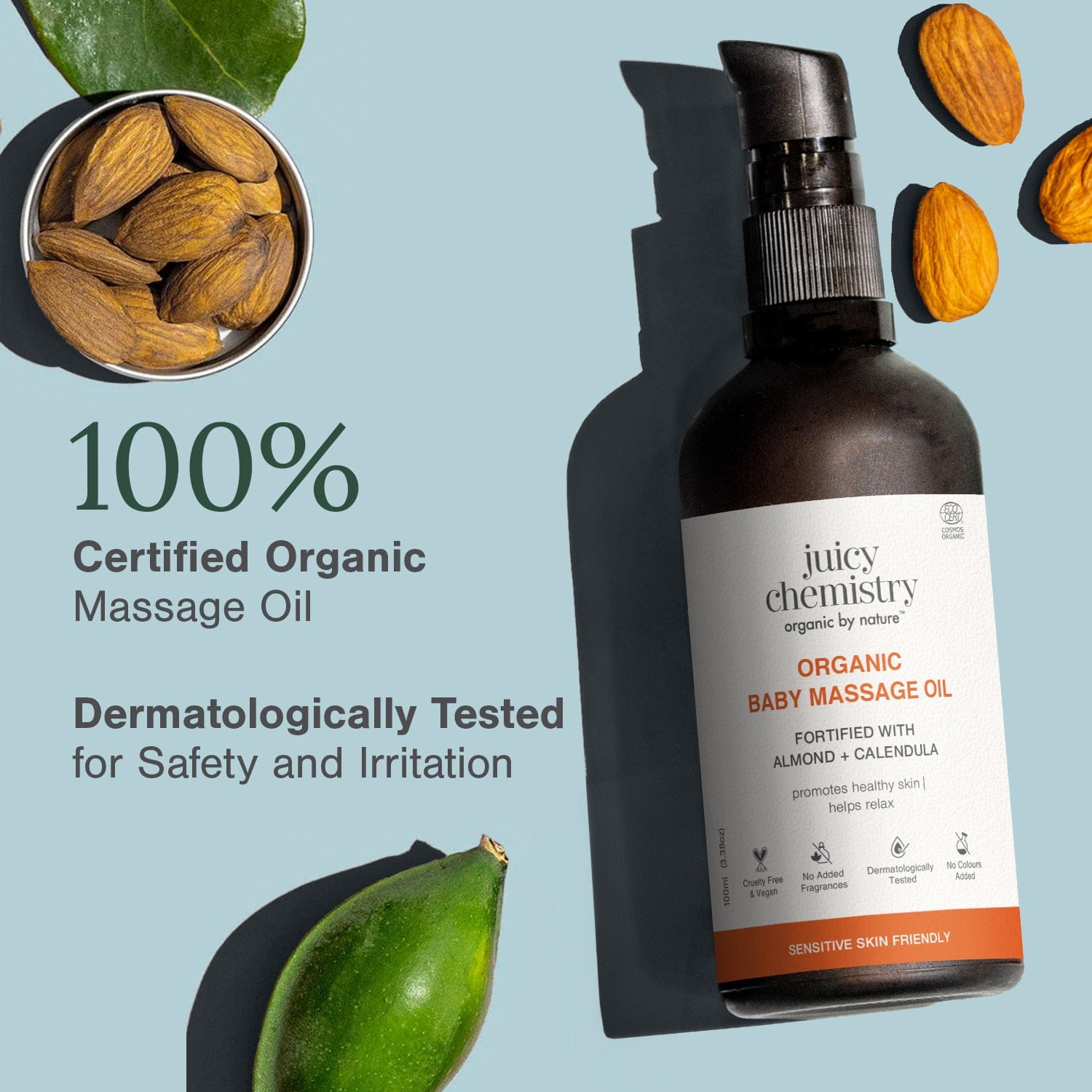
For parents who want to know exactly what is in the bottle, Juicy Chemistry's Cold-Pressed Sweet Almond Carrier Oil contains just one ingredient: organic sweet almond oil. It is COSMOS Organic certified by Ecocert Greenlife, cold-pressed, and hexane-free. No fragrance, no additives, no guesswork.
And if jojoba feels like the right fit for your baby, their Cold-Pressed Jojoba Carrier Oil follows the same principle. One single certified organic ingredient, nothing else. That kind of transparency can feel reassuring when you are choosing something for your baby's skin.
Both oils double up beautifully as part of your own skincare routine too, making them a versatile addition to any household.
Here is something easy to forget: the oil is just a medium. The real magic is in the touch itself. Gentle, consistent massage may support bonding, help your baby feel calm, and become a lovely part of your daily rhythm together.
Pick a quiet time, maybe after a warm bath or before an afternoon nap. Use slow, gentle strokes. Follow your baby's cues. If they seem fussy or uncomfortable, it is perfectly fine to pause and try again later.
The best baby massage oil, whichever you choose, is one that lets you focus on the moment rather than worry about what is on your baby's skin.
Lighter oils like jojoba or coconut may work well in warmer months because they absorb quickly and do not feel heavy on the skin. Choose cold-pressed options for better quality.
You can, but many parents find it helpful to switch between lighter oils in summer and richer ones like sweet almond in winter, depending on how their baby's skin feels.
Common baby oil allergy signs include redness, small bumps, or unusual dryness. Always do a patch test on a small area first and wait 24 hours before a full massage.
Cold-pressed oils tend to retain more of their natural fatty acids and nutrients since they are extracted without harsh solvents. For baby massage, this can mean a gentler, more nourishing experience.
Many pediatricians suggest waiting until your baby is a few weeks old before introducing any product. Once you begin, start with a small amount and watch how your baby's skin responds.


Shop Now