The Two Unsung Heroes that Revitalise Your Skin!
Liquid error (sections/article-template line 277): The format option 'month_day_year' is not a supported format.
Juicy Chemistry

You're midway through a presentation when you notice those telltale white specks on your shoulders. Or perhaps you've found yourself scratching your scalp unconsciously during meetings, leaving you frustrated and self-conscious. If you've struggled with persistent flakiness and scalp irritation, you're not alone, and the solution might be simpler than you think.
Rosemary oil has emerged as a research-backed remedy for treating flaky scalp and inflammation, offering a natural alternative that addresses the root causes rather than just masking symptoms. But how exactly does this botanical extract work, and what's the right way to use it?
Before exploring rosemary oil scalp treatment, it's helpful to understand what triggers these issues. The primary culprit behind most scalp flaking is an overgrowth of Malassezia, a yeast-like fungus that lives naturally on everyone's scalp. When conditions are right, excess sebum production, humid weather, or stress, this microorganism multiplies rapidly.
As Malassezia breaks down sebum into oleic acid, your scalp responds with inflammation, itching, and accelerated skin cell turnover. This creates the visible flakes characteristic of dandruff and seborrheic dermatitis. Meanwhile, the inflammation itself creates a cycle of irritation that compromises your scalp's natural barrier.
Rosemary oil (Rosmarinus officinalis) functions as a multi-targeted treatment for flaky scalp conditions through three distinct mechanisms. First, its antimicrobial compounds actively suppress Malassezia growth, addressing the fungal overgrowth at its source. Second, the oil's anti-inflammatory properties calm redness and soothe irritation by modulating your skin's immune response. Third, rosemary acts as a natural vasodilator, widening blood vessels to increase nutrient and oxygen delivery to scalp tissues.
A clinical trial published in 2023 compared rosemary extract lotion with 2% ketoconazole in 42 patients with seborrheic dermatitis. While ketoconazole showed slightly better results in reducing total flake count, rosemary lotion proved significantly more effective at relieving the itching that often accompanies scalp inflammation, a finding that matters deeply when you're dealing with constant discomfort.
The therapeutic effects of rosemary oil stem from its bioactive compounds: 1,8-cineole, camphor, and alpha-pinene. These phyto-chemicals work synergistically to create an inhospitable environment for fungi while simultaneously reducing inflammatory markers in scalp tissue.
Research indicates that rosemary oil performed comparably to minoxidil in promoting hair growth over six months, but with one crucial advantage: participants using rosemary reported significantly less scalp itching. This dual benefit makes it particularly valuable for treating flaky scalp, where both the condition and its treatment can sometimes cause further irritation.
The oil's mechanism for balancing sebum production is particularly elegant. Rather than stripping oils as harsh shampoos do, rosemary functions as a scalp adaptogen. It reduces excess oil that fuels dandruff-causing microbes while providing enough hydration to prevent the dryness that can also trigger flaking. This makes it suitable for various scalp types, from excessively oily to combination conditions.
This is perhaps the most critical question for safe usage: Rosemary essential oil should never be applied undiluted directly to your scalp. As a highly concentrated botanical extract, pure rosemary oil can cause skin irritation, burning sensations, or allergic reactions when used at full strength.
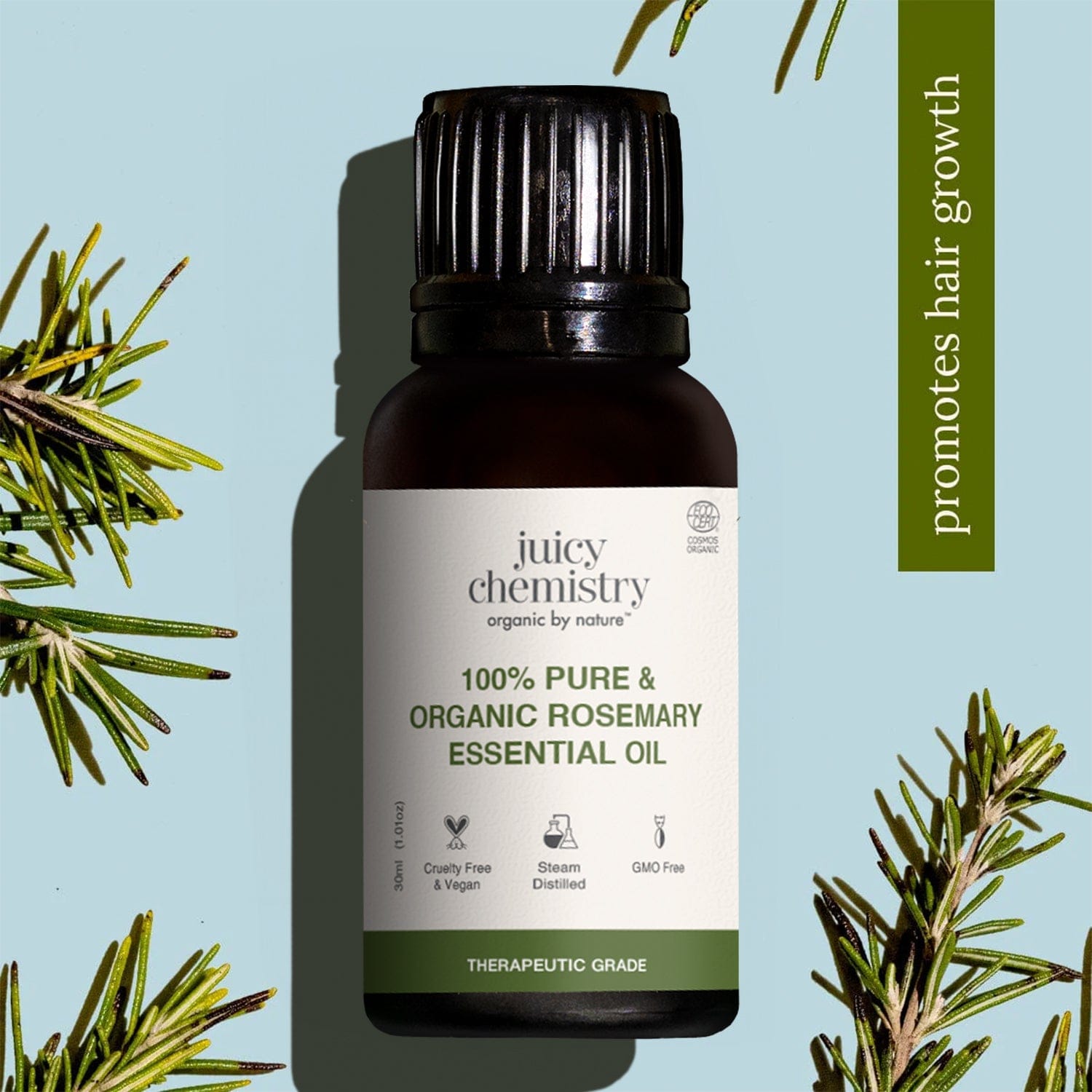
The recommended dilution ratio is 3–5 drops of pure rosemary essential oil per teaspoon of carrier oil. Suitable carrier oils include jojoba, argan, coconut, or pumpkin seed oil, each bringing additional moisturising and nourishing properties to support scalp health. Juicy Chemistry's 100% Pure & Organic Rosemary Essential Oil provides therapeutic-grade quality that's been steam-distilled to preserve its active compounds without synthetic additives.
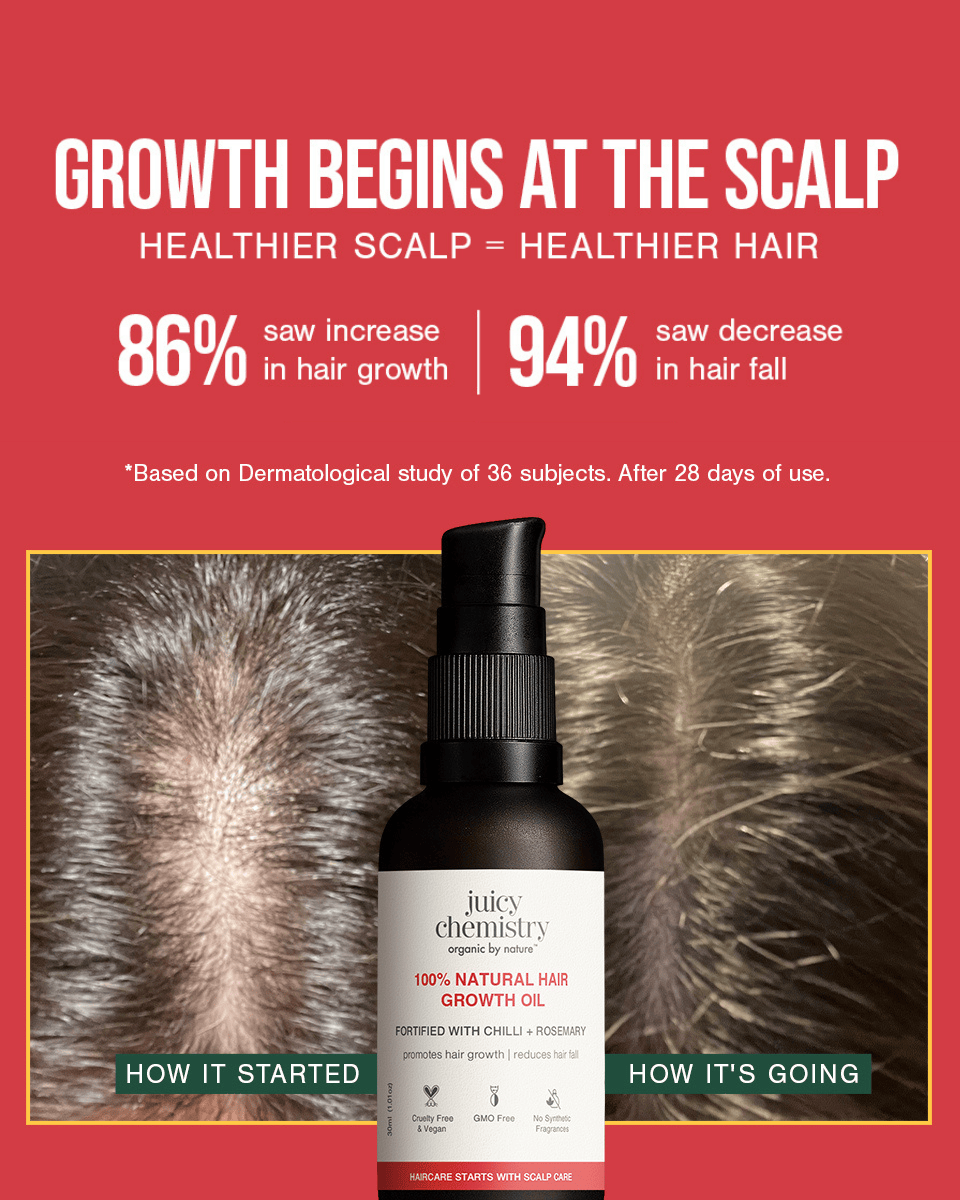
If you prefer a ready-to-use formulation, Juicy Chemistry's 100% Natural Hair Growth Oil combines rosemary with complementary ingredients like pumpkin seed oil (a natural DHT blocker) and black seed oil for comprehensive scalp support. Clinical testing showed this blend increased hair growth by 356% and reduced hair fall by 64% over 28 days, addressing both flaking and the hair thinning that sometimes accompanies chronic scalp inflammation.
Transform treating a flaky scalp into a mindful self-care moment with this simple routine:
In a small bowl, mix rosemary essential oil with your chosen carrier oil in the ratio of 1:10, respectively. For sensitive scalps, always patch test and observe how your skin responds over several applications.
Rub the mixture between your palms for about 30 seconds. The gentle warmth helps the oil penetrate more effectively and turns application into a spa-like experience.
Part your hair into sections to ensure even distribution. Use your fingertips to apply the oil directly onto your scalp, focusing on areas where flaking or irritation is most noticeable.
Using circular motions, massage your entire scalp for 5–10 minutes. This step is crucial; it enhances blood circulation, helps the oil penetrate deeper, and physically loosens flakes. The massage technique itself supports hair health by stimulating follicles.
Leave the treatment on for at least 30 minutes. For intensive care during particularly flaky periods, consider leaving it overnight (protect your pillowcase with a towel).
Wash out with a gentle, sulfate-free shampoo. You may need to shampoo twice to remove all oil residue without stripping your scalp's natural moisture barrier.
Frequency: Apply this rosemary oil scalp treatment 2–3 times weekly. Consistency matters more than intensity; regular application over weeks yields better results than daily use for a short period.
Understanding the timeline helps set realistic expectations. Unlike conventional treatments that might show quick but temporary relief, rosemary oil works gradually to rebalance your scalp ecosystem.
Week 1–2: You may notice the oil feeling soothing during application, with some immediate relief from itching. Flaking might persist or even appear slightly more as your scalp begins its transition period.
Week 3–6: This is when most people observe meaningful changes. Flaking typically reduces noticeably, itching becomes less frequent, and your scalp feels healthier overall. The inflammation-causing redness often calms during this phase.
Months 3–6: Research suggests that sustained improvements in scalp health and hair growth become evident after consistent use for three to six months. Your scalp's Malassezia population has rebalanced, inflammation has subsided, and the protective barrier function has strengthened.
During treatment, you might experience mild tingling; this is normal and indicates increased circulation. However, any burning, excessive redness, or worsening irritation signals that you should discontinue use and consider whether you've diluted the oil sufficiently.
For those incorporating rosemary oil during seasonal changes, winter months often require slightly richer carrier oil blends (like adding a few drops to coconut oil), while summer might call for lighter bases like jojoba. This seasonal adaptation aligns with your scalp's changing needs throughout the year.
While treating flaky scalp is the primary focus, rosemary oil delivers complementary benefits worth noting. Its circulatory effects support overall scalp vitality, creating an optimal environment for healthy hair growth. The antimicrobial properties help maintain cleanliness between washes, particularly helpful if you exercise regularly or live in humid climates where product buildup occurs faster.
The sensory experience shouldn't be overlooked either. Rosemary's naturally fresh, herbaceous aroma provides aromatherapeutic benefits; it's traditionally associated with mental clarity and focus. This transforms your scalp treatment into a moment of holistic wellness rather than just addressing a cosmetic concern.
When choosing rosemary oil products, certification matters. ECOCERT COSMOS certification ensures you're getting genuinely organic ingredients free from pesticides and synthetic additives. This third-party verification addresses the greenwashing that's unfortunately common in natural beauty products.
For optimal results in treating flaky scalp, rosemary oil works best as part of a holistic approach. Pair your scalp treatments with gentle, sulfate-free cleansing to avoid stripping away the beneficial oils you're applying. Between oil treatments, consider water-based hydrosols like organic rosemary water as a refreshing scalp toner that maintains the antimicrobial environment without heaviness.
If you're addressing both flaking and concerns about hair density or growth, the combination approach in formulated blends offers efficiency. The chilli extract in growth-focused formulations, for instance, complements rosemary's effects by providing additional circulation stimulation through capsaicin, though always ensure proper dilution and hand washing after application to avoid any accidental eye contact.
Rosemary oil scalp treatment offers a research-validated, natural approach to manage flaky, irritated scalp conditions. Its triple action: antimicrobial, anti-inflammatory, and circulation-enhancing, addresses the underlying causes rather than merely suppressing symptoms. With proper dilution, consistent application, and realistic timeframe expectations, rosemary oil can transform your scalp health over several months of dedicated use.
Whether you choose pure rosemary essential oil to create custom blends or opt for formulated treatments that combine complementary ingredients, the key lies in patience and consistency. Your scalp's ecosystem took time to become imbalanced; give it the time it needs to heal.
Most users notice reduced itching within 4-6 weeks of regular use. Visible improvement in flaking typically appears between weeks 4-8, with optimal results after 6 months of consistent application 2–3 times weekly.
When used in proper amounts and washed out thoroughly, rosemary oil shouldn't leave residual greasiness. If your hair feels heavy, reduce the quantity of oil or ensure you're shampooing adequately after treatment.
Using rosemary oil scalp treatment 2–3 times weekly is recommended. Daily application doesn't accelerate results and may lead to product buildup. Consistency over weeks matters more than frequency.
Rosemary oil is particularly effective for flaking caused by seborrheic dermatitis and dandruff (Malassezia-related conditions). For severe psoriasis or other medical scalp conditions, consult a dermatologist for a comprehensive treatment plan that may include rosemary as a complementary therapy.


Shop Now