The Two Unsung Heroes that Revitalise Your Skin!
Liquid error (sections/article-template line 277): The format option 'month_day_year' is not a supported format.
Juicy Chemistry

Source: clartici.com
Natural and organic beauty has taken the industry by storm. Consumers today want to make conscious choices that truly create an impact and are gentler on the skin. But there's a problem here. Firstly, there's a lot of grey area in which most companies operate. They may seem organic labels but if you look closer, it's all just a show.
Now, you may think - hey, but that's what certifications are for! You're right - to an extent. The truth is that the rules set by most certification bodies are ones companies tend to work-around. Let's dive more into this and see what's what.
Organic vs Natural: The Difference
When a product is referred to as 'organic' it means that the product has been procured without being altered, grown or developed by adding synthesized chemicals or any other additives. 'Natural', on the other hand, means that the product in question and its ingredients are found in nature. This doesn't mean there aren't any artificial chemicals in it though. You can have a product that is 'natural' but is cultivated in a farm that relies heavily on chemical fertilizers and pesticides. So it's not organic but it's natural! People tend to assume that an organic product is natural and vice versa but it isn't always the case.

The Confusion Around Organic and Natural Labels
When you pick up a product that says 'natural' or 'organic', the first question that pops up into the mind is - is this product what it claims to be?
The label 'natural' brings about the greatest ambiguity. What even is natural? According to the former president of the Society Cosmetic Chemists and co-founder of The Beauty Brains, Perry Romanowski, there really is no such thing as a natural cosmetic! He remarks that 'out in the wild, you can’t plant a plant and grow body wash or lipstick. No matter the marketing, all cosmetics are processed in some way.
According to him, the term 'natural' is as natural as the company's marketing plan wants it to be!
To what extent can you control whether a product is truly 'organic'? What if 90% of the ingredients used are organic? Is it still considered organic? If not, then what do you call it?
Well, this is where certification bodies come in. They help consumers make informed decisions.
ECOCERT
Now, you might be wondering, how do certification bodies operate? What standards do they observe? Glad you asked. Well, the standards and regulations followed by these bodies could be based on national standards or they could just make their own rules.
If a product has been certified, you'll see it on its label. This is an important indicator of how seriously a company takes its 'organic' claim. Let's talk about ECOCERT and the COSMOS certifications.
Founded in France in 1991, ECOCERT was one of the first certification bodies to develop standards for 'natural and organic cosmetics'. The ECOCERT standard involves inspecting ingredients, manufacturing processes, packaging and formulations among other things. The organisation also takes a look at how environmentally friendly the product is.
To get the ECOCERT Organic Cosmetic label, products must comply with the following conditions among many others:
Making the Right Choice
Right now, the beauty world is full of all kinds of natural and organic skincare products and it all becomes overwhelming at times. So, to make an informed decision, you need to get a good grasp of the facts. The best way to know whether a product truly is organic is by looking out for well-known certifications and reading the ingredient list.
But why do you need to check the ingredient list? Isn't a certification enough? Unfortunately, it isn't. We mentioned earlier that water and salt cannot be certified; So, for example, if a product contains 70% water and the remaining contains some organic ingredients, you can easily claim its a certified organic product. The problem with these certifications is that companies tend to bend the rules so you have to be careful. Unless you have the full ingredient list, a breakup of the percentage of ingredients obtained from natural origin and organic farming.
Certified organic products are a much safer bet than any other product claiming to be organic. But you still have to look beyond the label. When it comes to skincare and beauty products, looks truly can be deceiving.
How We're Different
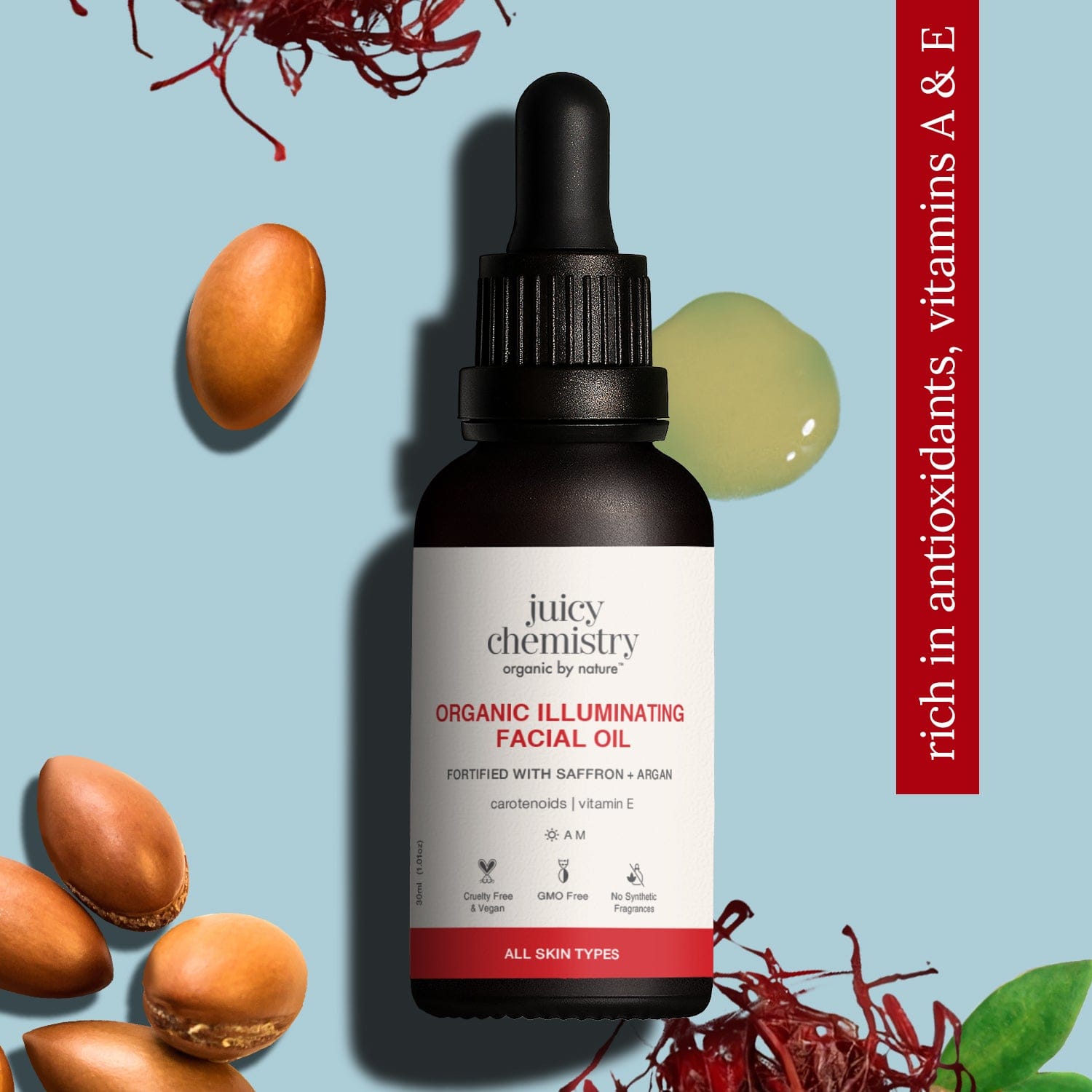
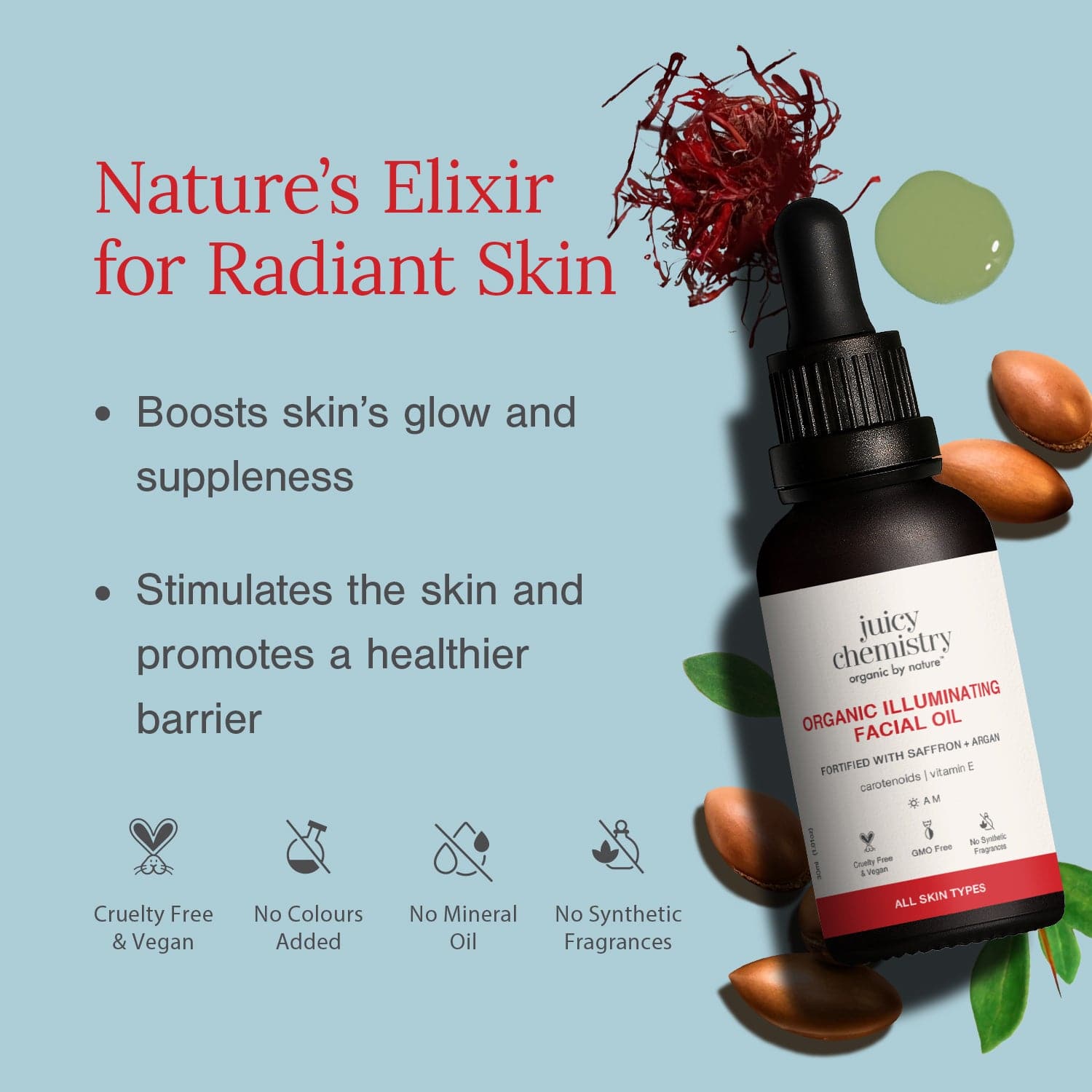
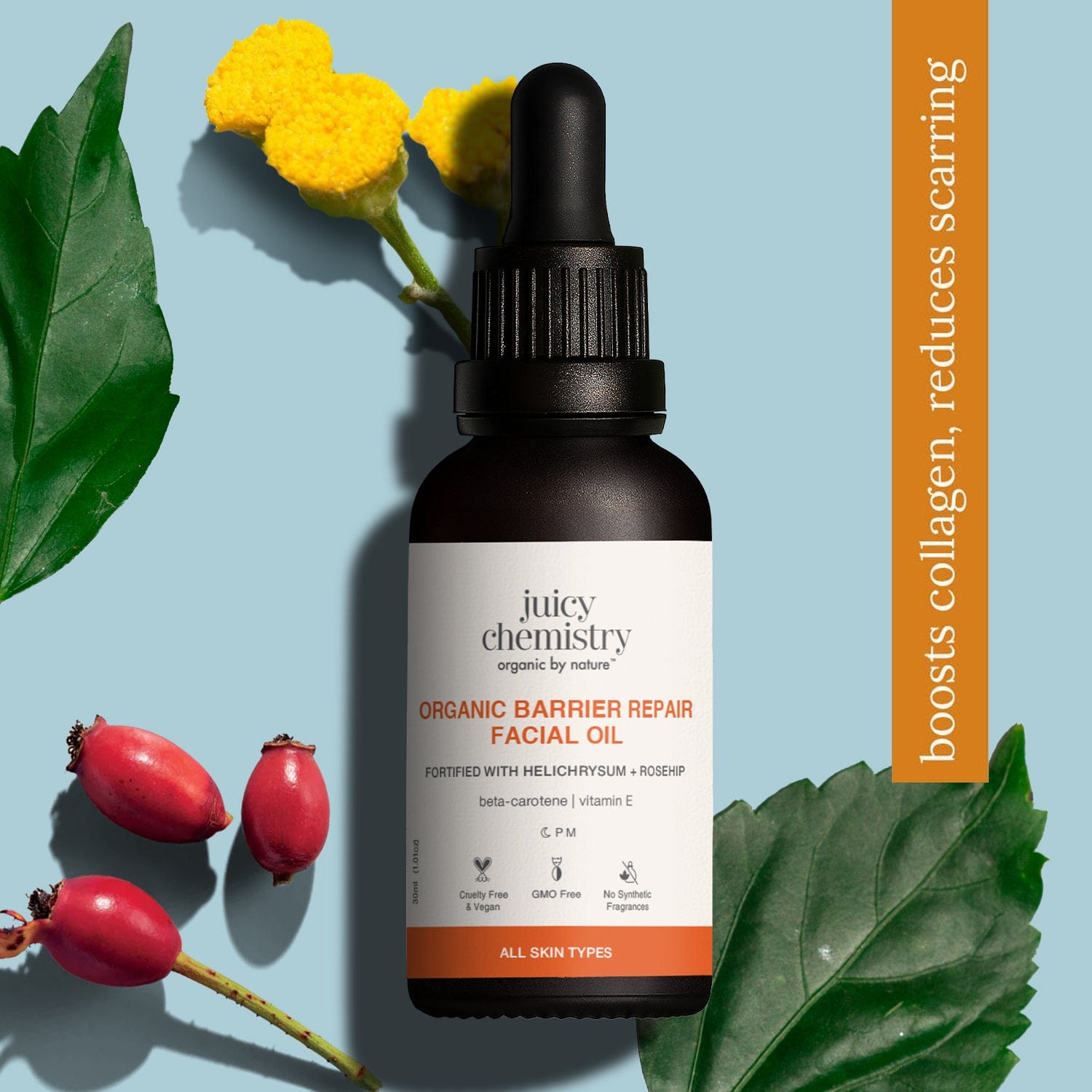
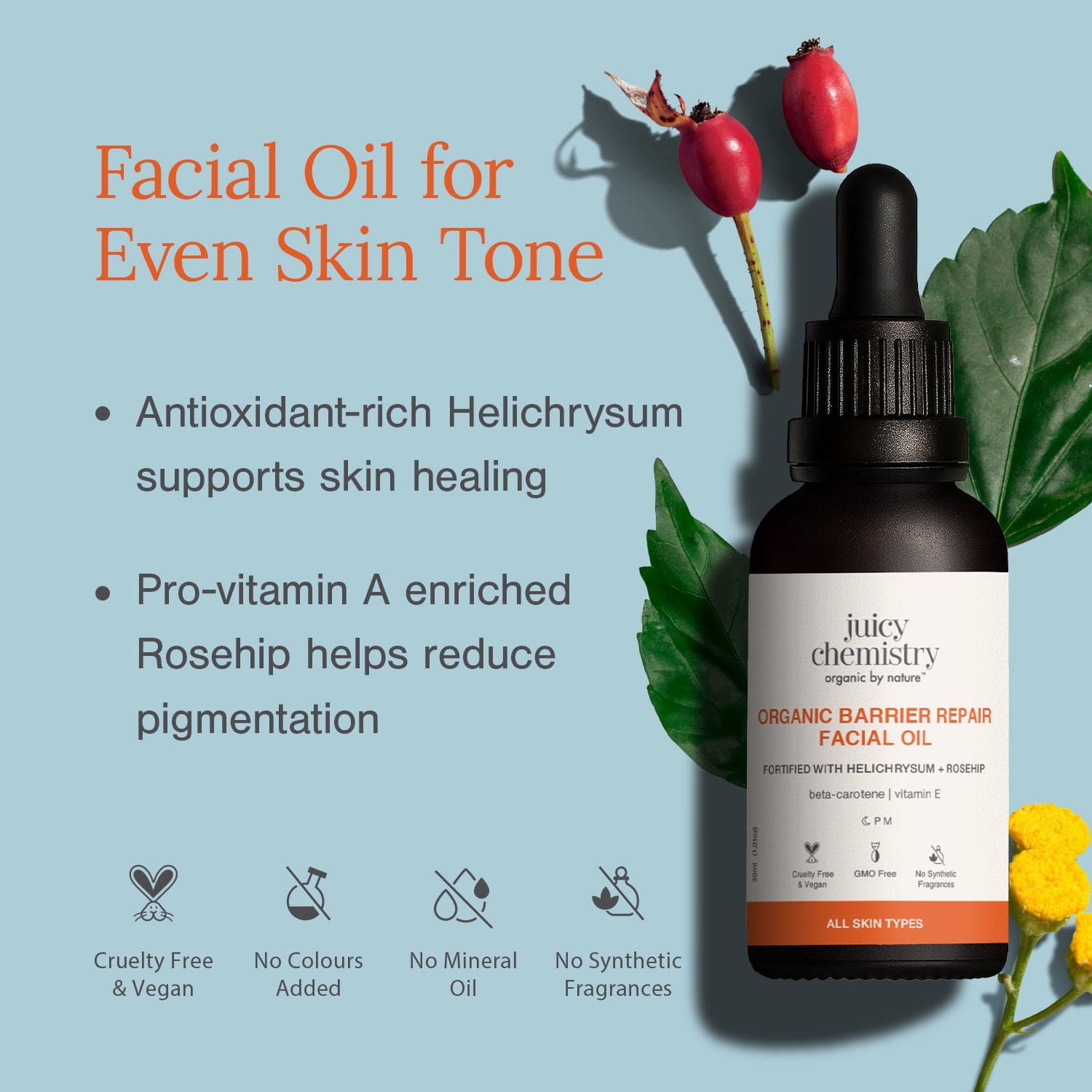
At Juicy Chemistry, we're committed to providing the best of quality and are strong believers in transparency. Our products do not contain any water or salt and are 100% certified organic. We're India's first complete product range to be certified organic by ECOCERT per the COSMOS V3 standard. All of our product packages and product pages online detail the full list of ingredients as well as the percentage breakdowns for natural origin and organic farming.
We also don't use any sort of toxins or chemicals such as surfactants that could be too harsh for the skin and scalp.
You can have a face cream with words such as 'organic' and 'natural' labelled all over it. Turn the back and see the ingredients and you'll find it's loaded with harsh chemicals and even unnecessary ones such as glycerin, water, caprylic triglyceride (highly occlusive - meaning it clogs your pores), benzyl alcohol (can irritate the skin and increase sensitivity) and fragrance among others. At Juicy Chemistry, we take great pride in ensuring our products are of the highest quality. In all our products, you'll find the concentrated ingredients, obtained from the finest organic produce, that do wonders for your skin. We put in significant effort to ensure that our products are truly organic and good for your skin.
For many companies, organic skincare is a marketing ploy. There’s nothing truly organic about a wide variety of products available today in the market. It’s all just ‘green-washing’. But for us, organic skincare is in our heart and soul and we make sure the products we create are good for you and the environment. We believe in beauty inside and outside. Beauty that cares. Beauty that is truly organic.
Shop our range of products *here*.


Shop Now