The Two Unsung Heroes that Revitalise Your Skin!
Liquid error (sections/article-template line 277): The format option 'month_day_year' is not a supported format.
Juicy Chemistry

Is rosehip oil good for sensitive skin? Yes. Rosehip oil is particularly suitable for sensitive skin due to its high content of essential fatty acids (omega-3, 6, and 9) that strengthen the skin barrier without irritating. Its natural anti-inflammatory properties help soothe redness and calm reactive skin, whilst being lightweight and non-comedogenic, making it safe for those with sensitivity concerns.
If your skin reacts to nearly everything you apply, you're not alone. Sensitive skin behaves differently because its protective barrier, the outermost layer that locks in moisture and keeps irritants out, functions less efficiently. This can lead to redness, tightness, and that uncomfortable stinging sensation with new products.
The key isn't avoiding oils altogether; it's choosing the right kind. Unlike heavy, pore-clogging oils, rosehip oil works with your skin's natural structure rather than against it.
Cold-pressed rosehip seed oil absorbs quickly without leaving a greasy film. Its molecular structure allows it to penetrate the skin barrier effectively, delivering nutrients where they're needed most. This makes it ideal for those who find traditional oils too heavy or irritating.
Research shows that rosehip oil contains approximately 77% polyunsaturated fatty acids (PUFAs), particularly:
For sensitive skin types, this fatty acid profile is particularly valuable. When your skin barrier is compromised, these essential lipids help repair and reinforce it naturally.
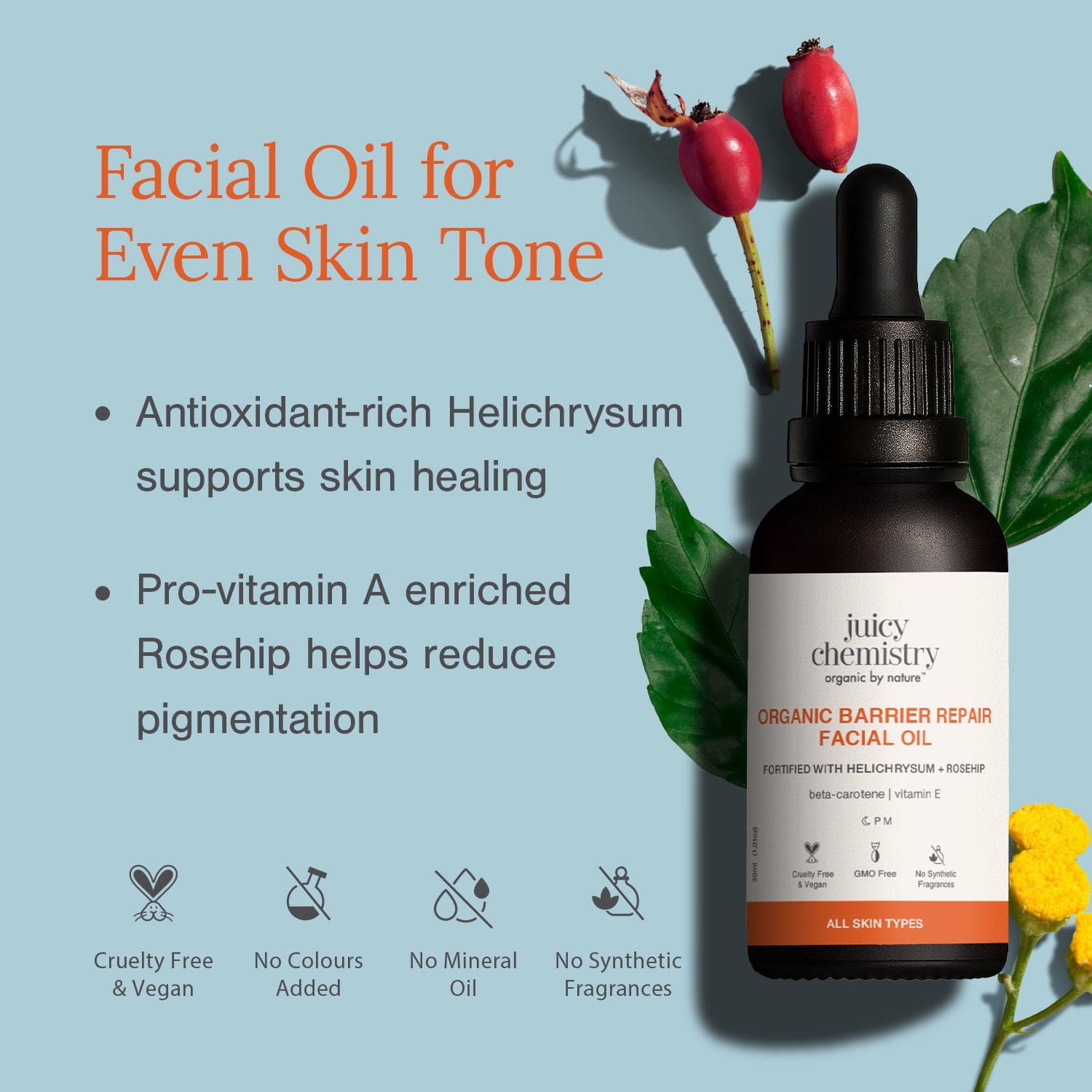
Many sensitive skin types avoid retinol due to its potential for irritation; the dreaded redness, peeling, and sensitivity. Rosehip oil contains trans-retinoic acid, a gentler form of natural Vitamin A. According to clinical studies, this compound promotes cell renewal and collagen production without the harsh side effects often associated with synthetic retinoids.
Absolutely. Dry sensitive skin faces a double challenge: it lacks adequate moisture and reacts easily to hydrating ingredients. Rosehip oil addresses both concerns simultaneously.
Its vitamin E content acts as a natural humectant, helping your skin retain water throughout the day. Meanwhile, the omega fatty acids create a protective layer that prevents transepidermal water loss, the invisible evaporation that leaves skin feeling tight and uncomfortable.
Apply rosehip seed oil to damp skin immediately after cleansing. The moisture on your skin helps the oil spread evenly and lock in hydration more effectively. During colder months, layer it beneath your regular moisturiser for added protection against environmental stressors.
Here's where rosehip oil surprises many people. Despite being an oil, it's actually beneficial for acne-prone skin, including sensitive types.
Research findings demonstrate that rosehip oil is non-comedogenic, meaning it won't clog your pores. Its linoleic acid content is particularly relevant here. Acne-prone skin often has lower levels of linoleic acid in its natural sebum, leading to thicker, stickier oil that blocks pores. Topical application helps rebalance this ratio.
Additionally, rosehip oil's anti-inflammatory properties calm the redness and swelling associated with acne breakouts, whilst its vitamin C content supports healing and helps reduce the appearance of post-acne marks over time.
Some individuals with very oily skin may prefer mixing a drop of rosehip oil into their moisturiser rather than applying it directly.
When your skin barrier is compromised, whether from harsh weather, over-exfoliation, or a reaction to products, it needs gentle, reparative care.
The polyphenols and vitamin E in rosehip oil work together to reduce inflammation at a cellular level. This can help calm conditions like eczema, rosacea, and general sensitivity, though individual responses vary. Always patch-test new products on a small area first, particularly if you have diagnosed skin conditions.
Unlike occlusive barriers that simply seal the skin, rosehip oil actively supports your skin's natural repair mechanisms. Its beta-carotene content acts as an antioxidant, protecting cells from free radical damage whilst they heal. This makes it valuable after procedures like chemical exfoliation or during recovery from sun exposure.
During spring transitions, when environmental allergens increase, and skin may react more easily, incorporating a lightweight oil like rosehip into your evening routine can provide consistent barrier support without overwhelming reactive skin.
Even gentle oils deserve a patch test. Apply a small amount to your inner forearm and wait 24–48 hours. If no redness, itching, or irritation occurs, it's likely safe for facial use.
Begin with once-daily application (preferably at night) for the first week. If your skin responds well, you can increase to twice daily. Sensitive skin often needs time to adjust to new products, even beneficial ones.
The general rule: apply products from thinnest to thickest consistency. After cleansing and toning, apply your serums, then rosehip oil, followed by moisturiser if needed. In warmer months, you might find the oil alone provides sufficient hydration.
Rosehip oil pairs well with:
Not all rosehip oils are created equal. For sensitive skin, particularly, quality makes a significant difference.
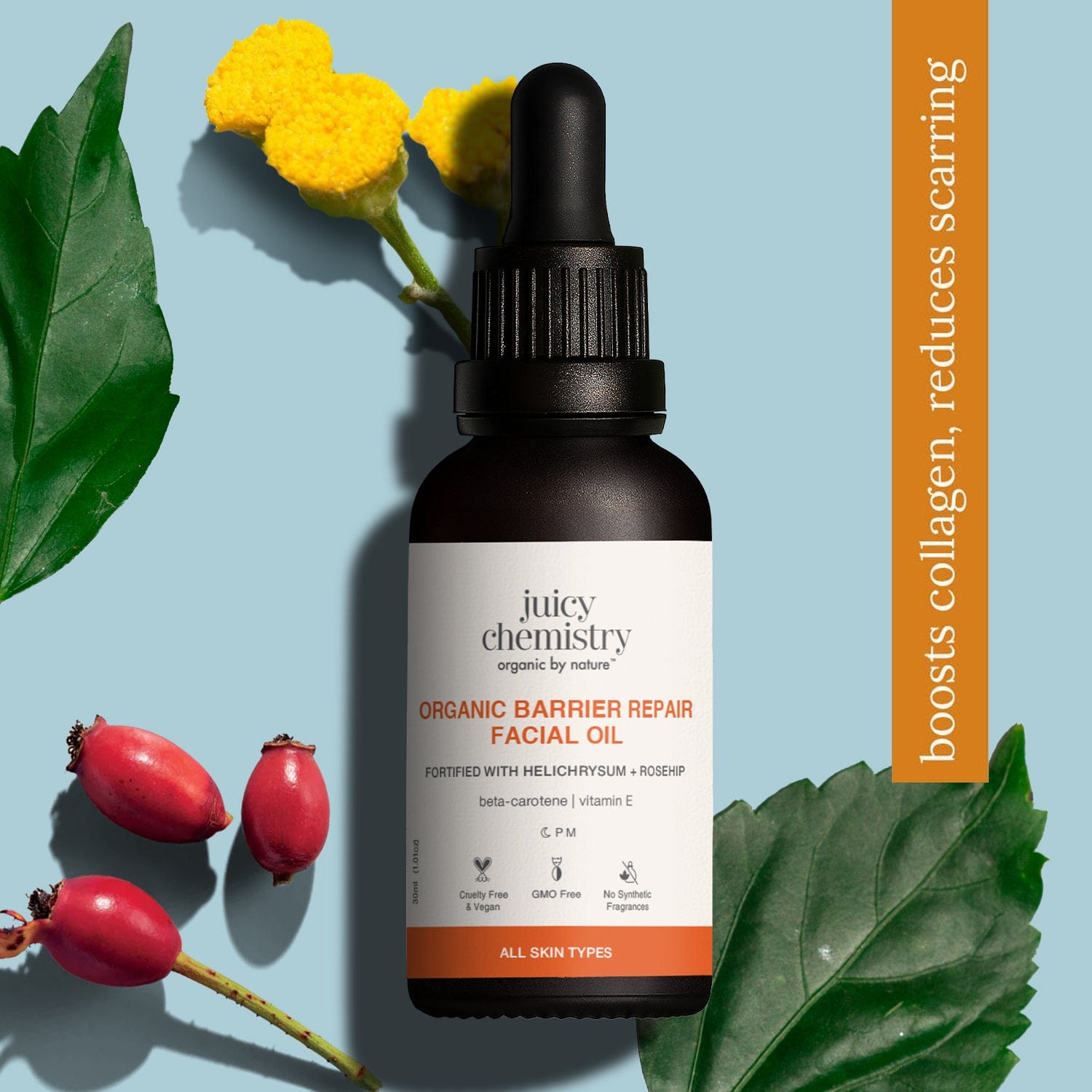
Cold-pressed extraction: This method preserves heat-sensitive vitamins and fatty acids. Juicy Chemistry's organic rosehip seed oil uses this virgin method to maintain the oil's natural potency without chemical solvents or high temperatures.
ECOCERT COSMOS certification ensures the oil comes from rosehip seeds grown without pesticides or synthetic chemicals, important for reactive skin that may be sensitive to residual contaminants.
Rosehip oil's benefits extend beyond facial care:
Is rosehip oil good for sensitive skin? The research and real-world experiences suggest yes, particularly when you choose high-quality, cold-pressed, organic oil and introduce it gradually into your routine.
Its unique combination of soothing fatty acids, gentle vitamin A, and barrier-supporting nutrients makes it one of the most versatile options for sensitive skin types, including those dealing with dryness, acne, or general reactivity.
The key is patience. Sensitive skin rarely responds to overnight transformations. Instead, rosehip oil offers steady, cumulative benefits that support your skin's natural healing processes whilst protecting against future damage.
Ready to experience the difference certified organic rosehip oil can make? Explore Juicy Chemistry's range of ECOCERT COSMOS certified skincare that puts ingredient purity and your skin's health first.
Many people with rosacea or eczema find rosehip oil helpful due to its anti-inflammatory properties, but individual responses vary. Start with a small patch test on unaffected skin, and introduce very gradually. If you're under dermatological care, consult your healthcare provider before adding new products.
No. Rosehip oil is non-comedogenic and actually helps balance sebum production. Its high linoleic acid content can improve the quality of your skin's natural oils, making them less likely to clog pores. Start with 1–2 drops at night and adjust based on how your skin responds.
Cold-pressed rosehip oil typically maintains potency for 6–12 months when stored properly (cool, dark place, tightly sealed). If it develops a rancid smell or changes colour significantly, it's time to replace it. Oxidised oils can irritate sensitive skin.
Rosehip oil is generally considered safe for topical use during pregnancy and is traditionally used for stretch mark prevention. However, always inform your healthcare provider about skincare products you're using, particularly those containing vitamin A derivatives, even in natural forms.
Start with a once-daily evening application for the first week. If your skin tolerates it well and you don't experience sensitivity, you can add morning application. Always follow with broad-spectrum SPF during the day, as vitamin A content increases photosensitivity. Some people prefer using it only at night year-round for simplicity.


Shop Now