Monsoon Skincare Mistakes: 7 Things Making Your Skin Worse in the Rains
Liquid error (sections/article-template line 266): The format option 'month_day_year' is not a supported format.
Juicy Chemistry


While sweating is a normal bodily function, the odor associated with perspiration can be off-putting when it mingles with the bacteria present on our skin.
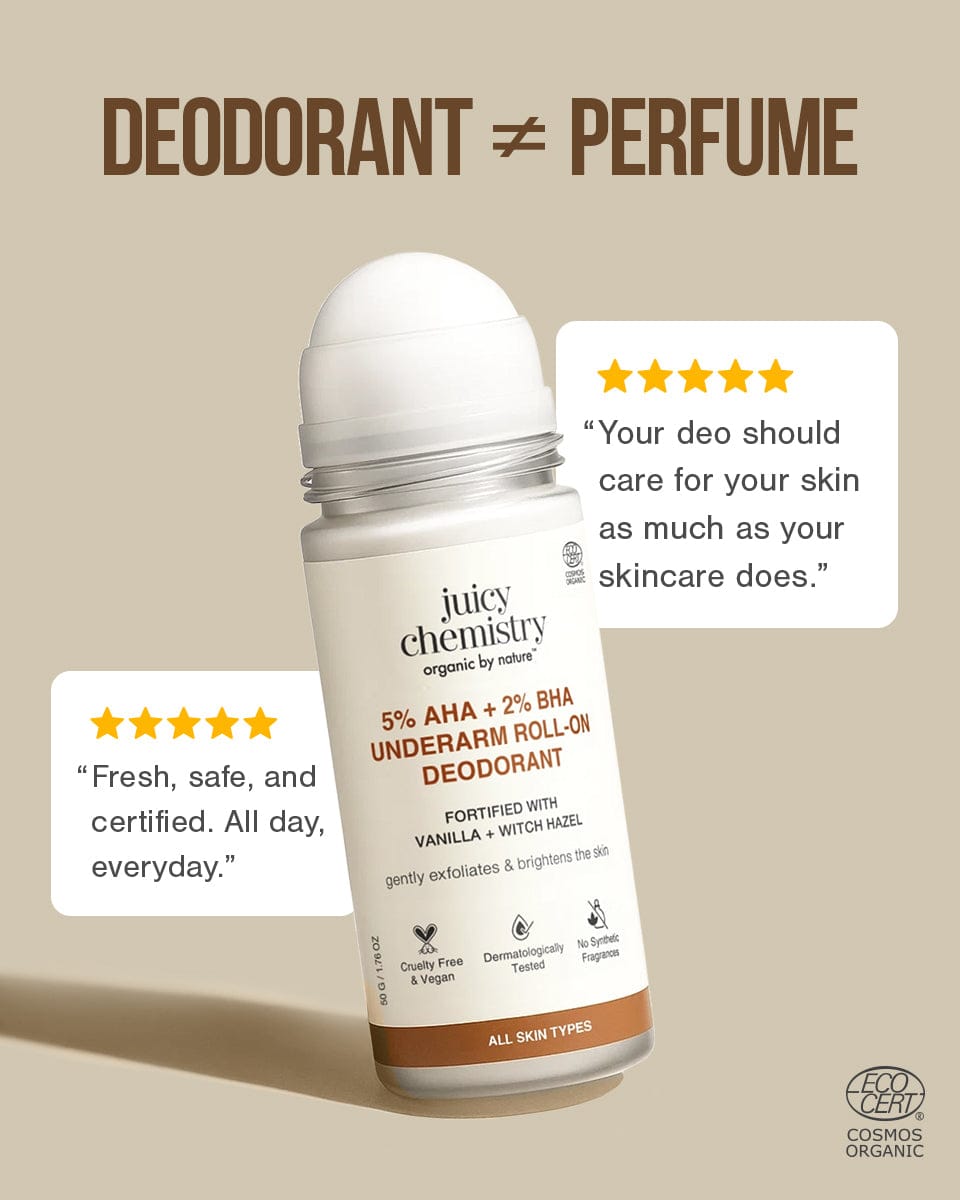
This can result in embarrassing underarm stains, unpleasant body smells, and irritating rashes, such as those caused by armpit sweat. In these cases, organic deodorants provide a remedy by assisting in balancing body odor and enhancing the tone and firmness of the underarm region.
These deodorants are crafted from organic components and natural clays, making them an excellent alternative to traditional products.
They are free from aluminum and function by preventing the combination of natural bacteria with salt and water on the skin while still allowing the body to sweat naturally.
Making the switch to organic deodorant is an additional step toward reducing toxins in our everyday lives.
Opting for a deodorant stick involves more than just selecting a product with an appealing fragrance. It should effectively manage sweat, combat odors, and avoid leaving marks on your clothing.
Let’s delve deeper into the advantages of using organic deodorant.
Eliminate body odor
Sweating is an essential function that aids in detoxifying the body and maintaining a healthy pH level. Contrary to common misconceptions, sweat itself does not produce the foul odor linked to body odor. It consists of salt and water and is odorless in a healthy person.
The true source of body odor is the reaction between sweat and the bacteria on our skin.
Organic deodorants address this interaction. Their formulations often include sodium bicarbonate, which acts as an antibacterial agent and pH balancer. This ingredient neutralizes the acidity in sweat and eradicates underarm bacteria, thus preventing body odor from developing.
Bid farewell to blocked pores
It is vital to keep your armpit pores clear to reduce the likelihood of ingrown hairs or other skin irritations, which can result in unpleasant odors, discomfort, and even infections.
To prevent creating an environment that fosters bacterial growth, leading to inflammation, consider using organic deodorants that contain natural clay. These deodorants can absorb excess sweat and oil, prevent pore blockage, and extract impurities from the skin.
Enhance skin tone, elasticity, and smoothness
For healthier, more supple, and glowing underarm skin, organic deodorants are essential. They often include essential oils that are rich in antioxidants, such as blood orange essential oil. This oil is abundant in anthocyanins and antioxidants, which can help promote an even skin tone, improve elasticity, and create smoother skin.
Eliminate yellow stains
Yellow discoloration on clothing occurs due to a chemical reaction when aluminum, a common ingredient in antiperspirants, interacts with your sweat.
To prevent these stains, consider switching to a deodorant that is aluminum-free. Organic deodorants made with plant-derived oils are an excellent option as they do not leave any yellow marks.
Environmentally friendly
Choosing a deodorant made with organic, sustainable, and responsibly sourced ingredients ensures you receive the protection you need while being mindful of the planet.
Organic deodorants are often packaged in eco-friendly materials and contain ingredients that are sustainably sourced. This way, you can feel assured that your choices are not harmful to the environment.
No skin irritation
If you have ever shaved or removed hair from your armpits, you know how sensitive that skin can be and how easily it can become irritated. However, using organic deodorants that feature plant-based ingredients can provide a soothing, skin-conditioning effect.
These deodorants include moisturizing components like shea butter, coconut oil, and cocoa butter to rejuvenate your skin.
Juicy Chemistry's Blood Orange and Geranium Deodorant is an organic product certified by both ECOSERT and USDA. This completely natural deodorant features a refreshing citrus aroma complemented by subtle floral undertones.
The essential oil derived from blood orange possesses inherent anti-microbial qualities that may assist in enhancing the tone and firmness of the skin in the underarm region.
On the other hand, geranium essential oil offers natural astringent and anti-inflammatory benefits that can improve the texture of underarm skin with consistent application.
Also Read: The Rise of Natural Long-lasting Deodorant: Neutralises body odor


Shop Now