Alpha Arbutin vs Vitamin C: Which Ingredient Works Better for Pigmentation?
March 09, 2026When it comes to fading dark spots and evening out skin tone, Alpha Arbutin and Vitamin C are the two heavy hitters. While both target uneven tone, they do so in different ways.
Here’s everything you need to know to choose the right one for your skin.
How Pigmentation Develops
Pigmentation happens when melanocytes produce excess melanin. This is usually triggered by:
- Sun exposure (UV damage)
- Post-inflammatory hyperpigmentation (acne marks)
- Hormonal changes (melasma)
To clear these spots, you need ingredients that interfere with the melanin pathway.
Alpha Arbutin: The Melanin Inhibitor
Alpha Arbutin is a derivative of hydroquinone that directly blocks tyrosinase, the enzyme responsible for creating melanin.
- Best for: Stubborn acne marks, sun spots, and melasma.
- The Benefit: It targets the source of the pigment to fade existing spots and prevent new ones from forming.
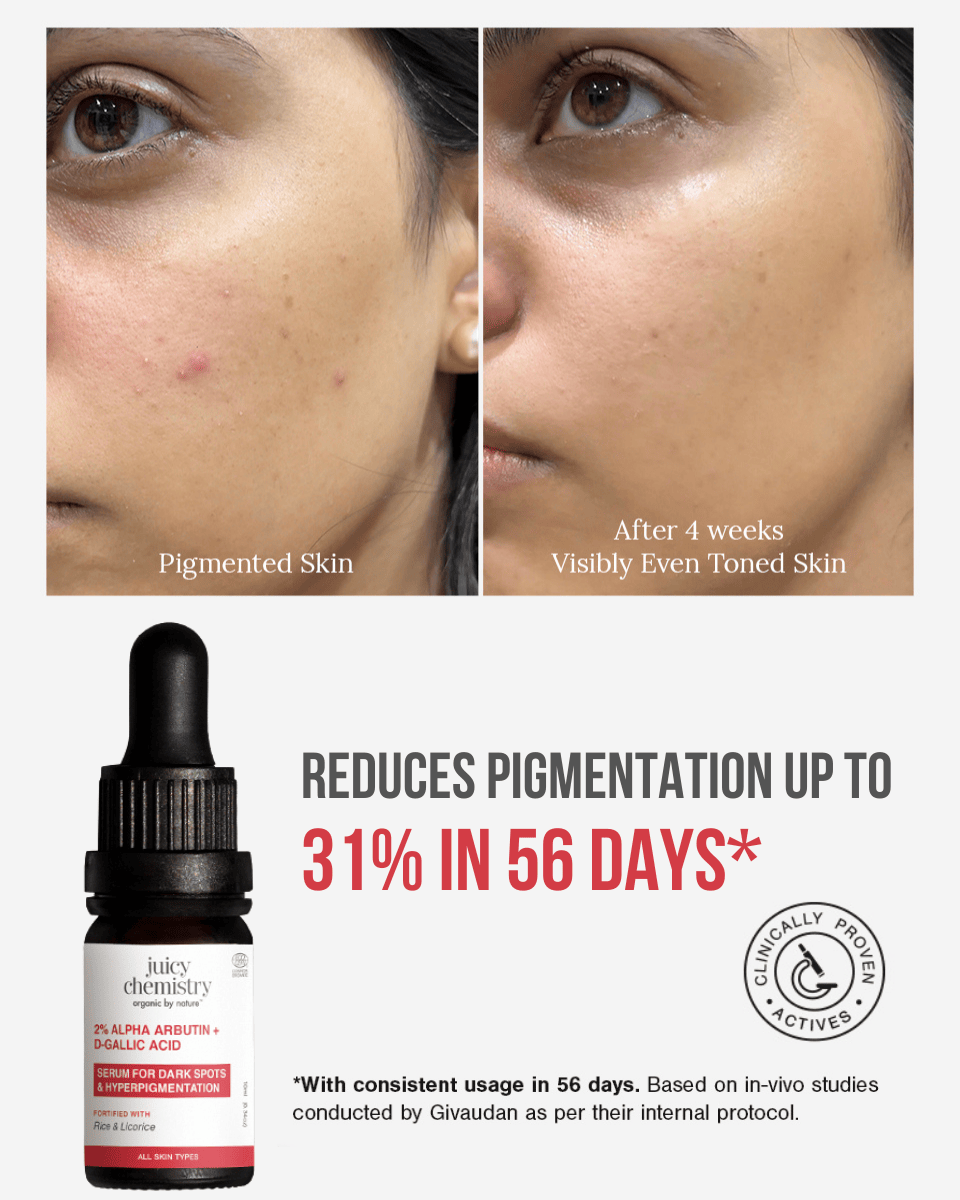
- Product Spotlight: Formulas like 2% Alpha Arbutin + D-Gallic Acid Serum pair melanin inhibitors with botanical brighteners for faster results.
Vitamin C: The Multi-Tasking Brightener
Vitamin C is a powerful antioxidant that protects the skin while regulating pigment production.
- Best for: Overall dullness, early-stage pigmentation, and daily protection.
- The Benefit: It neutralizes free radicals from UV rays and pollution, which prevents pigment from darkening in the first place.
Which One Should You Choose?
|
Feature |
Alpha Arbutin |
Vitamin C |
|
Primary Goal |
Targeted dark spot correction |
Brightening & prevention |
|
Mechanism |
Inhibits melanin synthesis |
Antioxidant protection |
|
Best Used For |
Acne scars & sun damage |
Dullness & uneven texture |
Pro Tip: You don’t actually have to choose. Use Vitamin C in the morning to protect your skin from the sun, and Alpha Arbutin at night to focus on repair and spot fading.
Translation missing: en.blog.comments.form_title
Why Sourcing Matters: Unlocking the True Potential of Your Ingredients
Understanding Skin Cycling: The Next Step in Your Skincare Routine
Beginner Skincare Routine for Pigmentation
How Sunscreen Prevents Dark Spots and Pigmentation
Why Pigmentation Is More Common in Indian Skin
Post-Acne Marks vs Pigmentation: Understanding the Difference
Pigmentation in Indian Skin: What Causes It & Which Ingredients Actually Work
What Is Biotechnology in Skincare? How Bioengineered Ingredients Are Transforming Clean Beauty
Copper Peptides for Skin: Benefits, Science & Safety Explained
What Is Male Pattern Baldness?
Alpha Arbutin + Diglucosyl Gallic Acid: A Smarter Way to Treat Pigmentation Without Harming Skin
Vanilla AHA + BHA Deodorant: Why Exfoliation Works Better Than Masking Odour
Why a Warming Oil Can Actually Help Hair Growth
(When Formulated Right)
Phyto-Retinol for Anti-Ageing Without Irritation
How to Layer Skincare?
The Power of B5 in Skincare
Plant Extracts: Nature's Powerhouse for Your Skin
Unlock Radiant Skin with Our New Organic Powder Face Cleanser!
Unveiling the Power of Pentavitin: The Hero Ingredient in Our Organic Powder Face Cleanser
Multi-molecular Hyaluronic Acid: Your Skin's New Best Friend
Lactic Acid in Skincare: Everything You Need to Know
Understanding Types of Hyperpigmentation: PIE, PIH, Melasma – and How to Treat Them Effectively
How to Layer Skincare Actives for Maximum Results
Unlocking Radiance: The Power of EGCG in Skin Health
Unlock Better Skin With D-Gallic Acid: A Biotech Forward Ingredient
Understanding Acne: Types, Causes & the Best Actives for Clearer Skin
Alpha Arbutin - Then Gentle Active for Hyperpigmentation
All About Exfoliating Acids: AHA vs BHA
Unlock Radiance with Our New Vitamin C Serum: Nature’s Powerhouse Inside a Bottle
What to Use Together and What Not To – The Ultimate Guide to Pairing Actives in Skincare
Phyto-retinol : Pregnancy Safe Alternative to Retinol
Retinol Vs. Phyto-Retinol: What’s The Difference?
All You Need To Know About Revinage, Retinol, And Bakuchiol
Is Revinage An Effective Retinol Alternative?
The Ultimate Guide to Vitamin E for Skin
Understanding Organic Cold Pressed Oils And Their Benefits In Summer