How to Choose the Right Hair Growth Oil for Your Hair Type
March 21, 2026You're standing in front of the mirror again, running your fingers through your hair, wondering why growth seems to have stalled. You've tried oils recommended by friends, influencers, and that one aunt who swears by her grandmother's recipe. Some left your hair feeling greasy and limp; others seemed to do nothing at all.
The secret often lies in one simple truth: the best hair growth oil for your friend might not be the best hair growth oil for you. Your hair type, scalp condition, and even your lifestyle play crucial roles in determining which hair oil is best for your unique needs. When you understand how to choose hair oil that matches your specific hair profile, you stop wasting time on products that work against your hair's natural characteristics.
Why Does Your Hair Type Matter When Selecting Hair Oil?
Hair isn't one-size-fits-all, and neither are hair oils. Fine hair can be weighed down by heavy oils that work beautifully on thick, coarse textures. Curly hair craves moisture-sealing properties that might overwhelm straight, oily scalps.
Research has shown that different hair types have varying porosity levels, which affects how well they absorb and retain moisture. Low porosity hair (often fine or straight) resists oil penetration, while high porosity hair (often curly or damaged) absorbs quickly but loses moisture just as fast. Your scalp's sebum production adds another layer: an oily scalp paired with the wrong oil creates buildup, while a dry scalp needs richer nourishment.
The composition of hair oils matters too. Lightweight molecular structures penetrate the hair shaft, while heavier oils coat and seal. When you pick the right oil for hair based on these scientific principles rather than marketing claims, you set yourself up for visible results.
Know Your Hair Profile Before Shopping
Before diving into which hair oil is best, take a moment to assess your hair honestly. Stand in good natural light and examine both your scalp and strands.
- For Fine or Thin Hair: Hold a single strand between your fingers. If you can barely feel it, you have fine hair. This hair type benefits from lightweight oils that provide nourishment without weight. If you're searching for hair oil for thin hair, your primary goal should be stimulation and volume rather than heavy conditioning.
- For Thick or Coarse Hair: Your strands feel substantial, and your hair has natural volume. Thick hair often requires more moisture and can handle richer formulations. A hair oil for thick hair needs deeper penetration and longer-lasting nourishment.
- For Curly Hair: Curl patterns naturally create more porosity. If you're looking for hair oil for curly hair, moisture retention and frizz control become priorities. Your curls need oils that seal the cuticle and define the pattern.
- Scalp Assessment: Touch your scalp midday. If it feels oily or looks shiny, you have an oily scalp. If it feels tight, flaky, or itchy, you have a dry scalp. For those wondering about hair oil for an oily scalp, the goal is balance, not adding more oil that mimics what your scalp already overproduces.
- Consider lifestyle factors too. High stress, poor sleep, seasonal changes, and nutritional gaps all affect hair health. Even the most effective hair growth oil works best when supported by adequate protein intake, hydration, and stress management.
Matching Hair Growth Oil to Your Hair Type
Fine or Thin Hair Needs Lightweight Stimulation
Fine hair requires a hair oil selection guide that prioritizes non-greasy formulations. Jojoba oil mimics your scalp's natural sebum, making it ideal for balancing oil production without weighing hair down. Its molecular structure allows it to penetrate the scalp and deliver nutrients to follicles while regulating sebum.
Organic jojoba oil works beautifully as a pre-wash treatment for fine hair. Apply a small amount to your scalp, massage for five to ten minutes, and wash after 30 minutes. The key is using less product more frequently rather than heavy applications.
Thick or Coarse Hair Thrives with Rich Nourishment
Thick hair can handle more substantial formulations. Ayurvedic blends combining multiple botanicals provide comprehensive nourishment. Ingredients like hibiscus, amla, and bhringaraj have been used traditionally to strengthen hair structure and support scalp health.
For thick hair that tends toward dryness or premature greying, consider oils that combine conditioning with circulation-boosting properties. The hibiscus and bhringaraj formulation brings together traditional Ayurvedic wisdom with organic ingredients that may help improve hair texture over time with consistent use.
Curly Hair Requires Moisture and Definition
Curly hair often has higher porosity, meaning it loses moisture quickly. The best natural hair growth oil for curls should seal the cuticle and reduce frizz while maintaining bounce. Heavier oils or blends work well here because curls need that extra coating to maintain definition.
When applying oil to curly hair, focus on the mid-lengths and ends first, then gently work into the scalp. Curls benefit from overnight treatments that allow deep penetration.
Oily Scalp Demands Balance
This seems counterintuitive, but the right approach to hair oil for oily scalp isn't avoiding oil altogether. Jojoba oil's chemical structure closely resembles sebum, which can help regulate overproduction. When your scalp senses adequate moisture, it may reduce its own oil production over time.
Apply minimally to the scalp and focus more on the lengths and ends where natural oils don't reach as easily.
Addressing Thinning and Hair Fall
When hair fall is your primary concern, look for formulations with circulation-boosting ingredients backed by research. Studies have shown that certain plant oils can support scalp health and hair structure.
Rosemary essential oil has gained attention for its potential to improve scalp circulation. Chilli extract, rich in capsaicin, may stimulate blood flow to follicles, delivering nutrients where they're needed most. Pumpkin seed oil acts as a natural DHT blocker, which can be particularly relevant for pattern hair loss.
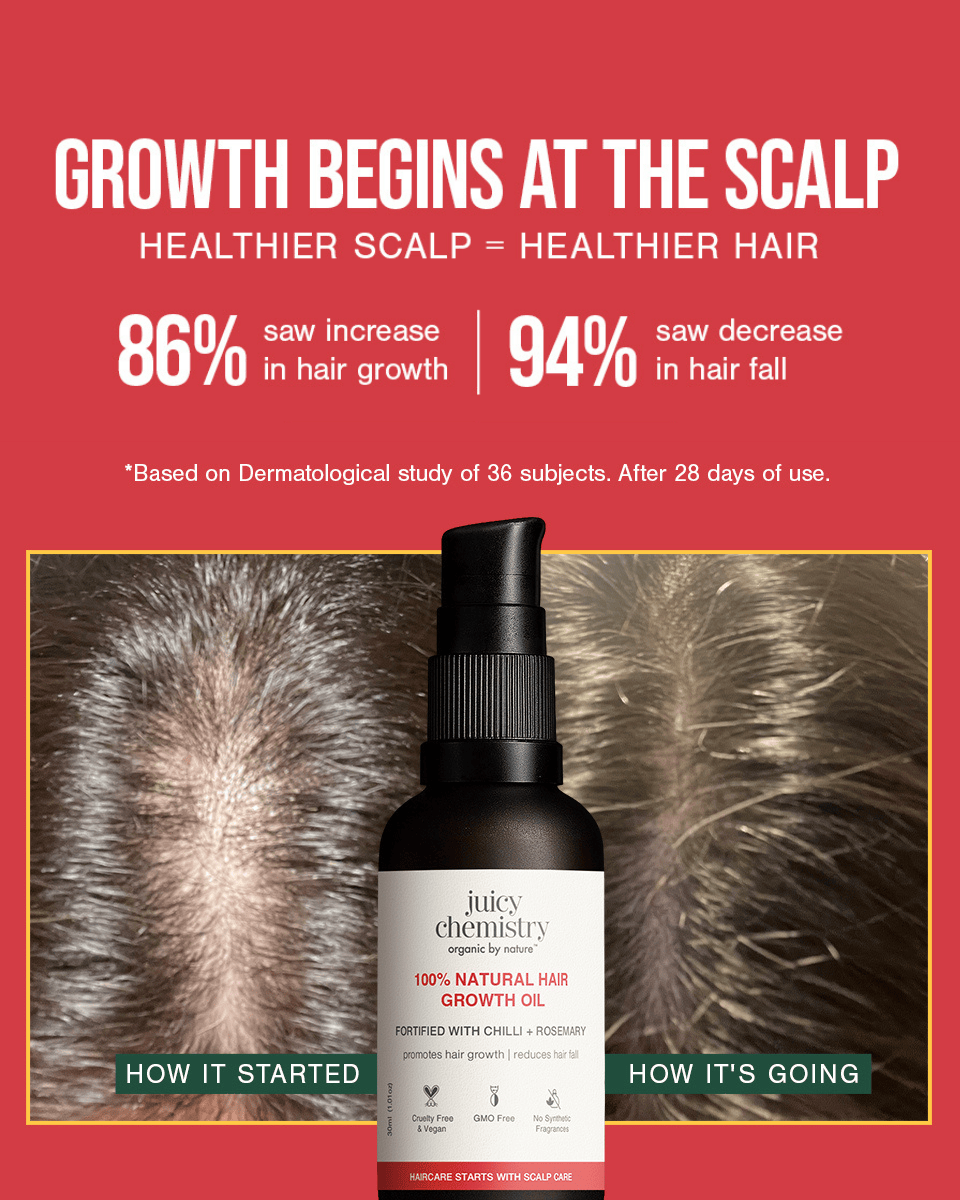
The chilli and rosemary hair growth oil combines these active ingredients in a lightweight base that won't overwhelm fine or oily hair. Clinical evaluations have shown promising results when used consistently over several weeks, though individual results may vary based on the underlying cause of hair fall.
Application Technique Matters as Much as Product Choice
Choosing the right product is only half the equation. How you apply your hair growth oil significantly impacts results.
Warm the oil slightly between your palms before application. Cold oil doesn't spread or penetrate as effectively. Section your hair to ensure even distribution, focusing initially on the scalp where follicles need nourishment.
Massage is non-negotiable. Five to ten minutes of gentle circular motions stimulates blood flow, helps ingredients penetrate, and creates a relaxing ritual that may help manage stress (which affects hair health, too). Use your fingertips, not nails, and work systematically from hairline to crown to nape.
Leave-in time depends on your hair type and schedule. Fine hair might benefit from 30 to 60 minutes, while thick or curly hair can handle overnight treatments. Wash with a gentle, sulphate-free cleanser. You might need to shampoo twice to remove oil thoroughly, but do so gently.
Consistency delivers results. Commit to two to three applications weekly for at least eight to twelve weeks before assessing results. Hair growth cycles take time, and rushing the process won't accelerate biology.
For more detailed guidance on building an effective routine, explore how to care for your hair with natural organic hair oil.
Common Mistakes That Undermine Results
- Using Too Much Product: More oil doesn't mean better results. Excessive application leads to buildup, requires harsh washing, and can actually clog follicles. Start with less than you think you need.
- Skipping the Scalp Massage: Simply pouring oil on your head misses the point entirely. The massage stimulates circulation and helps ingredients penetrate.
- Inconsistent Application: Using oil sporadically when you remember won't deliver the cumulative benefits that consistent use provides. Set a specific schedule and stick to it.
- Ignoring Lifestyle Factors: No oil can compensate for poor sleep, chronic stress, or nutritional deficiencies. Hair health is holistic. Support your hair growth oil routine with adequate protein, iron, and B vitamins in your diet.
If you're weighing different approaches, this comparison of DIY hair growth treatments versus professional hair oils might help clarify the benefits of properly formulated products.


Your Hair Deserves the Right Match
Finding the best hair growth oil for your hair type isn't about following trends or using what worked for someone else. It's about understanding your unique hair profile, choosing ingredients that address your specific needs, and applying them consistently with proper technique.
Fine hair needs lightweight stimulation. Thick hair requires rich nourishment. Curly hair craves moisture and definition. Oily scalps need balance. And all hair types benefit from circulation-boosting ingredients when addressing hair fall or slow growth.
The journey to healthier hair combines the right products with lifestyle awareness. Manage stress, nourish your body properly, adjust your routine with seasonal changes, and give your chosen hair oil selection time to work. Hair growth happens in cycles measured in months, not days.
When you're ready to explore natural, organic formulations that respect both traditional wisdom and modern research, Juicy Chemistry offers ECOCERT-certified options formulated without synthetic additives. Your hair deserves ingredients you can trust, backed by transparency and proven organic integrity.
Start by honestly assessing your hair type, choose your oil accordingly, commit to consistent application with proper technique, and support the process with overall wellness. The right hair growth oil for your hair type is waiting to be discovered.
Frequently Asked Questions
How often should I use hair growth oil?
For most hair types, two to three times weekly works well. Fine or oily hair might benefit from once or twice weekly application, while thick or dry hair can handle three times or more frequent application.
Can hair oil make my hair fall out?
When used correctly, quality hair oils should support hair health. Hair fall from oil use typically results from harsh washing to remove excess product, using oils that don't suit your hair type, or allergic reactions to specific ingredients.
How long before I see results from hair growth oil?
Hair grows in cycles, so visible results typically appear after eight to twelve weeks of consistent use. Some people notice reduced hair fall or improved texture sooner, but length and density changes require patience.
Should I dilute hair growth oil?
Pre-formulated hair growth oils are ready to use as-is. However, if you have a very sensitive or irritated scalp, dilution with a carrier oil like jojoba or coconut oil can make application gentler.
Can I use hair growth oil on coloured or chemically treated hair?
Yes, natural oils can help restore moisture to processed hair. However, avoid heavy applications immediately before colouring, as oils can create a barrier that affects dye penetration. Wait 48 hours after chemical treatments.