AHA vs BHA vs PHA: Which Exfoliating Acid Is Right for Your Skin?
September 17, 2026AHA, BHA and PHA can make skincare sound like a chemistry exam. The good news is that you do not need all three. The smarter approach is to understand what each type of exfoliant does, then choose according to your skin's needs, your existing routine and how well your skin tolerates exfoliation.

What is AHA?
AHA stands for alpha hydroxy acid. Common AHAs include lactic acid, glycolic acid and mandelic acid. They are generally water-soluble and are commonly used to exfoliate the skin surface, helping improve the appearance of dullness, rough texture and uneven-looking tone. Lactic acid is often chosen when someone wants a gentler-feeling AHA routine.
What is BHA?
The best-known BHA is salicylic acid. It is oil-soluble, which makes it especially useful in routines targeting excess oil and pore congestion. It can help loosen the buildup of sebum and dead skin cells associated with blackheads, whiteheads and blemishes. JC's 2% BHA + Zinc PCA Face Serum is specifically positioned for acne, clogged pores and excess oil.
What is PHA?
PHA stands for polyhydroxy acid. Examples include gluconolactone and lactobionic acid. PHAs generally have larger molecular structures than many AHAs, so they tend to penetrate more slowly and are often used when a gentler exfoliating approach is desired.
AHA vs BHA vs PHA: which should you choose?
If dullness and rough surface texture are your main concerns, an AHA may be the more relevant tool. If clogged pores and excess oil dominate, BHA is often the more logical choice. If you want exfoliation but your skin does not tolerate stronger acids well, a PHA-based approach may be worth considering. This is not a ranking of strength. It is a matching exercise.


Can you combine acids?
Sometimes, but beginners rarely need to. Combining several exfoliating acids can increase the overall exfoliation load and make irritation more likely. Juicy Chemistry's Lactic Acid Serum is one example of a targeted exfoliating formula. Use it according to the label rather than adding multiple acid products simply because each one sounds useful.
How to exfoliate without damaging your barrier
Start with a low frequency, avoid stacking several strong actives in the same routine and pay attention to how your skin feels. Persistent burning, unusual redness, tightness or peeling is a reason to scale back. And because exfoliating routines should sit alongside sensible sun protection, daily sunscreen remains non-negotiable.
Recommended internal links
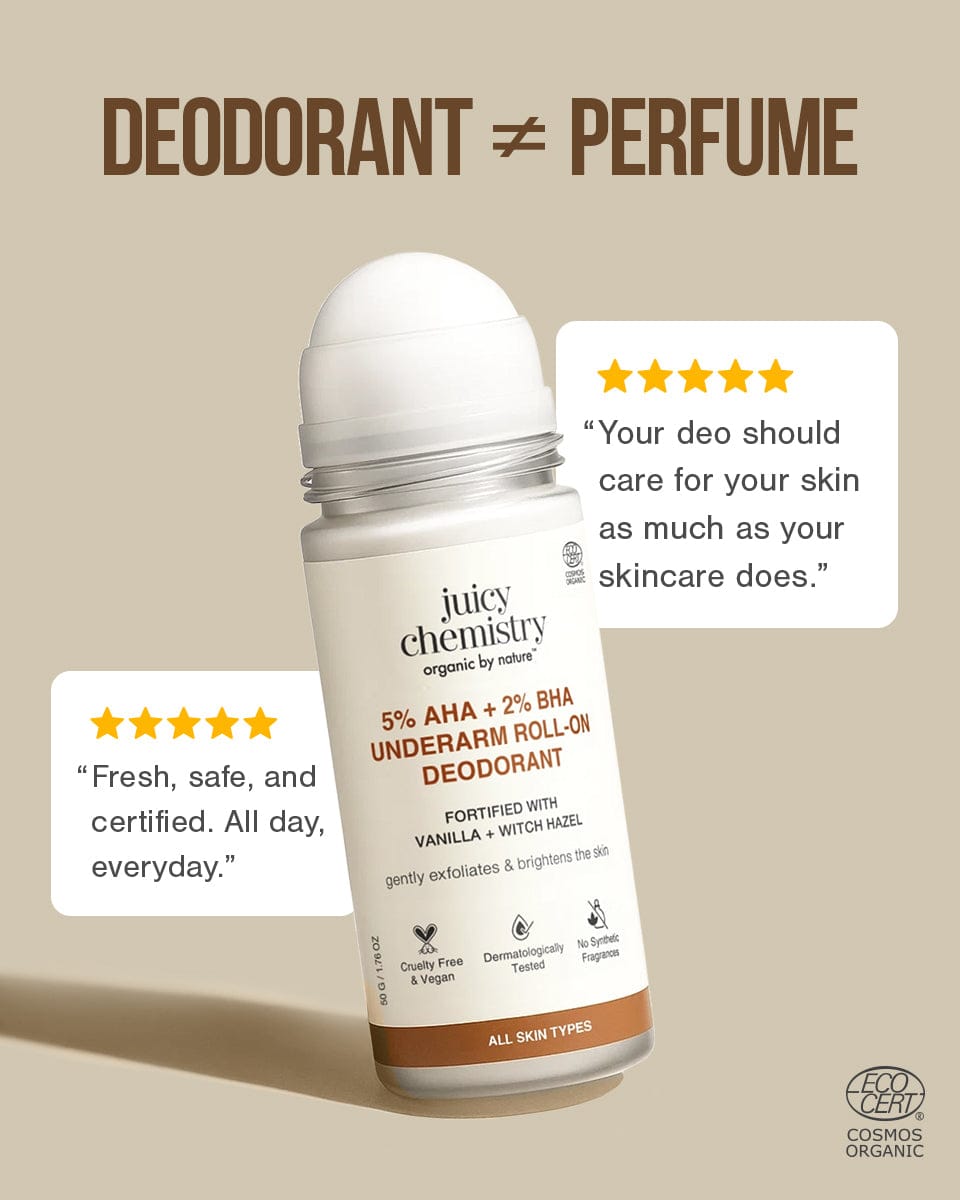
5% lactic acid serum | 2% BHA + Zinc PCA serum | AHA + BHA underarm roll-on | what is Zinc PCA

FAQs
Q: Is AHA better than BHA?
A: Neither is universally better. AHA and BHA target different concerns and should be chosen according to your skin.
Q: Can I use AHA and BHA together?
A: They can be combined in some routines, but doing so is not necessary for everyone. Start with one exfoliating active and assess tolerance.
Q: Is PHA suitable for sensitive skin?
A: PHAs are often formulated as a gentler exfoliating option, but sensitive skin can still react to any active. Patch testing and gradual use are sensible.
Q: How often should I exfoliate?
A: There is no universal frequency. Follow the product instructions and reduce use if your skin becomes irritated or excessively dry.