Dark Neck & Underarm Pigmentation: Causes and Natural Fixes
August 07, 2026Raising your arms in a sleeveless top should not come with a side of hesitation. And wearing your hair up should feel freeing, not stressful. But if the skin around your neck or underarms has turned darker than the rest of your body, it is natural to feel a little self-conscious about it.
Here is the thing, though. Dark patches in body folds are incredibly common. And in most cases, the darkening is not about hygiene at all. Understanding what actually causes it is the first step toward feeling good in your skin again.
Why Does the Skin Around Your Neck and Underarms Get Darker
Pigmentation in body folds happens for a few very specific reasons, and most of them have nothing to do with cleanliness.
- Friction is one of the most common triggers. Tight clothing, rough fabrics, and skin-on-skin contact create constant rubbing in areas like underarms, the neck, and inner thighs. Over time, that repeated friction stimulates extra melanin production as the skin tries to protect itself. The result is a noticeably darker tone in those areas.
- Shaving and hair removal can also play a role. Razors cut hair at the surface, leaving blunt ends that appear dark under thin skin. The irritation from frequent shaving can then trigger post-inflammatory hyperpigmentation, making the area look even darker.
- Deodorants and antiperspirants with alcohol, synthetic fragrance, or aluminium compounds may irritate sensitive underarm skin. When the skin reacts with redness or irritation, pigmentation often follows.
- Hormonal shifts during pregnancy, while taking oral contraceptives, or with conditions like PCOS can increase melanin activity across the body. Neck and underarm folds are particularly prone because the skin there is thinner and more sensitive.
- And then there is dead skin buildup. Without regular exfoliation, layers of dead cells accumulate in creased areas, giving the appearance of darker skin even when the melanin level has not changed much.
When Dark Patches Might Signal Something Deeper
Not all darkening is purely cosmetic. A condition called acanthosis nigricans causes thick, velvety, dark patches in body folds, most commonly the neck, underarms, and groin. According to Mayo Clinic, acanthosis nigricans is often linked to insulin resistance, which can be an early indicator of type 2 diabetes.
If the dark skin in your folds feels thicker or velvety to the touch, or if the darkening appeared suddenly, a visit to your doctor is a good idea. Treating the underlying cause, whether it is insulin resistance, a thyroid issue, or a medication side effect, often helps the skin return to a more even tone on its own.
For most people, however, the darkening is surface-level hyperpigmentation caused by friction, irritation, or dead skin buildup. And that is something gentle, consistent care can address well.
Simple Lifestyle Changes That Help Even Out Pigmentation Naturally
Before reaching for any product, a few everyday tweaks can make a real difference.
Swap tight-fitting tops for looser, breathable fabrics, especially in warmer months. Less friction means less melanin stimulation in your underarms and neck. If you shave, use a gentle, fragrance-free shaving cream and always shave in the direction of hair growth to reduce irritation.
Switch your deodorant. Conventional formulas loaded with aluminium, baking soda, or synthetic fragrance can aggravate underarm skin. Look for aluminium-free, certified organic alternatives that protect against odour without irritating delicate skin.
Gentle exfoliation once or twice a week helps clear dead skin buildup without over-sensitising the area. And always moisturise body folds after bathing. Well-hydrated skin is less likely to develop friction-related darkening.
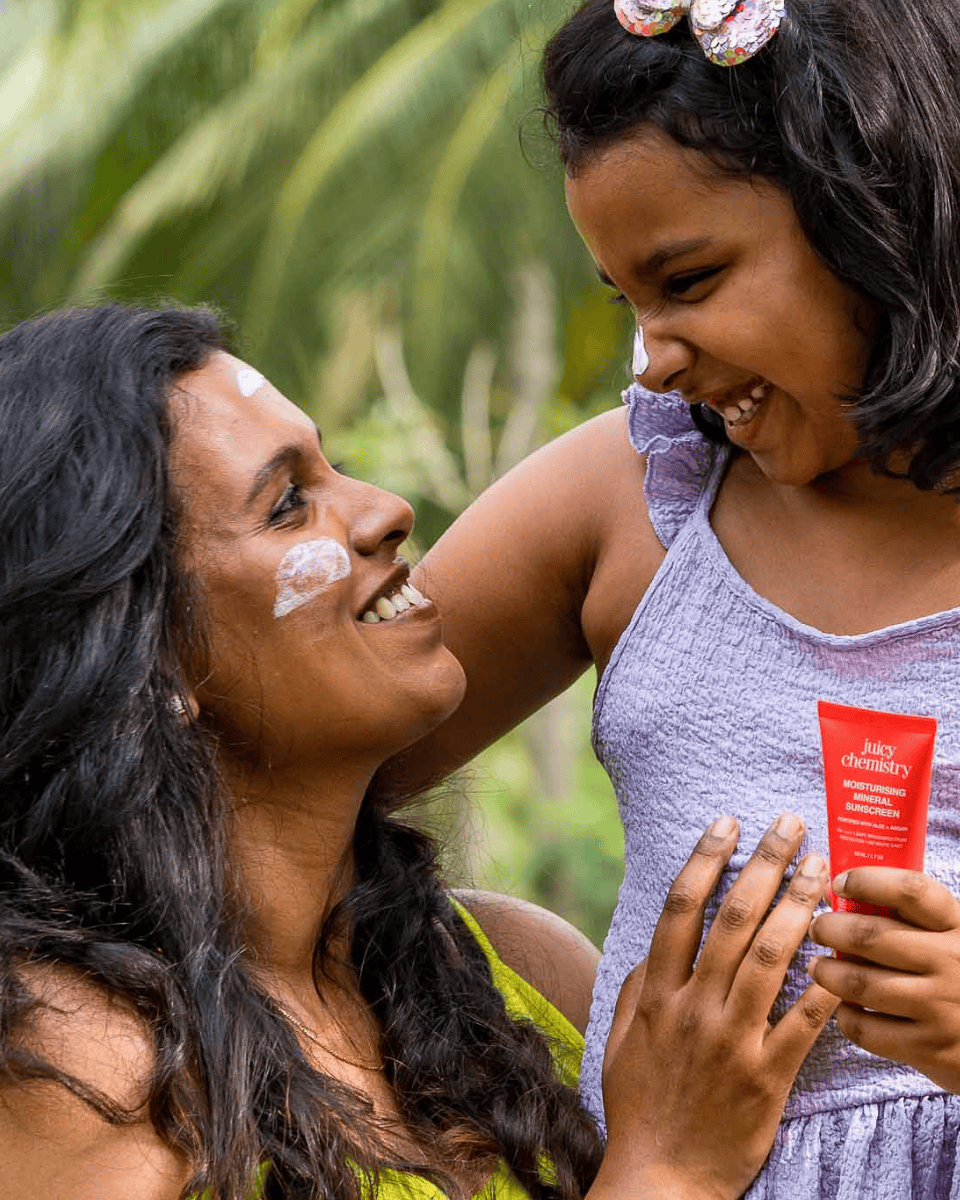
Sunscreen on exposed areas like the neck is often overlooked, but UV exposure worsens pigmentation. Apply a broad-spectrum mineral sunscreen to your neck as part of your morning routine, especially during summer.
What Ingredients Actually Work for Neck and Underarm Darkening
When it comes to addressing dark neck and underarm pigmentation topically, a handful of well-studied ingredients stand out.
- AHAs (Alpha Hydroxy Acids) like lactic acid work on the skin's surface. Lactic acid gently dissolves the bonds between dead skin cells, promoting cell turnover and revealing brighter skin underneath. And because lactic acid also acts as a humectant, the skin stays hydrated even as dead cells shed.
- BHAs (Beta Hydroxy Acids) like salicylic acid are oil-soluble, which means they can penetrate into pores and address congestion beneath the surface. For underarms, where sweat and product residue can clog pores, that deeper action is especially helpful.
The combination of both AHAs and BHAs offers gentle exfoliation at different levels of the skin, making the pairing well-suited for stubborn body fold pigmentation.
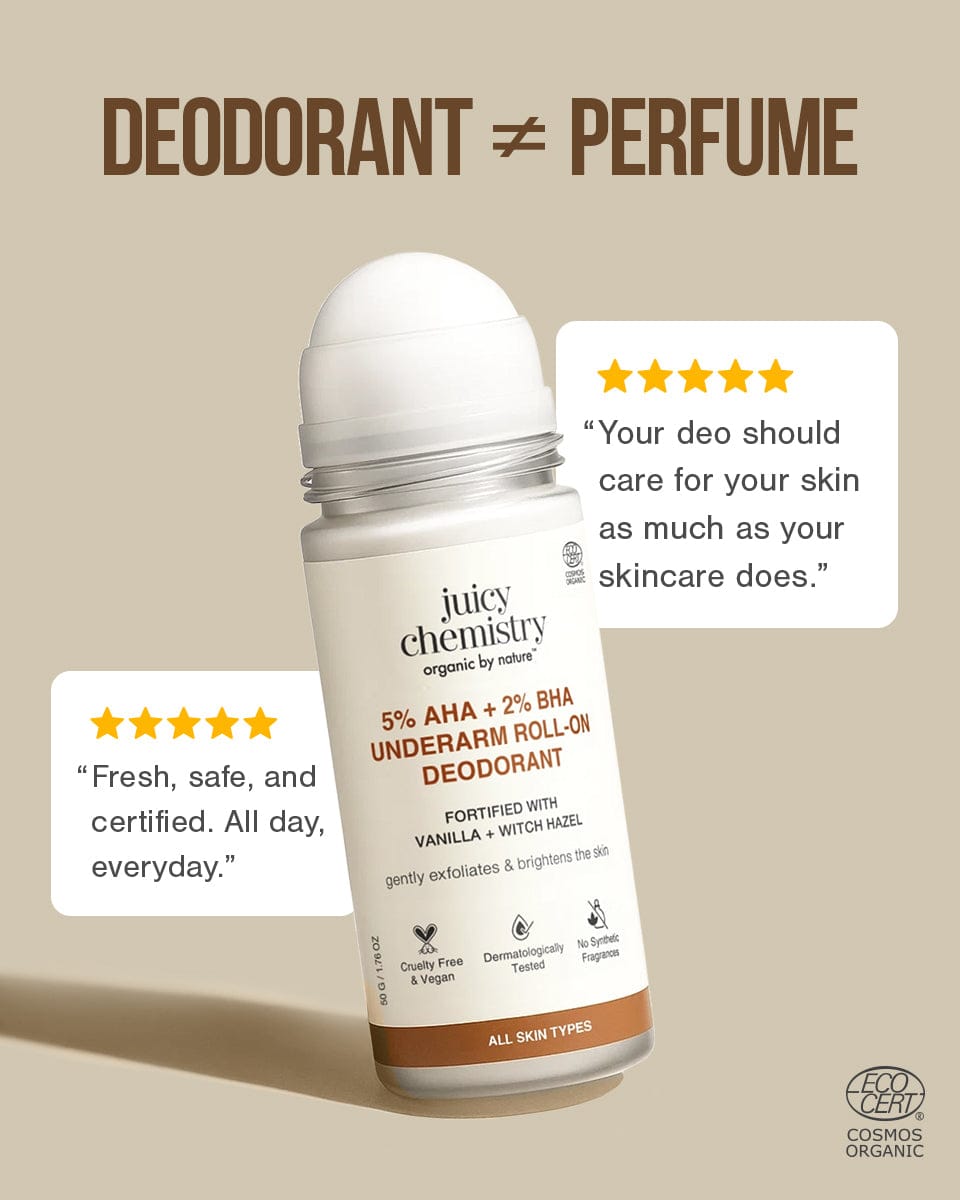
Juicy Chemistry's 5% AHA + 2% BHA Underarm Roll-on Deodorant brings both actives together in a single step. Formulated with lactic acid, salicylic acid, witch hazel, licorice root extract, centella asiatica, and sodium hyaluronate, the roll-on gently exfoliates while providing odour protection. The formula is aluminium-free, baking soda-free, and COSMOS organic certified by ECOCERT. Just roll onto clean, dry underarms and allow to dry. No rinsing needed.
For a deeper look at how to lighten underarm pigmentation naturally, our detailed guide covers additional tips and routines you can build around gentle, certified organic care.


What to Avoid if You Want Even-Toned Skin in Body Folds
A few habits can make darkening worse, even when you are actively treating the area.
Scrubbing hard with abrasive scrubs or loofahs damages the skin barrier and triggers more melanin production. Gentle exfoliation always wins over aggressive scrubbing. Harsh skin-lightening products with hydroquinone or mercury are not only risky but can cause rebound pigmentation and long-term skin damage.
Avoid applying lemon juice directly to the skin. Despite popular home remedies, undiluted lemon juice is too acidic for body folds and can cause irritation, burns, and increased sun sensitivity.
And if you are using an exfoliating product on your underarms, do not apply on freshly shaved or wounded skin. Give the area a day to recover before applying any acid-based treatment.
When Should You Talk to a Dermatologist
If your neck or underarm darkening is accompanied by thickened, velvety skin texture, or if the pigmentation appeared rapidly without any obvious cause like friction or shaving, a dermatologist can help rule out underlying conditions.
Darkening linked to acanthosis nigricans, hormonal imbalances, or medication side effects needs to be addressed at the root. Once the underlying cause is managed, the skin often responds well to gentle topical care.
For cosmetic-level hyperpigmentation caused by friction, shaving, or product irritation, consistent use of gentle exfoliants and a good skincare routine from a trusted organic brand can go a long way.
FAQs
Can dark underarms be fixed permanently?
Surface-level pigmentation from friction or shaving can improve significantly with gentle exfoliation and consistent care. If an underlying condition like insulin resistance is involved, managing that condition is key to lasting improvement.
Is dark neck pigmentation a sign of diabetes?
Not always, but thick, velvety dark patches around the neck can be a sign of acanthosis nigricans, which is linked to insulin resistance. If you notice that type of texture change, consult your doctor.
How long does underarm pigmentation take to fade?
With regular exfoliation and proper care, most people notice visible improvement within six to eight weeks. Deeper or longer-standing pigmentation may take more time.
Are AHAs safe for sensitive underarm skin?
Yes, when used at appropriate concentrations. A formulation combining gentle AHAs with soothing ingredients like witch hazel and centella asiatica can exfoliate without irritation.